

Dr. Maya Shankar on the Other Side of Change
She sits down with Rainn—plus an excerpt from her new book!
Change has a way of knocking without asking.
Sometimes gently, sometimes with a battering ram.
This week on Soul Boom, Rainn sits down with cognitive scientist, author, TED Talker, and podcaster extraordinaire Dr. Maya Shankar — someone who has made a life’s work out of understanding what happens in the wake of change.
Maya is one of the world’s leading applied behavioral science strategists—and a rare bridge-builder between data and the human heart. She’s the creator and host of A Slight Change of Plans, the award-winning podcast that Apple named Best Show of the Year in 2021. The show blends deeply personal stories with cutting-edge psychology to explore how people navigate life-altering change.
Her path wasn’t linear. Maya trained as a violin prodigy under Itzhak Perlman at Juilliard—until a sudden hand injury abruptly ended her musical career. That forced reinvention sparked a lifelong fascination with identity, resilience, and how we rebuild meaning when our plans fall apart.
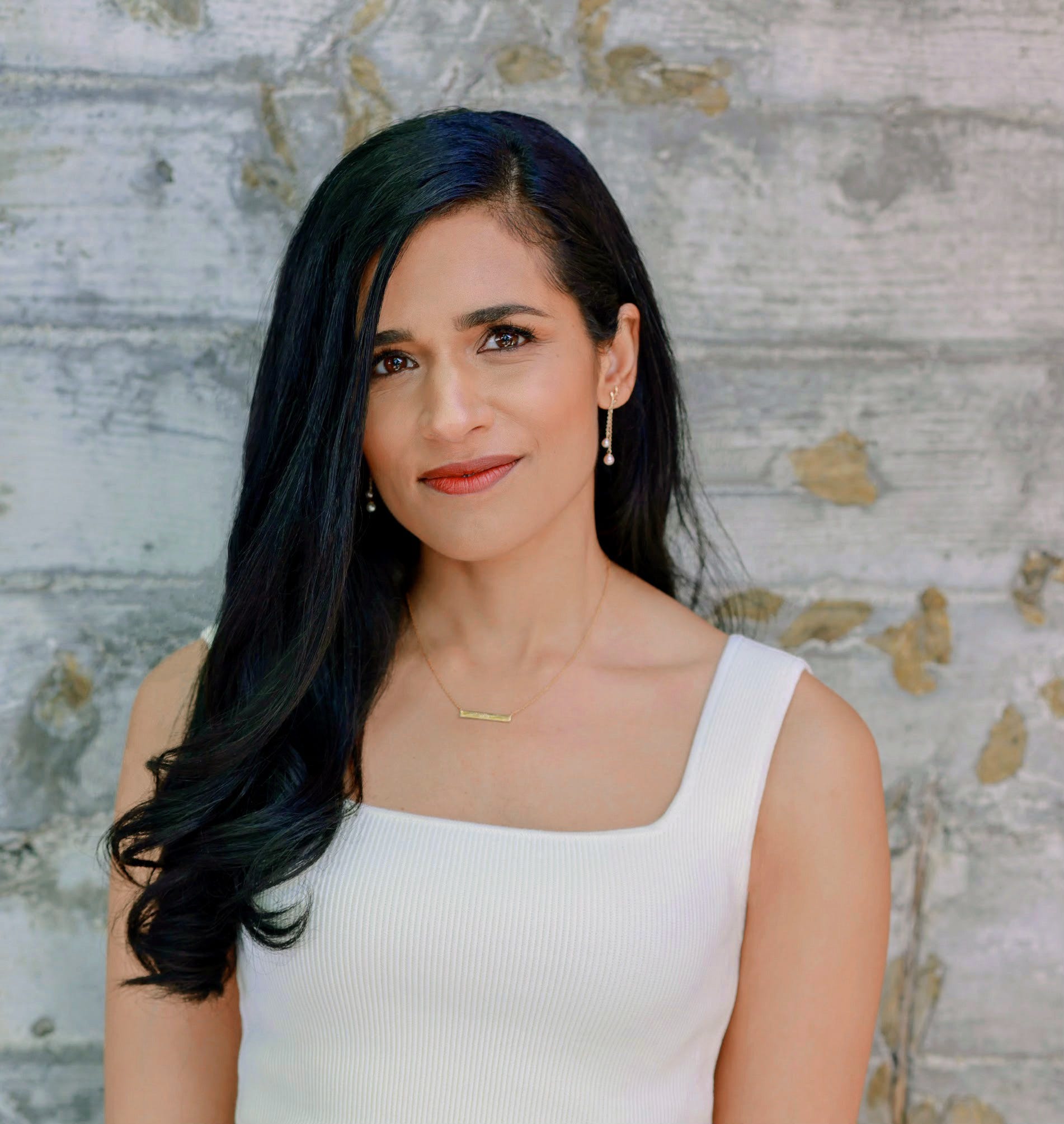
She went on to earn her B.A. from Yale, her doctorate from Oxford as a Rhodes Scholar, and completed postdoctoral work in cognitive neuroscience at Stanford. Her research on belief formation, decision-making, and the psychology of change would later shape policy at the highest levels—most notably when she founded the White House Behavioral Science Team under President Obama, and later served as the first Behavioral Science Advisor to the United Nations.
In this conversation, Rainn and Maya explore why uncertainty feels so threatening—and why it may be the doorway to growth. She explains real change isn’t just something we endure—but something that changes who we are.
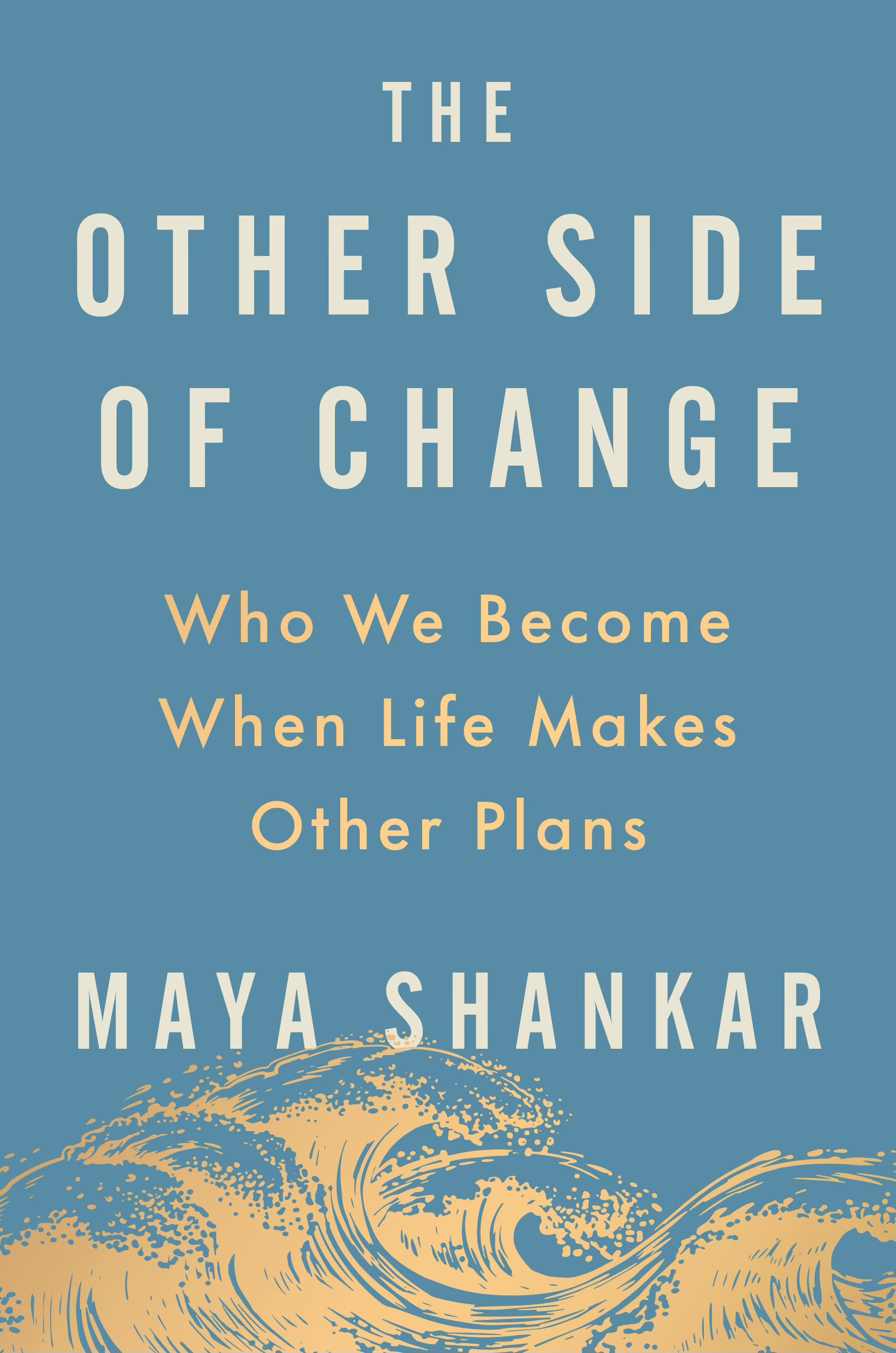
All of this leads naturally to Maya’s new book, The Other Side of Change. The book was born from Maya’s own reckoning with loss and uncertainty—and from hundreds of intimate conversations with people whose lives were split into a “before” and an “after.” Drawing on science, story, and lived experience, it asks a quieter but more powerful question: not “How do I survive this change?” but “Who might I become on the other side of it?”
We’re delighted to share an excerpt from Maya’s new book that opens a window onto that question—inviting us to notice how the beliefs we formed long ago quietly shape our identities, and how moments of disruption can loosen those beliefs just enough to let something new in.
Sometimes change feels like an ending. Maya reminds us it may also be a beginning.
— The Soul Boom Team
And Soul Boombinos — We’d love to read your thoughts in the comments: Has a change in your life ever revealed something about who you are that you couldn’t have discovered any other way?
The Blank Slate
By Dr. Maya Shankar, adapted from The Other Side of Change
As we grow up, our brains absorb information and then work to identify patterns, draw inferences, weave together stories, and make sense of our environment. This information comes from all kinds of sources, including popular culture, teachers, parents, caregivers, friends, and classmates. We might come to believe that expressing sadness is a sign of weakness, or that we’re good at some things but not others, or that success is defined in a specific way. We might internalize messages about what it means to be a good person, or what being conventionally masculine or feminine entails, or that it’s important to have a certain type of body. These beliefs can also be about our families and our place within them. Perhaps we’ve been led to believe that we must preserve certain traditions, or that we should never question our parents, or that it is our duty to protect our younger siblings even into adulthood.
What if you woke up one day and discovered that all those beliefs had vanished? At first, you might feel a sense of disorientation—maybe even grief for the mental structures you’d constructed: your frames of reference, your long-held values, the foundation upon which you built your life and your relationships. But, like Ingrid, you might also experience a kind of freedom. It would give you an opportunity to establish your beliefs anew, without the constellation of anchors, intuitions, and biases you’ve accumulated in the course of your life.
Just as a change can give us an opportunity to reimagine our relationships with others, it can also prompt us to challenge beliefs that have long crystallized. In this way, a significant change can offer us a reset similar to what Ingrid experienced. Change naturally jostles our belief tapestry, loosening the threads ever so slightly. We are given an opening through which to examine faulty ideas or mistaken assumptions that we’d never thought to interrogate. A change in our lives can be an invitation to ask ourselves: Who could I be without these beliefs?
Changing our beliefs about anything can be hard. Our beliefs are embedded in the stories we tell ourselves about who we are, which the psychologist Dan McAdams refers to as our narrative identity. This narrative helps us make sense of the messy and complicated world around us and allows us to find purpose and direction within it. Because we crave consistency and unity in this narrative, modifying a single thread of belief in the tapestry—one that may be deeply entangled with many other beliefs—can be a disorienting process, one that we’re reluctant to initiate. This can be especially true of beliefs we formed in childhood, which served as the basis upon which we’ve processed every subsequent piece of information.
Take the example of Brad Snyder, who built a strong narrative identity around his military service. Brad grew up in a military family, and he aspired to follow in the footsteps of his grandfather, a veteran of World War II who’d commanded great respect from those around him. Brad worked hard and was accepted into the United States Naval Academy, where he trained to become an improvised explosive device (IED) ordnance officer. In 2011, during a deployment to Afghanistan, he stepped on an IED during a mission with Navy SEALs. He suffered significant wounds to his face and was left permanently blind.
“I have essentially failed at my job,” he remembers thinking. “My job was to protect these guys. I’m supposed to be the one who can find these IEDs. I’ve got the metal detector, I’m the one walking out in front of the patrol, and here I missed one.”
Brad was transported to Walter Reed National Military Medical Center in Maryland to recover. When his family came to visit, he was particularly anxious about reuniting with his little sister, Elyse, eight years his junior. He had relished playing the role of the hero to her; from his perspective, this dynamic had been the defining feature of their relationship. When Elyse had watched movies like Top Gun and The Hurt Locker, which Brad felt glamorized the military experience, he never corrected her impression.
“To her, I was a badass,” he writes. “She saw me as a guy who could do amazing stuff like jump out of planes, SCUBA dive, and take apart bombs. I liked the idea that maybe she bragged about me to her friends. I liked the idea that in her mind, I was what I had always hoped to be. I liked the idea that she was proud of me.”
Now Brad felt he had failed Elyse.
“She’s gonna come into the hospital room, and I’m not gonna be this hero version of myself, wearing the white uniform and the gold buttons and the medals on my chest. I’m gonna be laid up in a hospital room with stitches all over myself and tubes coming out, and I can’t even get up to go to the bathroom by myself,” Brad said.
But to Elyse, what actually defined their relationship were the everyday things that bond siblings—laughing over Brad’s cheesy jokes, quoting Saturday Night Live sketches and Will Ferrell movies, and talking about their latest musical obsessions or travel experiences. That version of Brad was still fully intact, and Elyse reacted to his new state with only love and tenderness.
This was a moment of revelation for Brad.
“You know, it was kind of paradigm-changing for me, realizing that this brother-sister relationship wasn’t exactly what I thought it was,” he said.
Before his injury, he had never questioned why he’d felt that impressing Elyse was a critical part of their relationship. She had never once suggested that anything hung on his profession, nor that she’d even taken special pride in his accomplishments. Brad had absorbed these messages from other places—perhaps initially from how people responded to his grandfather, and then through his tenure in the Navy.
“I realized that this hero thing was never actually part of her narrative,” Brad said.
Empowered by this realization, Brad was able to be more forthcoming with Elyse and the rest of his family about his vulnerabilities—something he had long been loath to do. This shift in mindset was especially important during his recovery from the explosion, when it was essential that he be open about his emotional and physical needs. He remembers one afternoon when he and his guide dog got terribly lost walking around Baltimore. His instinct was to shield his loved ones from his struggles. But rather than give in to that impulse, he picked up his phone and called Elyse, who helped him find his way home.
If we can be intentional about seeing change as a moment to reexamine our beliefs, we might discover that they are not sacred, immutable truths. It can be tempting to think that we’ve arrived at each of our convictions through a process of thoughtful reflection and deliberate reasoning. Although this may be true for some of them, many others likely rest on flimsier ground—particularly those ideas we absorbed as young children, which can be bound up with our desire for love and belonging. We learned these ways of thinking and being when we were vulnerable and seeking safety, and when our brains weren’t fully developed.
But regardless of when we first formed our beliefs, we likely reached many of them via mental shortcuts—through intuition or through messages we absorbed, often subconsciously, from loved ones or from societal norms. We may also have been affected by the emotional state we happened to be in when processing the incoming information, or by who the messenger was. Or we may have overinterpreted or misunderstood the meaning behind what we were told. It’s interesting to consider how, if our lives had unfolded in a slightly different way, we might have ended up with a drastically different worldview.
Excerpted from THE OTHER SIDE OF CHANGE by Dr. Maya Shankar. Copyright © 2026 by Maya Shankar. All rights reserved. No part of this excerpt may be reproduced or reprinted without permission in writing from the publisher.
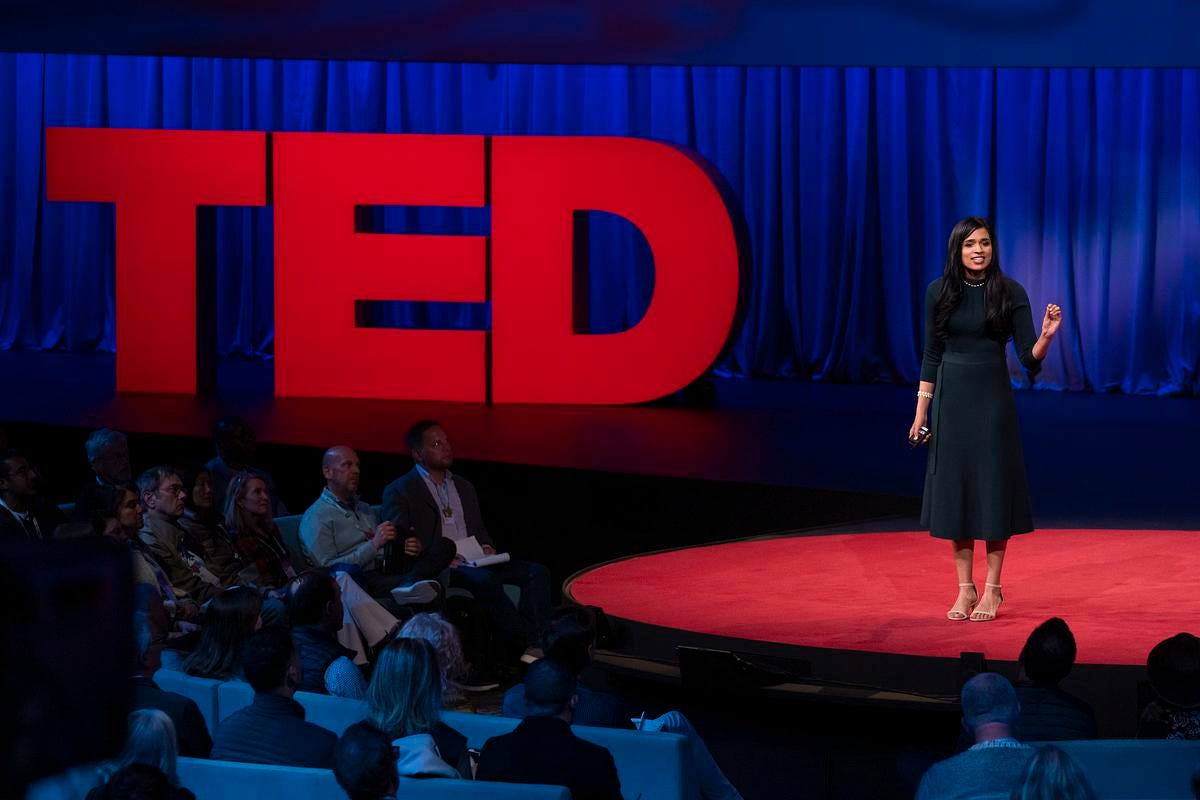
Maya Shankar, Ph.D., is a cognitive scientist and applied behavioral science strategist whose work focuses on how people navigate uncertainty, identity disruption, and transformative change. She is the creator and host of A Slight Change of Plans. Shankar earned her B.A. from Yale University, her doctorate from Oxford University as a Rhodes Scholar, and completed a postdoctoral fellowship in cognitive neuroscience at Stanford University. She previously served as Senior Policy Advisor in the Obama White House, where she founded the White House Behavioral Science Team, later formalized by executive order, and went on to serve as the first Behavioral Science Advisor to the United Nations. Her work has informed policy and practice across health care, education, veterans’ services, and economic mobility, and she has advised organizations including the United Nations and the World Bank. Her work has been featured by The New Yorker, The New York Times, NPR, CBS Mornings, and National Geographic, and her TED Talk, “Why change is so scary—and how to unlock its potential,” has been viewed over two million times.