

America Is Still Becoming
Rainn and an All-Star Panel on what it means to become a more perfect union
The Declaration wasn’t the end of the story. It was the beginning of one.
In a recent essay for The New York Times, Jamelle Bouie reflected on perhaps the most famous sentence in American history:
“We hold these truths to be self-evident, that all men are created equal, that they are endowed by their Creator with certain unalienable Rights, that among these are Life, Liberty and the pursuit of Happiness.”
Those words have become sacred in the American imagination. These days we hear them as a timeless declaration of universal human equality.
But as Bouie points out, that wasn’t quite how Thomas Jefferson originally understood them.
Jefferson’s Declaration was, first and foremost, an argument about political authority—a justification for revolution and self-government. It would take generations of Americans to insist that those words meant more.
No one did so more powerfully than the people who had been excluded from the promise itself.
Again and again, enslaved Black Americans quoted the Declaration back to the nation that had written it.
One petition from 1777 declared:
“Your petitioners apprehend that they have, in common with all other men, a natural and unalienable right to that freedom... bestowed equally on all mankind... They cannot but express their astonishment that every principle from which America has acted... pleads stronger than a thousand arguments in favor of your petitioners.”
Benjamin Banneker would later quote Jefferson’s own words back to him, asking how a man who had proclaimed that “all men are created equal” could reconcile those ideals with slavery.
As Bouie reminds us, it was these voices—and countless others—that transformed the Declaration from a revolutionary manifesto into America’s enduring moral compass.
In other words, America has always been a common endeavor.
Its greatest ideals have never simply been inherited. They’ve been enlarged, challenged, reclaimed, and carried forward by generation after generation of people determined to make the country live up to its own highest aspirations.
And today, on this Fourth of July—the 250th anniversary of the Declaration of Independence—we have a rare opportunity to ask what chapter comes next.
That question brought Rainn to Washington, D.C., last week for a series of conversations exploring America’s future—not only politically, but morally and spiritually.
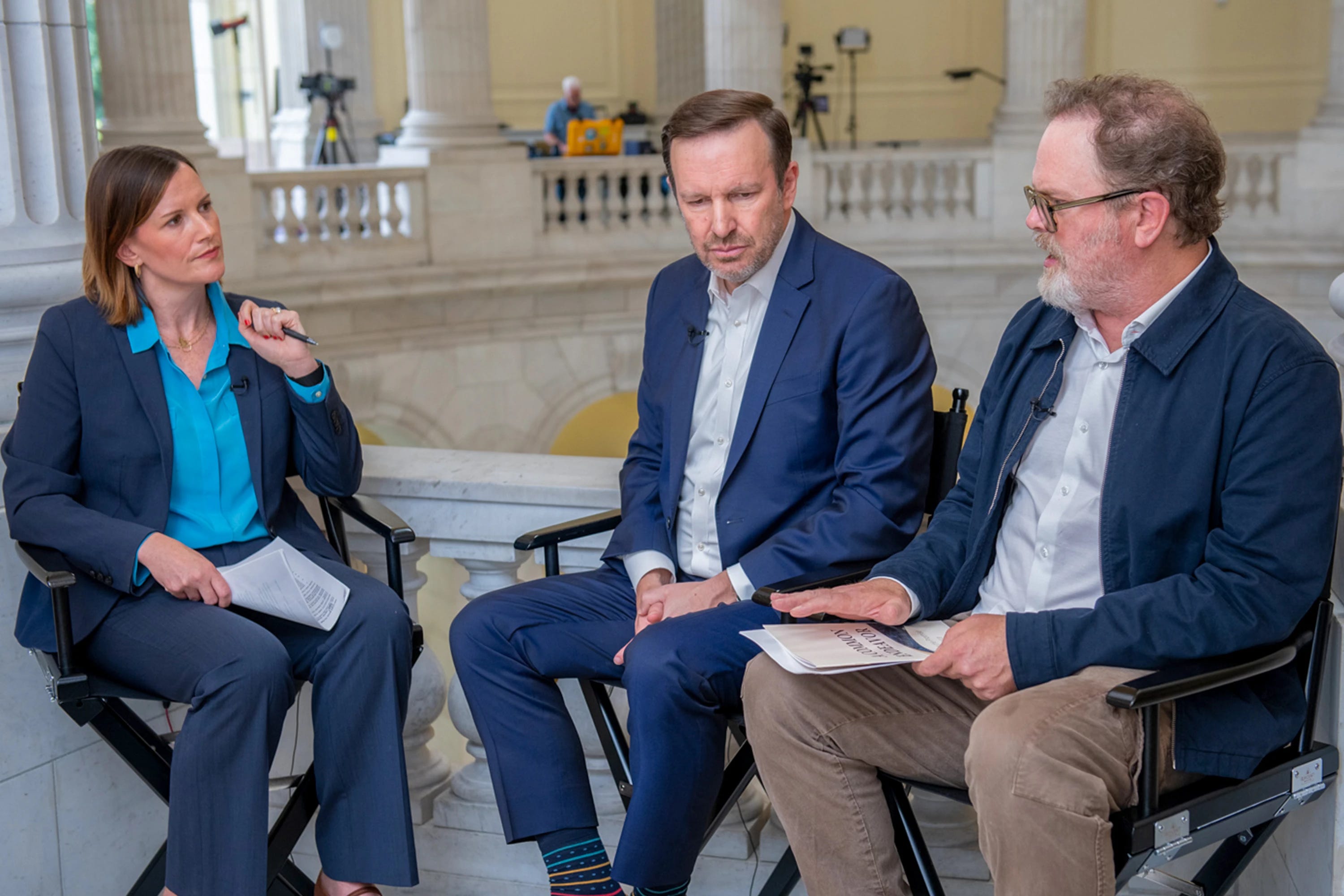
One of those conversations was with Senator Chris Murphy, who reflected on the role government can play in helping people find purpose:
“I think we have to connect more in government about how to invest in the common good and give people access to purpose and meaning... we’re doing our best work when we’re actually thinking about the policies we make and whether they’re actually making people feel spiritually fulfilled every day when they wake up.”
Rainn responded by widening the lens.
“America is at a crisis point, certainly. It’s also at an inflection point... our founders had amazing ideals when they launched this democratic experiment... Let me be really clear about what I mean when I say spirituality... I’m speaking about the common, shared, universal values that we all treasure... compassion and love for one another, service to one another.”
Those ideas became the starting point for a special live edition of the Soul Boom podcast.
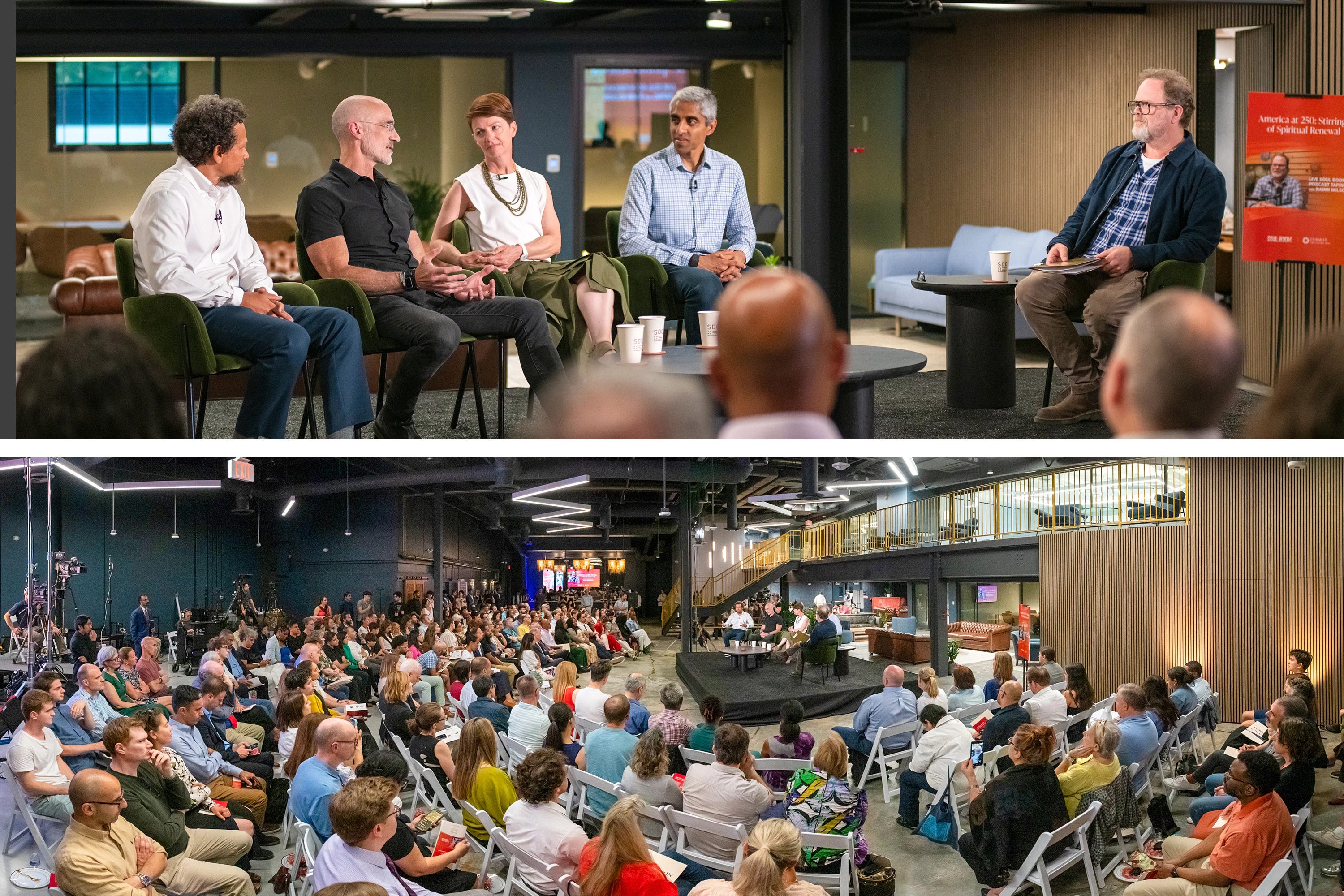
This isn’t our usual one on one kind of interview. Instead, Rainn gathered with an all-star panel to wrestle with one deceptively simple question:
What would America’s spiritual renewal actually look like?
Joining him were returning Soul Boom guests Arthur Brooks and Dr. Vivek Murthy, alongside journalist Amanda Ripley and scholar Derik Smith.
It’s one of the richest conversations we’ve had. Check it out:
While he was in Washington, Rainn also shared A Common Endeavor: Realizing the Promise of America, a new letter from the Bahá’ís of the United States written for the 250th anniversary of the Declaration of Independence.
The letter argues that freedom, equality, and justice are not only political principles but spiritual ones—and that America’s next chapter will depend as much on our capacity for love, trust, courage, and service as on any policy or election.
As a special bonus with today’s Dispatch, we’re sharing the full letter as well.
Two hundred and fifty years after the Declaration, perhaps the most important question isn’t whether America has fulfilled its promise—It’s whether we’re still striving towards a more perfect union.
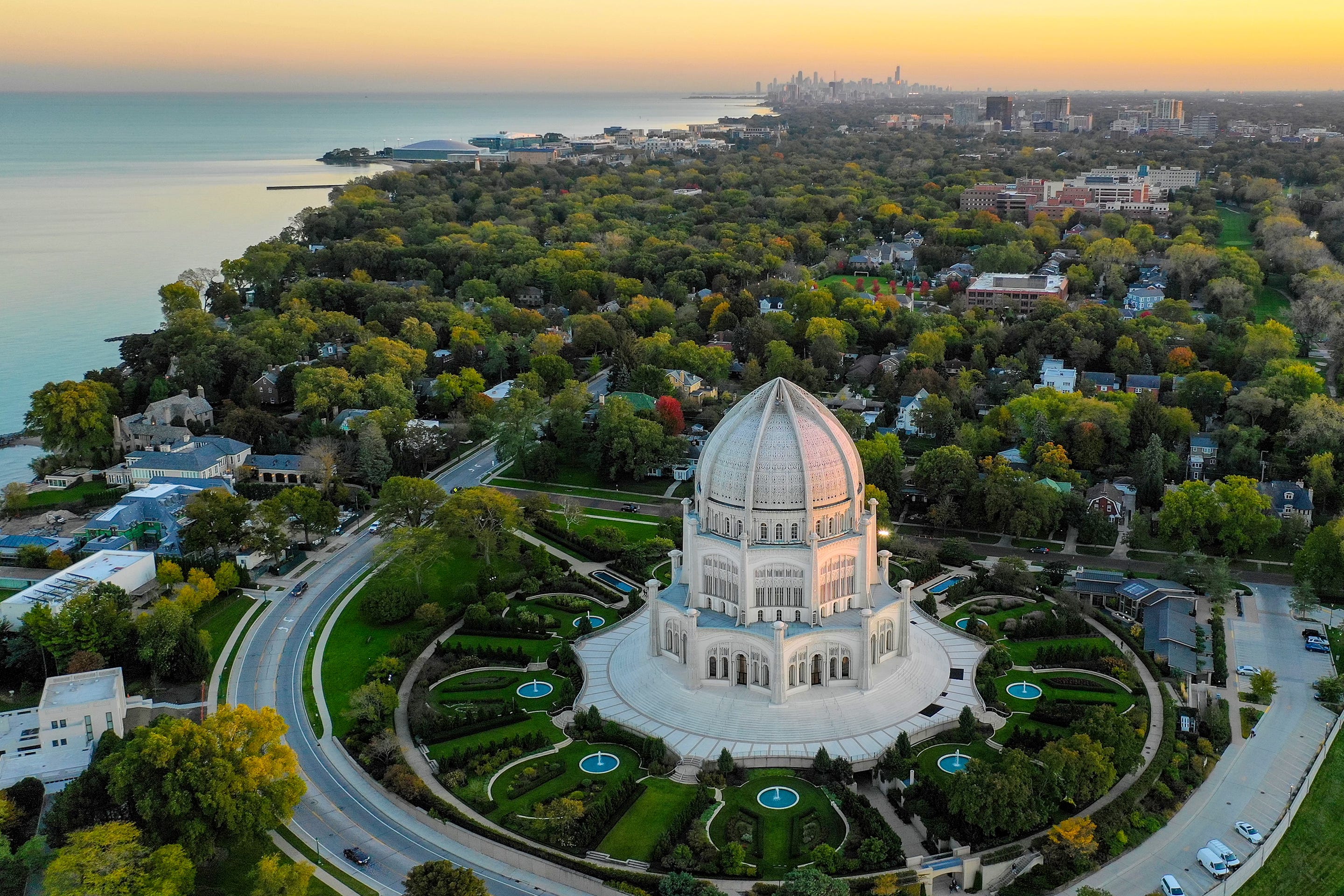
“In this time of challenge, we need spaces where we can pause, reflect, and listen to others with openness and goodwill. We hope this message can inspire such conversations—in homes and neighborhoods, in faith communities and civic settings—so that we can move forward together.”
A Common Endeavor
Realizing the Promise of America
To all who hold the promise of America in their hearts,
The founding of our country was based on ideals, like freedom, equality, and justice, that reflect deep, shared human aspirations. Generations have labored to realize those ideals and to build a more perfect union where all can flourish.
In this common endeavor, we have experienced progress and accomplishments, but also setbacks and crises.
People across the country are reflecting on this history during a critical juncture in the life of our society. Many Americans, exhausted and disillusioned by polarization and conflict, are feeling anger, despair, or apathy. Discourse in the public sphere largely feeds this anxiety, and such narratives often obscure a widespread desire to transcend division. Driven by such desire, individuals of all backgrounds are arising in the service of common aims. Among them are members of the Bahá’í Faith and their collaborators, who are engaged in thousands of grassroots, community-building efforts.
Such experiences inspire the hope that, whatever the turbulence of the current moment, we can together realize our highest convictions. Bahá’ís are eager to contribute, alongside others, to the stirrings of spiritual renewal in the life of this nation.
The Bahá’í sacred scriptures envision a destiny for America that fulfills, and even exceeds, the principles of its founding. These scriptures also recognize the gravity of America’s challenges, and they offer the insight that there is a moral and spiritual dimension to the task of shedding the ills that blight our society. In this view, we can move forward toward America’s high destiny only to the extent that we work together to overcome key spiritual and social maladies, such as excessive materialism, corruption, racism, and the mistreatment and exploitation of vulnerable groups.
Freedom, equality, and justice are, in essence, moral or spiritual principles. They stand alongside other important values like moral courage, trustworthiness, generosity, integrity and, not least, love. We flourish to the extent that we embody such qualities in our individual and collective lives. These principles and values have always been a part of humanity’s spiritual heritage, and they need to find fresh expression in our time.
At the heart of the change required for true prosperity—and a reflection of the nation’s founding principles—is the recognition that all people belong to one human family. Only in unity can we thrive. Yet the principle of oneness is not based on uniformity. Instead, it embraces and nurtures the diverse expression of our common humanity as intended in the phrase e pluribus unum: out of many, one.
Oneness has profound practical implications. According to this principle, prejudices of any kind are a distortion of the human spirit, not its essential nature, and must be overcome. Furthermore, we all deserve to be treated with dignity and the opportunity to develop the talents we possess—for our own benefit and the benefit of others.
So essential is the principle of oneness that we could tell the story of this land as the struggle to apply it fully to social life.
The history of our country is one of great enterprise, including innovations in technology, industry, and commerce. These material achievements have changed our lives but have not yielded shared prosperity. Unless aligned with spiritual and moral principles, material attainments can be as great a source of harm as of good. Our challenge now is to focus innovation, creativity, and effort on the spiritual dimensions of change.
Insights drawn from religion have shown the potential to help us reconcile the moral, spiritual, and material aspects of life. While historical wrongs committed by religious individuals and institutions must be acknowledged, religious faith as a civilizing force has inspired and sustained movements for the common good throughout human history. At its best, religion brings people together with meaning and purpose, illumines the sacredness of every soul, and teaches us to realize our own potential through service to others. It helps us clearly see challenging forces at work around us while strengthening faith in a vision of what we can build. Such understandings can enrich a broad conversation about revitalizing the spirit of our nation among those with secular, spiritual, and religious worldviews.
We all have a part to play in fulfilling the hope of this country. Whatever our background—whether our ancestors were the first inhabitants of this land, or were brought here in forced servitude, or came in search of freedom and opportunity—whatever our age or gender, whatever our circumstances, and wherever we are, we each have a sphere in which we can act.
We can arise in service, expand our circle of concern, seek the harmonization of our interests with the interests of others, and work for mutual benefit. We can learn with others how to put higher truths to practical use in specific contexts.
Young people have a unique contribution to make within this broad, multi-generational effort. When inspired by a sense of possibility and purpose, youth have a remarkable capacity to forge meaningful relationships and contribute to change. In the process, they learn to protect themselves from the harmful forces they face. How, then, can this shared sense of possibility be fostered among them as well as all members of society?
A recognition of the moral and spiritual foundations of collective well-being and progress is now growing. To strengthen that recognition, we need conversations at all levels of society, from the neighborhood to the halls of government, about the shared values that strengthen America’s social fabric.
Conversation is an easily underestimated but vital form of action. The simple act of visiting friends and neighbors, building ties of friendship, and exploring hopes and concerns together can help remedy the isolation and loss of purpose that are increasingly prevalent. Conversations—when carried out with goodwill, fair-mindedness, a desire to learn and, most importantly, with love—can help build community, catalyze action, and facilitate progress.
As the Bahá’í writings observe:
The power to transform the world is effected by love, love originating from the relationship with the divine, love ablaze among members of a community, love extended without restriction to every human being. This divine love... is disseminated by enkindled souls through intimate conversations that create new susceptibilities in human hearts, open minds to moral persuasion, and loosen the hold of biased norms and social systems so that they can gradually take on a new form.
Many groups and organizations are striving for justice and human dignity, for solidarity that can overcome division, and for the empowerment of the downtrodden. Some efforts seek to build upon accomplishments that are worthy of preservation, while others focus on new ways of doing things. The complex endeavor of social evolution requires a range of approaches.
Meaningful change can advance in unassuming settings at the grassroots. Where people are explicitly putting into practice the principle of the oneness of humanity, we have seen that contributors from different religious, racial, ethnic, political, cultural, and economic backgrounds can pursue shared goals. Under such conditions, they consult to bridge differences, reconcile perspectives, and make collective decisions. They are able to take action and learn their way forward.
They do not have all the answers, but they are working on questions that are crucial to our common endeavor, such as:
How do we foster faith in the capacity of all so that everyone’s contributions are sincerely welcomed and encouraged?
How do we build genuine bonds of concern, mutual responsibility, and collaboration that allow people to transcend whatever differences arise as they work together?
How can educational programs nurture a new kind of social actor, one who can see their own well-being in the prosperity of the whole society?
How can a shared devotional spirit help those of different belief systems experience all humanity and all life as an interdependent whole to which we all have moral obligations? How can that spirit reshape our relationships and our stewardship of the land’s resources?
How do we strengthen the fundamental institutions of our society, such as families, schools, and other civic entities, to serve our collective hopes?
Whatever the adversities that lie ahead, the Bahá’í writings offer a hopeful vision for our country: that our varied communities and peoples can live in peace and justice.
The United States is in many ways a microcosm of the world. Our differences are both an inherent challenge and a great strength. While such differences can be conceived as a source of tension and conflict, they can also be a potent source of creativity and resilience.
The work of our nation to harness the power of unity in diversity is a search for new ways of living that can help establish peace and prosperity, both here and across the globe.
This is the promise of America.
Let us not falter now. This trying time can be an inflection point when we see constructive efforts begin to intensify. Let us redeem the incalculable price that generations have paid by pressing forward toward true prosperity for all. With God’s help, let us arise in service and even sacrifice when called. Let us see through our differences and recognize the sincere, fair-minded souls all around us who long to contribute.
Let us join in common endeavor.
Let us draw on the power of love, of justice, of creativity and enterprise.
Together, let us bring about the spiritual renewal that will lead us to the realization of our highest aspirations.

For me, a spiritual renewal in America would be comprised of several things. First, a respect for every individual's own spiritual path; Second, a respect for all living things, not just humanity, but also the earth, all of its natural systems, all it's life forms, animal and vegetable, all of its seasons; Third, a cessation of all labeling (black, white, liberal, conservative, jewish, Christian, gay, straight, and on and on) and the division that is caused by wearing and assigning these labels. I could not agree more with Arthur C. Brooks that all of this begins on the individual level, with personal responsibility, with personal transformation.