

BJ Novak on Why It Never Feels Like Enough
Success, scarcity—and the devil in the details
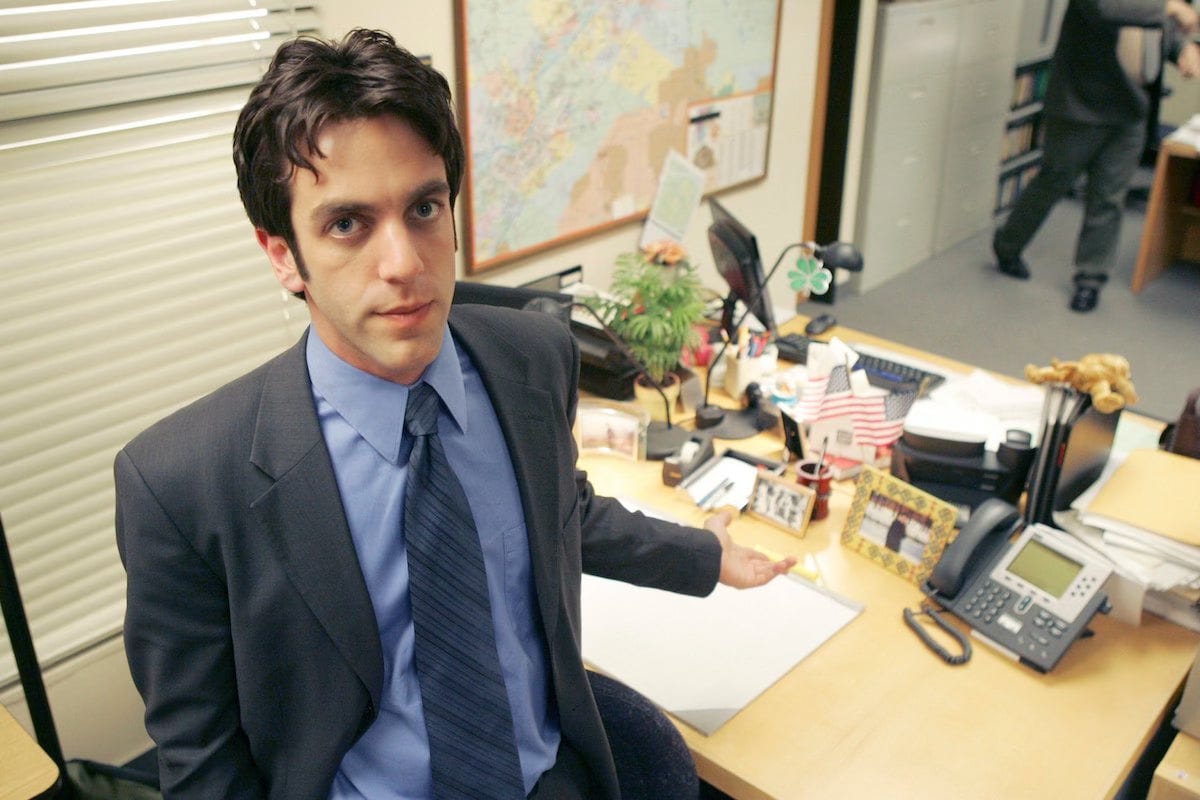
This week on Soul Boom, we’re joined by B. J. Novak. You likely remember him as Ryan from The Office—the temp who climbs the corporate ladder only to fall off it.
BJ was also one of the show’s key writers, shaping its voice from within, and has since built a body of work as an essayist and director that reflects a particular attentiveness to how culture functions beneath the surface.
We’ll let you watch the episode to take in the full conversation — but there was one thread worth examining in this here Dispatch:
Scarcity.
What emerged wasn’t something easily measured, but something that seems to persist even when external conditions change, even when a person’s life would suggest stability or success.
You hear it in passing, in stories that almost feel incidental—the successful person still taking what’s free, still behaving as though there might not be enough later—and it begins to suggest that whatever this is, it isn’t entirely tied to the present. It lingers from earlier phases of life, from years marked by uncertainty or striving, and doesn’t quite recalibrate once things improve.
It remains, shaping how one relates to what one has, and begins to look less like a situation and more like an orientation—a way of moving through the world that can persist even in the presence of abundance.
From there, the conversation shifts toward the idea of testing.
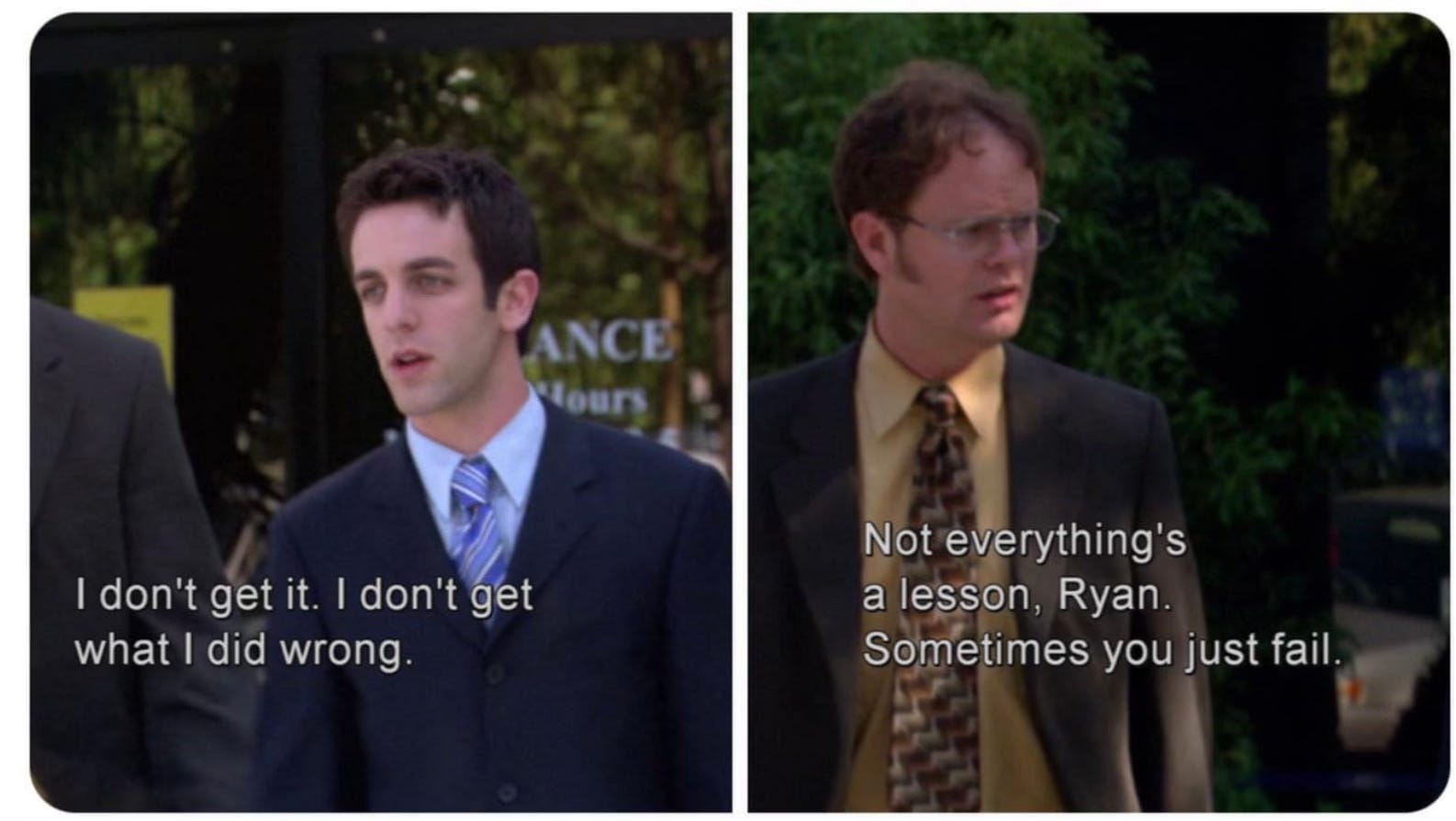
Because when we talk about spiritual tests, most of us think immediately of difficulty—loss, crisis, the moments when something breaks and we’re forced to respond. Rainn reflects on the fire that damaged his home and the stretch that followed, and in looking back, he offers a harsh self-assessment. A D+. Not a collapse, but not the response he might have hoped for. BJ counters with an interesting take — he describes his own life as not having presented him with those kinds of visible tests. And that absence becomes its own test. And that idea is as old as time—that the material benefits of a life of ease can distract. The veil of privilege is the thickest of all.
How does one relate to success, to comfort, to the gradual accumulation of stability?
It’s often said, hardship reveals character. Less obvious is the way ease can do the same. One can be unsettled by loss, but one can also be unsettled by the sense that what has been gained might not last. The same posture—uncertainty, vigilance, a reluctance to fully inhabit the present—can show up in both conditions. Looking at it this way, the distinction between hardship and comfort begins to blur, and the question becomes less about circumstance and more about orientation.
How are we meeting what is in front of us?
Across different spiritual traditions, there is a recurring emphasis on this point. Not on eliminating difficulty or securing comfort, but on cultivating a way of being that can move through both without becoming entirely defined by either.
A great deal of contemporary discourse on spirituality centers on internal regulation—reducing anxiety, finding calm, creating a sense of balance. Meditation apps, mindfulness practices, breathwork, a steady stream of content designed to help us feel a little more grounded.
There is real value in this. But there is also a question that follows. What is it all for?

If the endpoint is simply a more manageable internal state, then something essential may be getting lost. Because much of what spiritual traditions have pointed toward is not only inward but outward, not only about perception but about participation.
About how one shows up for others.
Otherwise, it risks becoming another form of consumption, one more domain in which we optimize the self without necessarily moving beyond it.
This becomes especially relevant when we consider how much of our inner life is shaped by what we take in through screens — and how much time we spend doing so. The stories we watch. The voices we listen to. The steady flow of images and narratives that, over time, begin to define what feels normal, what feels desirable, what feels worth pursuing.
What we attend to, repeatedly, begins to shape us.
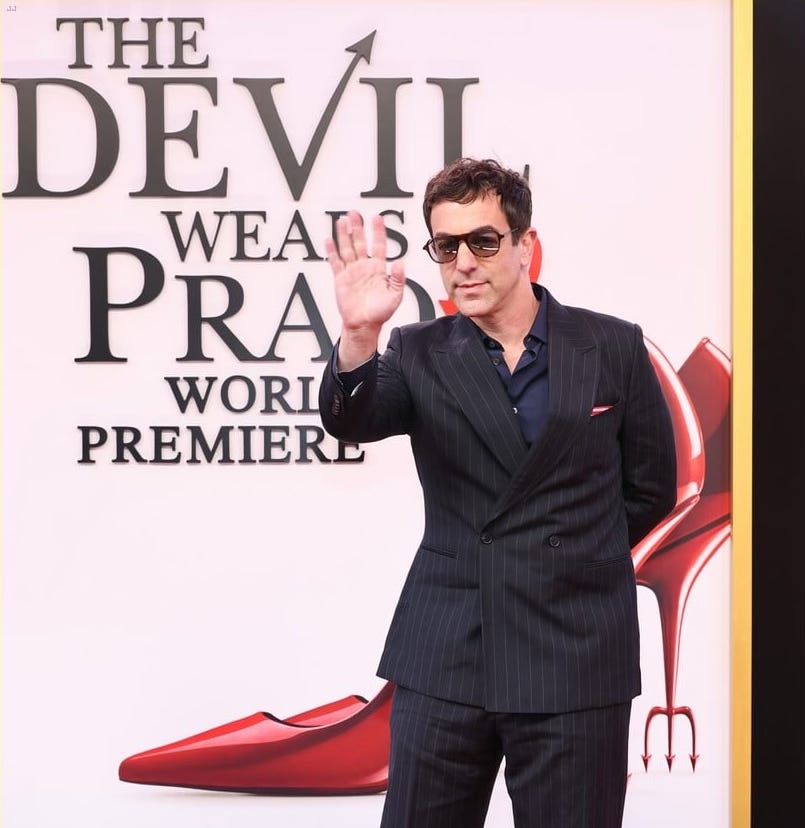
It’s part of what makes it interesting to watch both Rainn and BJ navigate their careers. BJ, for instance, steps into The Devil Wears Prada 2 (out May 1st!) playing a character he himself describes as a “problem” for the world of Runway—someone a little slippery, a little hard to like . And yet there’s an awareness there, a kind of intentionality about the roles he takes on, the stories he participates in. The same is true of Rainn. Neither of them seems interested in making work unconsciously. There’s a sense that what they put into the world matters—not in some heavy-handed, moralizing way, but in the quieter recognition that stories don’t just entertain, they shape the atmosphere we all live and breathe inside of.
It makes us think of something BJ’s dad wrote in an essay for the New York Times:
“Call me old-fashioned, but I’d rather explore the qualities and actions that will inspire future generations. Chances are, they will also inspire me.”
The stories we take in aren’t passive. We shape them and they shape us.
Through the lens of Soul Boom, you begin to see a spiritual principle at work:
Our hearts are mirrors. What we turn them towards, we reflect.
And maybe that’s part of the quiet work here. Because in a sense, we’re all temps—this whole life is less than a fleeting moment.
Soul Boomlets, we’d love to hear your answer to this lingering question:
Wonderful article. Please interview Jen Ward and Marvin Schneider of Jenuine Healing. They have so much to offer the world (JenuineHealing.com)
I’m turning my heart towards the kids that I work with at the local elementary school. As a teacher’s aid, I work with 6th graders on their reading and writing skills. I am continually amazed by their enthusiasm for life, curiosity (so many questions!), and kindness (helping other classmates when they fall down on the playing field at recess). They give me hope that, despite the current geopolitical situation, empathy and compassion do exist. And so, when I start to feel hopeless, I look to the children and let their positive energy surround me.