

Change Your Brain, Change Your Life
Rainn sits down with Dr. Daniel Amen PLUS a look at the spirituality of neuroplasticity!
Season’s Greetings to all you Brainiacs out there 🧠✨
This week on the Soul Boom podcast, Rainn sits down with Dr. Daniel Amen, psychiatrist, brain health specialist, and founder of Amen Clinics.
As Rainn notes early in the conversation, Dr. Amen’s latest book, Change Your Brain, Change Your Pain, may present itself as a work on healing pain—but at a deeper level, it’s really a book about life choices. About how the small, daily decisions we make—what we eat, how we sleep, how we think, how we respond to stress—quietly shape our inner lives, and over time, our outer ones.
That framing brings to mind something ‘Abdu’l-Bahá once said: “Human happiness is founded upon spirituality.” That idea feels deeply Soul Boom-y. And to be clear, this is not about blaming the victim or suggesting that all pain—physical or emotional—is the result of insufficient spirituality. That would be both a gross generalization and unkind. Rather, it points to a relationship between the inner world and the outer world: between what’s happening within us and how life unfolds around us.
Before getting into the mysteries of the brain and its neuroplasticity, it’s worth pausing on a phrase many people have heard, but few have explored deeply: “as above, so below.” The saying comes from ancient wisdom traditions, most famously the Hermetic tradition and the Emerald Tablet , and gestures toward a simple but enduring idea—what we see materially is a reflection of spiritual reality, and vice versa. The implication is that patterns in the larger world are reflected in our inner lives, and that inner patterns, in turn, shape what we experience outwardly. The mind and body are not separate from society or the cosmos; they are smaller expressions of the same underlying dynamics.

Versions of this insight appear across cultures and centuries—from Plato’s philosophy to Sufi mysticism, from Kabbalah to Eastern traditions like Taoism and Ayurveda, and even in modern psychology through Jung’s work on archetypes. Importantly, this idea isn’t about magical thinking or wishful causation. It’s about structural resonance. Inner fragmentation often echoes outward as social fragmentation. Inner coherence tends to express itself as more harmonious relationships and systems. When fear goes unexamined, it shows up not only in personal suffering, but in the institutions and cultures we build. And when healing begins within, it often enables more skillful, compassionate participation in the world.
Throughout the conversation, Rainn and Dr. Amen return to ideas that overlap with positive psychology—a field that studies not just what goes wrong in the human mind, but what helps people flourish. Drawing on thinkers like Martin Seligman, they explore how habits of thought can either lock us into cycles of fear and suffering or help build resilience, hope, and forward motion. The emphasis isn’t on denying pain, but on understanding how our interpretations of pain—and our responses to it—shape the brain over time.
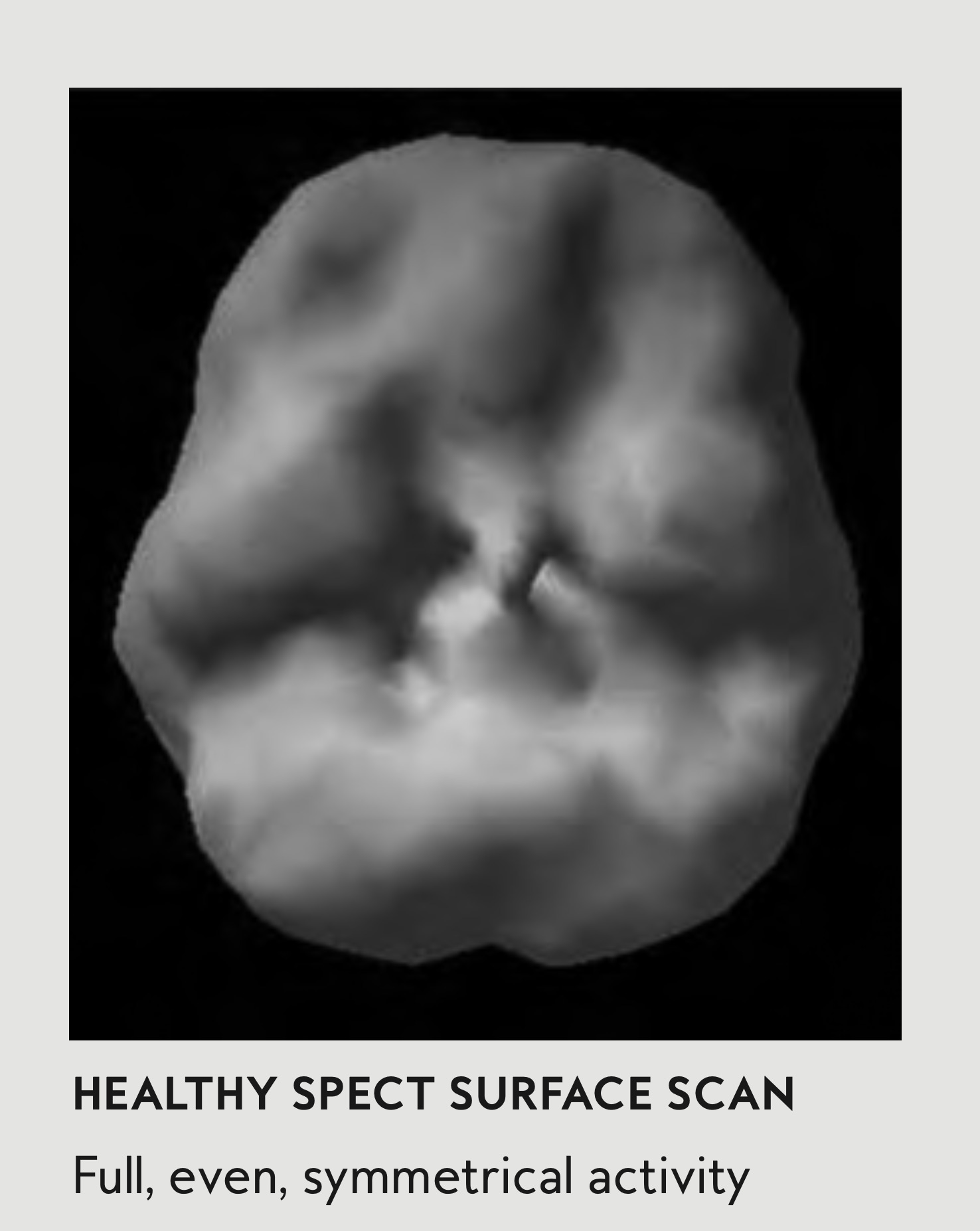
A central (and often debated) part of Dr. Amen’s work involves SPECT brain imaging, which he uses to examine patterns of brain activity and blood flow. His critics rightly point out that SPECT scans are not widely accepted as diagnostic tools in mainstream psychiatry, and that many of his claims are supported more by observational data and clinical outcomes than by large, randomized, double-blind trials. It’s fair to say that evidence on that scale doesn’t exist yet. It’s also fair to acknowledge that randomized, double-blind trials are exceptionally difficult to design in this domain. They are costly, slow, and often ill-suited to complex, individualized interventions that involve multiple variables at once—imaging, lifestyle changes, nutrition, supplements, therapy, and medication adjustments. Blinding is especially challenging when treatments are experiential or behavioral rather than pharmaceutical, and ethical constraints can limit randomization when patients are already suffering or seeking care.
As a result, much of medicine doesn’t advance through one type of evidence alone. Especially when it comes to complex, individualized, whole-person care, knowledge often emerges through converging lines of evidence: clinical experience, mechanistic research, real-world outcomes, and patient-reported change. Reasonable people disagree about where the evidentiary bar should sit—but the broader conversation Dr. Amen is helping to spark around brain health is increasingly difficult to dismiss.
What’s perhaps least controversial—and most widely useful—are the foundations he returns to again and again: caring for the brain through nutrition, sleep, movement, stress regulation, connection, and purposeful living. In a culture that often defaults to pharmaceuticals as the first (and sometimes only) response to suffering, this broader view offers an important counterbalance. Not an either/or—but a wider toolkit for healing.
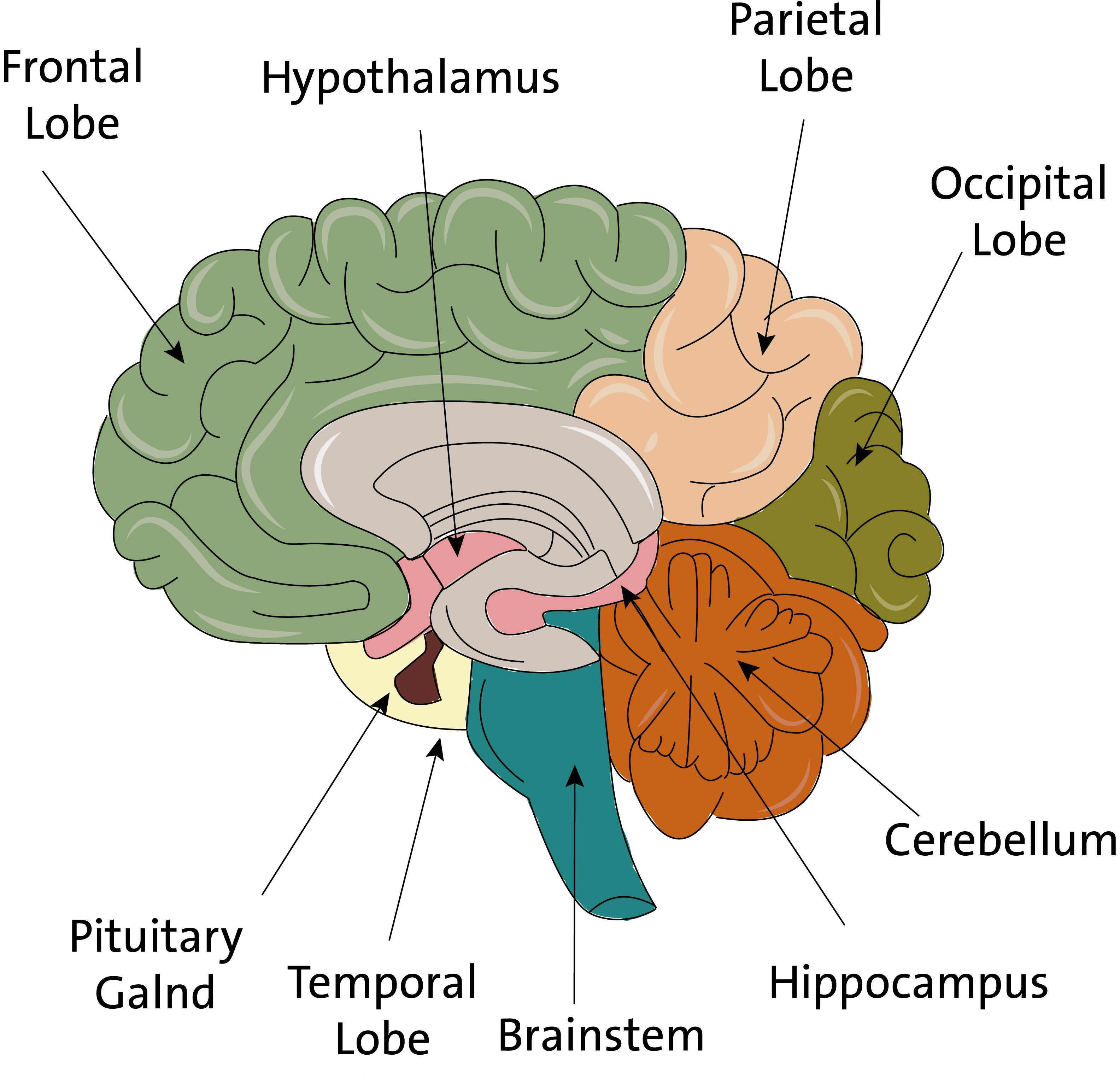
Let’s look at Dr. Amen’s frame through a Soul Boom lens.
What if physical and emotional pain have been approached in ways that unintentionally make them worse? What if familiar responses—more medications, more procedures, more siloed fixes—are aimed at symptoms while missing the deeper pattern underneath?
Dr. Amen’s work starts from a deceptively simple premise: pain isn’t just a body problem or a mind problem. It’s a brain problem. And when attention shifts toward how the brain processes, amplifies, and calms pain, new paths to relief may become visible—often more sustainable, and sometimes less invasive.
One of his core insights is that physical pain and emotional pain don’t travel on separate tracks. In the brain, they overlap. When distress intensifies in one domain, it often spills into the other. This helps explain why chronic physical pain so often comes paired with anxiety or depression—and why emotional distress can make bodily pain feel overwhelming. Treating one without acknowledging the other limits how much healing is possible.
This overlap also helps explain why certain antidepressants and mood-supporting supplements sometimes ease physical pain as well. From Dr. Amen’s perspective, it’s not mysterious—it’s neurological. Shared brain circuits create shared leverage points. After more than forty years of clinical practice, his takeaway is straightforward: when brain health improves, many other aspects of life often improve too, including how pain is experienced.
In Change Your Brain, Change Your Pain, Dr. Amen describes three major brain pathways that shape pain. The lateral pain feeling pathway acts as the brain’s alarm system, signaling when something is wrong—whether that signal comes from a physical injury or an emotional wound. The medial pain suffering pathway layers that signal with fear, despair, and catastrophic thinking. And the descending pain inhibitory pathway functions as a regulator, helping quiet pain when it is strong—and allowing pain to escalate when it is compromised by trauma, inflammation, or unhealthy habits.
Taken together, these pathways help explain why physical and emotional pain don’t just coexist; they can reinforce one another. Left unchecked, this interaction can lock someone into what Dr. Amen calls a self-reinforcing cycle of suffering.
To understand why people get stuck there—and how they get out—Dr. Amen draws on a framework he learned early in medical school: never reduce a person to a diagnosis. Instead, understand them through four intersecting circles. Biology matters: how the brain and body are functioning, and whether key risk factors are undermining them. Psychology matters: thought patterns, trauma, and the stories we tell ourselves. Social context matters too: relationships, stress, isolation, and belonging all shape how pain is felt. And then there’s the spiritual dimension—not religion necessarily, but meaning and purpose. When people lose a sense of why their lives matter, pain often gets louder.
Threaded through all of this is neuroplasticity—the brain’s capacity to change based on repeated experience. Dr. Amen emphasizes that neuroplasticity cuts both ways. Repeated pain, fear, and unhealthy coping can wire the brain for more suffering. He calls this the “Doom Loop.” But the same mechanism makes healing possible. Just as the brain can learn pain, it can learn relief. Interrupt the harmful patterns. Strengthen the healthier ones. Over time, the brain can reorganize toward calm, resilience, and hope—and that’s when it becomes the “Healing Loop”.
That’s the heart of Dr. Amen’s work: pain isn’t imaginary, and it isn’t a personal failure. But neither is it fixed. By caring for the brain across biological, psychological, social, and spiritual dimensions, it may be possible to loosen pain’s grip—and restore not just functioning, but a deeper sense of well-being.
And here’s where things come full circle. Dr. Amen’s work can be read as a modern, neuroscience-grounded expression of that ancient idea: as above, so below—or perhaps we should say: as within, so without. The brain you build shapes the life you experience—and the life you experience reshapes your brain. Inner patterns echo outward. Outer habits feed inward. When one is tended with care, the other often begins to shift as well.
Change your brain, change your pain, change your life. And your soul, too.

Prior to my stroke in the spring of this year, I was having health issues. I prayed for guidance and healing, and I suffered a stroke. What a way to change your lifestyle, right? I survived and feel better than ever. While in rehab, I learned about neuroplasticity........certain brain cells die, but the brain finds a way to reroute. Like a GPS situation......if the first route doesn't produce results, then you try a different one. I believe the brain cells that died (addictions, bad habits, etc.) were necessary for new, healthier ones to emerge. Though I was on a spiritual path before the stroke happened, I have become more enlightened/awakened since the recovery. I consider my stroke to be a miracle. I love this podcast. Thank you Rainn and Dr. Amen!!! Amen, amen, I say to you!!!!
Sleep