

Greetings to all you Earth-loving soul-seekers out there,
This week on the Soul Boom podcast, Rainn sits down with Christiana Figueres, the world-renowned climate leader who helped shepherd the historic Paris Agreement—a rare moment when nearly every nation on Earth agreed to act, together, on behalf of our shared future.
If her name doesn’t immediately ring a bell, you could be forgiven—not because her impact is small, but because it belongs to a different kind of fame. Not the flash of pop stardom, but the quieter, steadier influence of someone working behind the scenes to bend the arc of history. In the world of climate diplomacy, however, she is a beloved, iconic figure.
A Costa Rican diplomat by training, Christiana brought an anthropologist’s eye to global negotiations—educated at Swarthmore and the London School of Economics, she learned early how deeply human systems, stories, and relationships shape what’s possible. Over decades, she rose through the ranks of international climate work, ultimately leading the UN climate process at a moment when it seemed broken beyond repair. By 2010, when she took the helm of the UN climate process, things were not looking great. The Copenhagen talks had collapsed. Trust was thin. Hope was thinner. The prevailing global mood felt like we were approaching the gates of a planetary inferno: abandon hope, all ye who enter here.
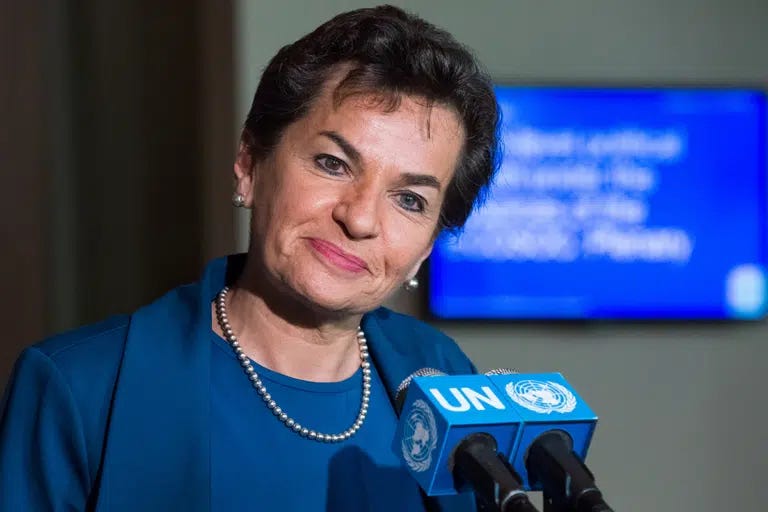
And yet—somehow—five years later, nearly every nation on Earth signed onto a shared plan in the form of the Paris Agreement — an unprecedented Agreement in which every signatory agreed to lower its emissions.
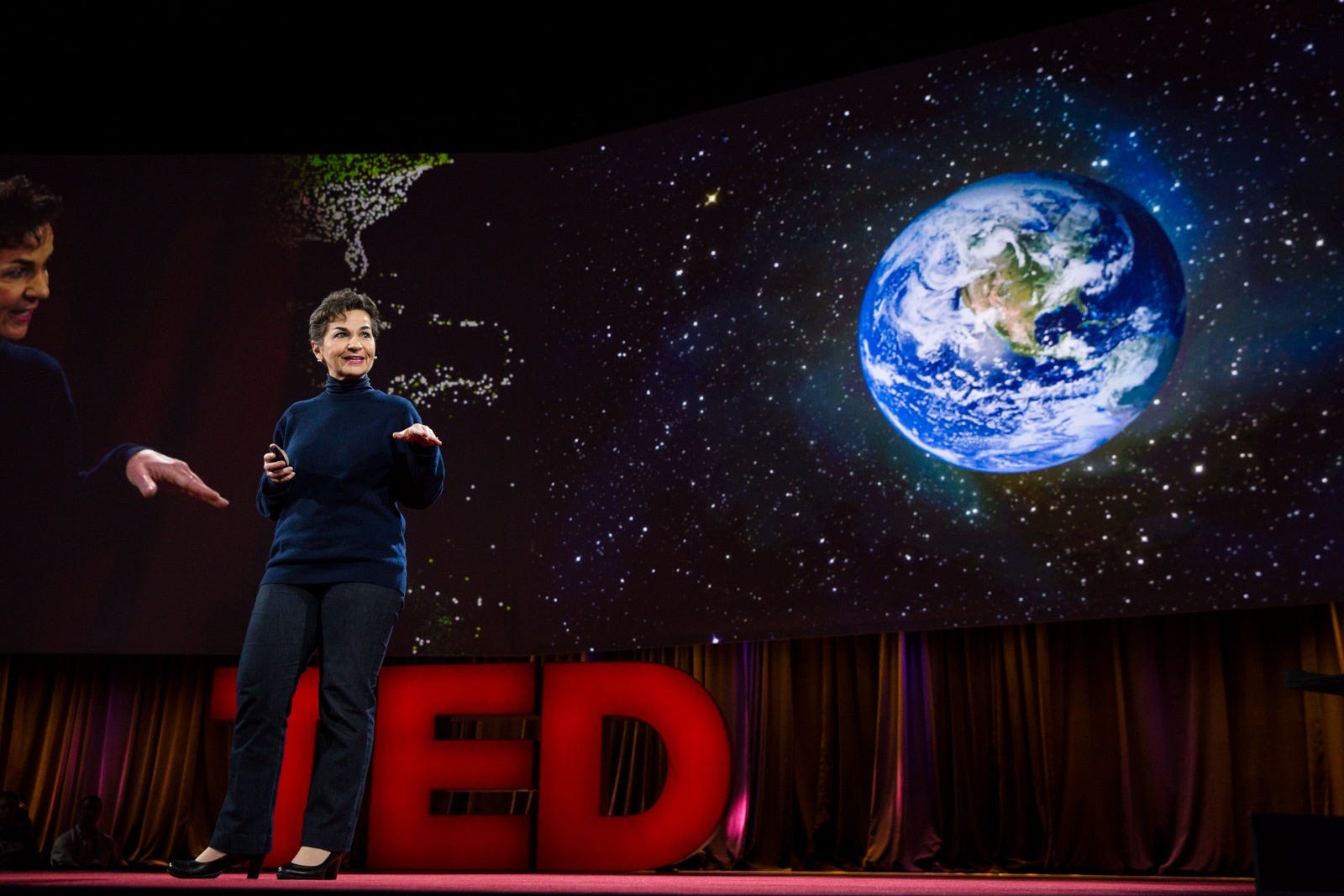
As Christiana tells Rainn, one of the great secrets to the agreement’s success wasn’t just intellect or strategy—it was something she calls stubborn optimism.
An idea so powerful she later gave a widely viewed TED Talk on it, stubborn optimism is not about wishful thinking or blind hope. It is the discipline of believing that change is possible—even when the evidence suggests otherwise—and acting accordingly.
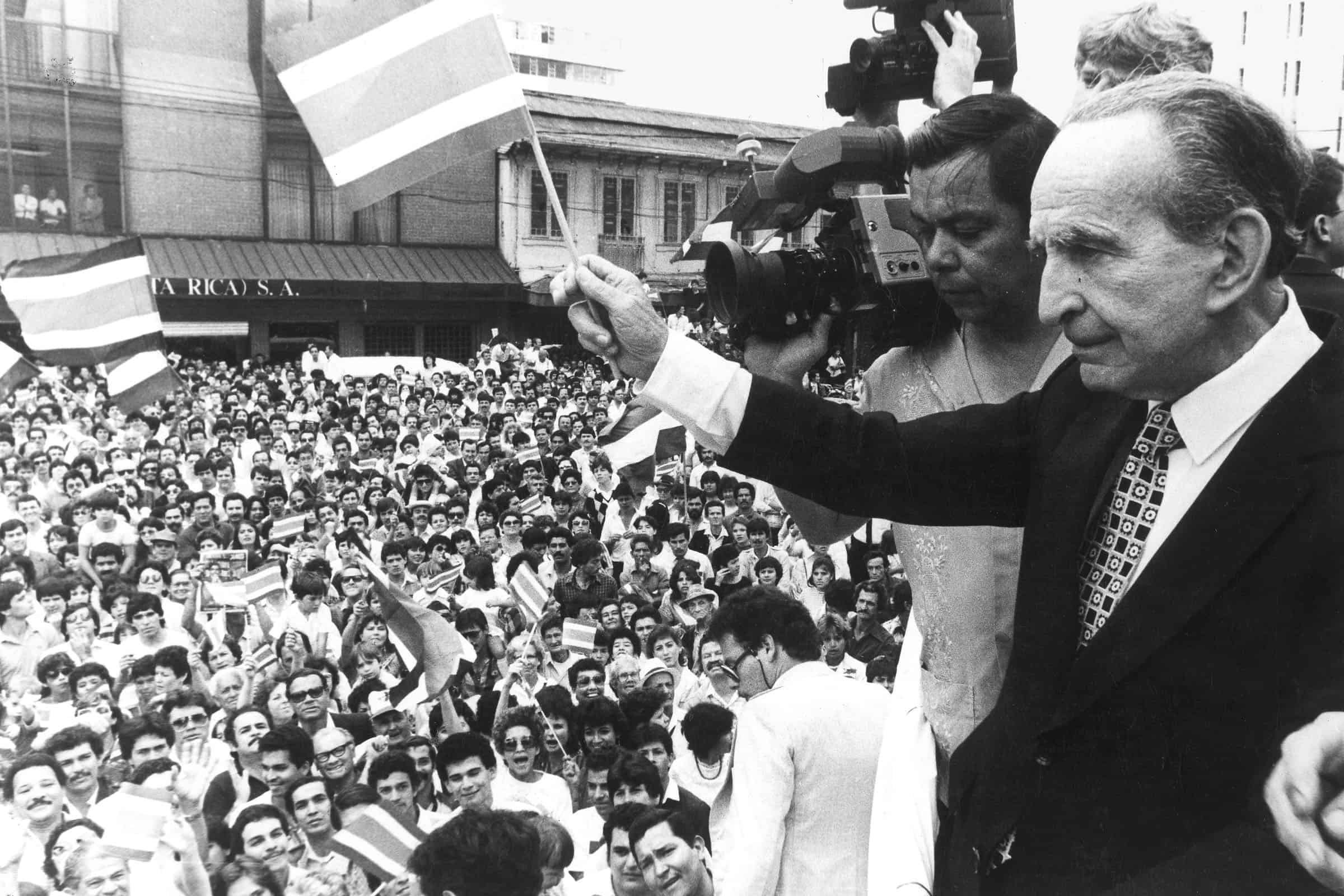
Christiana traces this mindset back to her father, José Figueres Ferrer, a towering figure in Costa Rican history. In 1948, after a disputed election plunged the country into crisis, he helped lead a revolution, defeated government forces, and then—remarkably—abolished the nation’s military altogether, redirecting its resources toward education, healthcare, and human development. To this day, Costa Rica remains one of the few countries in the world without a standing army.
But as Christiana shares in her conversation with Rainn, often the brightest lights cast the longest shadows.
She recalls, as a child, watching her father give an interview and listening as he was asked how many children he had. His answer: over a million—that is, the population of the people of Costa Rica. In that moment, she understood something that would take years to fully process: that he saw himself as a father to a nation, but not always to his own children.
Those early wounds stayed with her. Even after her extraordinary achievements, even as a devoted mother herself, she found that success did not quiet the deeper questions within. As she tells Rainn, eventually, she reached a breaking point—one that led her inward, toward a dimension of life she had not previously explored in any depth: the spiritual.
What followed was not a departure from her work, but a transformation of it.
Where she had once focused primarily on systems and structures, she began to see more clearly the inner dimensions of change—the mindsets, the beliefs, the unseen forces that shape human behavior at scale. The outer work of climate action, she realized, cannot be separated from the inner work of human awakening.
It’s a lesson worth holding on to, even as the nations of the world fall short of their 2015 Agreement, and the biggest stakeholder of all has pulled out of it — this against the backdrop of so many accumulating and interlocking planetary problems that some have dubbed our era the Age of the Polycrisis.
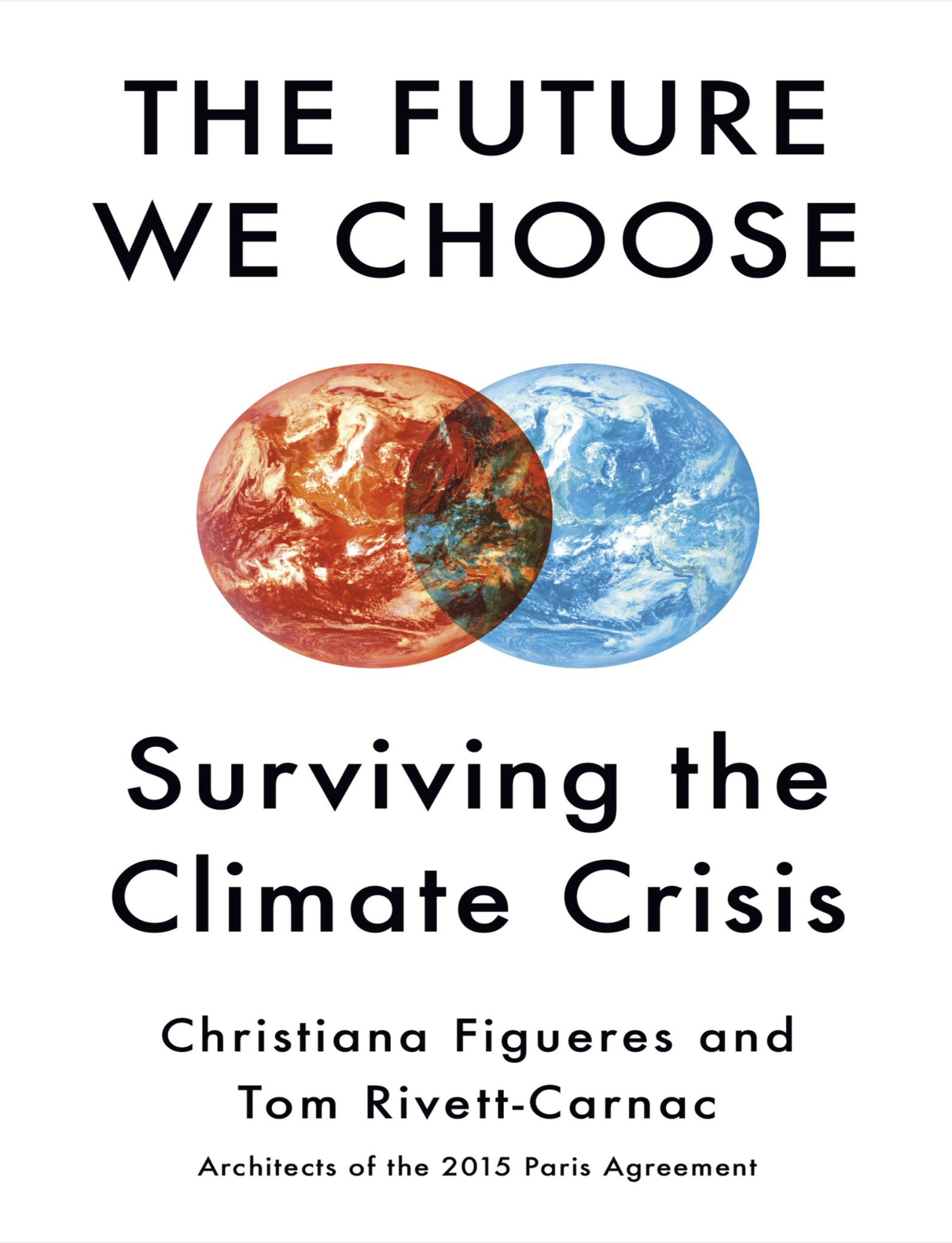
You can hear her reflect on this journey—and what it means for all of us—in Christiana’s conversation with Rainn. And on that note, to accompany this episode, we’re sharing an excerpt from the book she co-authored, The Future We Choose—a work that echoes the central theme of her TED Talk: optimism is not the outcome for things going well. Optimism is the necessary input we need to act courageously when they are not.
Stubborn Optimism
Excerpted from The Future We Choose: Surviving the Climate Crisis
By Christiana Figueres and Tom Rivett-Carnac
Twenty-five hundred years ago, Siddhartha Gautama, the man who became known as the Buddha, understood optimism. He said many times that a brightness of mind was both the final goal of the path of enlightenment and also the first step. A bright mind is how you proceed. Without it, you can’t make progress.
The Buddha also understood that we are not subject to our attitudes in a passive way but are active participants in creating them. Neuroscience has now confirmed this. It does not matter if our natural tendency is to see things with optimism or with pessimism. At this point in history we have a responsibility to do what is necessary, and for most of us that will involve some deliberate reprogramming of our minds.
Psychological research has shown that attitudes can be transformed by first identifying our thought patterns, then deliberately cultivating a more constructive approach. The practice involves becoming aware of these patterns, drawing out the unconscious assumptions, and challenging them when they don’t serve you.
It’s not complicated, but neither is it easy. Essentially, we all have inbuilt reactions to adverse things that happen around us. From the latest alarming report on climate change to missing the bus, we have a learned response to all phenomena that we encounter in life, and those learned reactions dictate how we respond to a particular situation. When it comes to climate change, the vast majority of us have a learned reaction of helplessness. We see the direction the world is headed, and we throw up our hands. Yes, we think, it’s terrible, but it’s so complex and so big and so overwhelming. We can’t do anything to stop it.
This learned reaction is not only untrue, it’s become fundamentally irresponsible. If you want to help address climate change, you have to teach yourself a different response.
You can do it. You can switch your focus, and you will be stunned by the impact such a shift can create. You don’t need to have all the answers, and you certainly don’t need to hide from the truth, nor should you. When you are faced with the hard realities, look at them with clarity, but also know that you are incredibly lucky to be alive at a time when you can make a transformative difference to the future of all life on earth.
You are not powerless. In fact, your every action is suffused with meaning, and you are part of the greatest chapter of human achievement in history. Make this your mental mantra. Take notice of how your mind tries to insist on your helplessness in the face of the challenge and refuses to accept it. Notice it, and refute it. It will not take long for your thought patterns to change.
When your mind tells you that it is too late to make a difference, remember that every fraction of a degree of extra warming makes a big difference, and therefore any reduction in emissions lessens the burden on the future.
When your mind tells you that this is all too depressing to deal with and that it is better to focus on the things you can directly affect, remind yourself that mobilizing for big generational challenges can be thrilling and can imbue your life with meaning and connection.
When your mind tells you that it will be impossible for the world to lighten its dependence on fossil fuels, remember that already more than 50 percent of the energy in the UK comes from clean power,² that Costa Rica is 100 percent clean,³ and that California has a plan to get to 100 percent clean, including cars and trucks, by the time today’s toddlers have finished college.
When your mind tells you that the problem is the broken political system and we can’t fix that so there is no point in doing anything, remind yourself that political systems are still responsive to the views of people, and that throughout history people have successfully overcome extraordinary odds to achieve political change.
And when your mind tells you that you are just one person, too small to make a difference, so why bother, you can remind yourself that tipping points are nonlinear. We don’t know what is going to make the difference, but we know that in the end systems do shift and all the little actions add up to a new world. Every time you make an individual choice to be a responsible custodian of this beautiful Earth, you contribute toward major transformations.
You may not be religious or spiritually inclined, but consider the lot of the stonemason in medieval Europe building one of the great cathedrals. He could have chosen to throw down his tools because he was not going to personally finish the entire cathedral. Instead, he worked patiently and carefully on his one piece, knowing he was part of a great collective endeavor that would lift the hearts and minds of generations. That is optimism, and cultivating it will not only be a crucial step to advancing our human story, it will also improve your life today.
Václav Havel aptly described optimism as “a state of mind, not a state of the world.” Three characteristics are generally agreed upon as essential to making this mindset transformative: the intention to see beyond the immediate horizon, the comfort with uncertainty about the final outcome, and the commitment that is fostered by that mindset.
To be optimistic, you must acknowledge the bad news that is all too readily available in scientific reports, your newsfeed, your Twitter account, and kitchen table conversations bemoaning our current state of affairs. More difficult, but necessary for any degree of change to take place, is to recognize the adversities and still be able to see that a different future is not only possible but is already tiptoeing into our daily lives. Without denying the bad news, you must make a point of focusing on all the good news regarding climate change, such as the constantly dropping prices of renewables, an increasing number of countries taking on net-zero-emissions targets by 2050 or before, the multiple cities banning internal combustion vehicles, and the rising levels of capital shifting from the old to the new economy. None of this is happening yet at the necessary scale, but it is happening. Optimism is about being able to intentionally identify and prescribe the desired future so as to actively pull it closer.
It is always easier to cling to certainty than it is to work for something because it is right and good, regardless of whether it currently stands a decent chance of success. All the measures to address climate change still require further maturation; none guarantee ultimate success. We don’t know which renewables, if any, will predominate, or which are more likely to scale quickly. Problems with the batteries of electric vehicles (weight, cost, recycling) must still be solved, and charging networks still require substantial expansion to succeed. Financial instruments must more effectively manage the risks of new technologies. Market models that shift us from single ownership of homes and cars to shared ownership must gather steam and make peace with regulation.
When you look at the future broadly instead of narrowly, you see that you must take these uncertainties in stride, or you will stay stuck in the knowns of the past. You have to be willing to risk mistakes, delays, and disappointments, or you will be at the mercy of only the tried and true, to your ultimate peril.
This mindset is all the more important once you realize that the habits, practices, and technologies of the past will lead us only to ecological demise and human suffering. Viewing our reality with optimism means recognizing that another future is possible, not promised. In the face of climate change, we all have to be optimistic, not because success is guaranteed but because failure is unthinkable.
Optimism empowers you; it drives your desire to engage, to contribute, to make a difference. It makes you jump out of bed in the morning because you feel challenged and hopeful at the same time. It calls you to that which is emerging and makes you want to be an active part of change. Rebecca Solnit puts it well: “Hope is an ax you break down doors with in an emergency; ...hope should shove you out the door, because it will take everything you have to steer the future away from endless war, from the annihilation of the earth’s treasures and the grinding down of the poor and marginal....To hope is to give yourself to the future, and that commitment to the future makes the present inhabitable.”⁶
In other words, optimism is the force that enables you to create a new reality.
Optimism is not the result of achieving a task we have set for ourselves. That is a celebration. Optimism is the necessary input to meeting a challenge.
Optimism is about having steadfast confidence in our ability to solve big challenges. It is about making the choice to tenaciously work to make the current reality better.
Optimism is about actively proving, through every decision and every action, that we are capable of designing a better future.
From the darkness of an Alabama jail, Martin Luther King, Jr., kept calling for the realization of a deeply held dream, no matter how bleak its prospects. Many others have done the same throughout history: John F. Kennedy refusing to accept that nuclear war was inevitable. Gandhi marching to the ocean to collect forbidden salt.
In all these cases, key people believed that a better world was possible, and they were willing to fight for it. They didn’t ignore difficult evidence or present things in a way that wasn’t true. Instead they faced reality with a fierce belief that change could happen, however impossible it might have seemed at the moment.
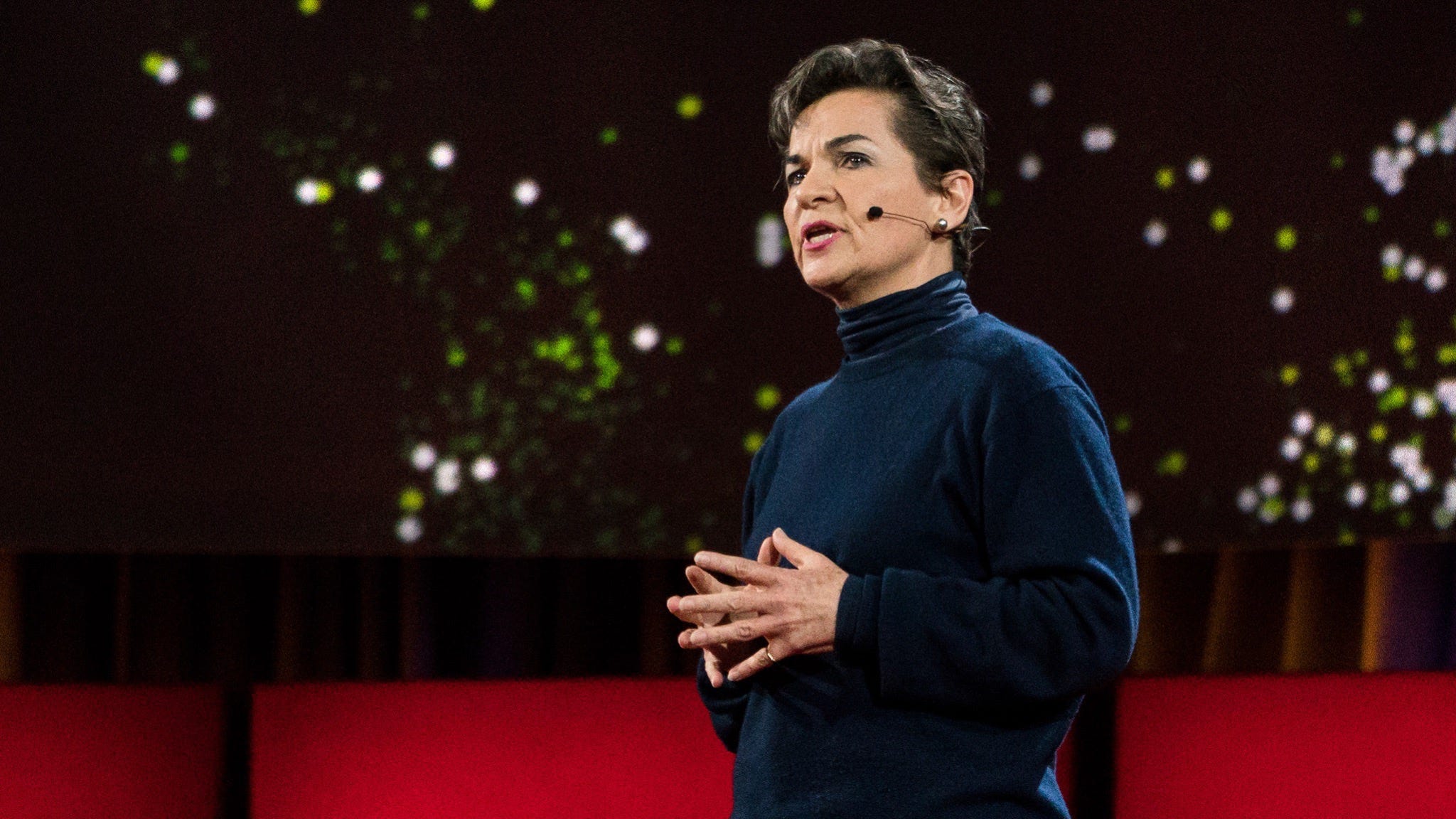
Christiana Figueres is a true powerhouse in the movement for a healthier planet. As the Executive Secretary of the UN Framework Convention on Climate Change from 2010 to 2016, she famously led the monumental diplomatic effort that secured the historic 2015 Paris Agreement. In an extraordinary feat of collective intention, she united 195 nations—each bringing vastly different perspectives, circumstances, and timelines—to rally together in service of humanity’s future and our hurting Earth.
Today, Christiana continues to inject fierce optimism into the climate conversation. She is a Founding Partner of the organization Global Optimism, the co-host of the hit climate podcast Outrage + Optimism, and the co-author of The Future We Choose: The Stubborn Optimist’s Guide to the Climate Crisis (written alongside Tom Rivett-Carnac).

Stubborn optimism first makes me think of the famous Loren Eiseley story, "The Star Thrower," (https://www.eiseley.org/Star_Thrower_Cook.pdf), and second, it makes me think of the program in which I participate as a volunteer Conservation Assistant with the South Carolina Aquarium. Our project, dubbed the Litter Journal, asks litter cleanup volunteers to not only collect litter from roadsides, river banks, beaches, and woodlands, but also to describe each piece of litter by use of a data form, and enter it into a public access database. The LJ began with only a few volunteer members and a few data points, but it has grown to over 3,100 participants who have documented nearly 4 and a half million data points. To keep doing this over the past ten years requires that we believe, as Richard Dreyfuss famously states in "Close Encounters of the Third Kind," "THIS MEANS SOMETHING. The data has actually been used throughout the state of South Carolina to present solid numbers to support single use plastic bans, balloon bans, bans on smoking on beaches, and more, as well as to test those bans to see how well they are working. Litter documentation projects like ours are not alone, and in fact they are only one example of Citizen Science and the power of the average citizen to take the time to observe and collect data on a variety of topics, for the use of scientists and decision makers in finding a way to a cleaner and healthier planet. I'm not likely to start a big movement, but I am certainly out there collecting litter and documenting it. In fact, over 1,750 hours of it at last count. Like my colleagues I am stubborn. We have to believe that everything that we do makes a difference, and that THIS MEANS SOMETHING.
Love this. Inner transformation for habitat restoration is my motto! It starts from the inside out. Having the right moral compass and attitude to enact lasting change for the betterment of all. We are nature.