

Greetings to all you Soul Prospectors—
This week on Soul Boom, Rainn sits down with social psychologist David DeSteno for a conversation about religion, ritual, and what actually shapes our moral lives.
At the center of this dialogue is a provocative question: as traditional religion declines, what happens to the moral architecture it once quietly supported? Are awe, gratitude, and compassion merely nice feelings — or were they the hidden engines beneath faith communities all along? Rainn and David explore whether science is now rediscovering what spiritual traditions have practiced for centuries — and whether we can cultivate virtue intentionally in a culture that no longer shares a common creed. It’s not a debate. It’s an excavation. And it leaves us wondering what replaces the cathedral when the scaffolding comes down.
David suggests that when it comes to religion, our beloved “-isms” — theism, deism, atheism — often become intellectual jerseys we wear onto the field. They help us identify our team. But they can also shrink the conversation. Even atheism, he notes, rests on a kind of faith — faith in scientific explanation, faith in probability, faith that what cannot be measured cannot be known. And religious belief, too, has evolved over centuries to coexist with scientific discovery. The Dalai Lama funds neuroscience research. The Catholic Church embraces metaphorical readings of Genesis. Certainty, on any side, turns out to be more fragile than we admit.
So DeSteno invites us — not to abandon our beliefs — but to gently set them aside for a moment.
Instead of asking Does God exist? he asks a different question: Do these practices work?
Do rituals change how we feel? Do they increase compassion? Do they help us endure loss? Do they strengthen bonds? Do they help us persevere? And perhaps, most importantly, do they help us become better people?
You don’t need to understand microchips to use a smartphone. And, he argues, you don’t need to solve the metaphysics of the universe to benefit from spiritual technologies.
Rituals, across cultures, have been “debugged” for thousands of years. They mark moments as sacred. They focus attention. They regulate emotion. They bind communities. Science is now beginning to measure what ancient traditions have long practiced: that structured acts — even simple ones — can dramatically alter behavior and self-control. The question isn’t whether they’re religious. The question is whether they help humans flourish.
He calls this posture “religioprospecting.” What if we approached the world’s spiritual traditions not as rival truth-claims, but as vast archives of tested psychological tools?
David isn’t a blind apologist for religion in all forms. He’s not suggesting that religion is always good. Like any powerful technology, it can wound or heal. But if more than 80 percent of humanity still draws from these traditions, perhaps there’s something in the toolbox worth examining. And at this point, it should be pretty clear why Dave’s take is very Soul Boom-adjacent.
It’s about learning which practices make us more connected, more compassionate, more awake. But we’ll let Dave speak for himself—below is an adapted excerpt from Dave’s latest brilliant book.
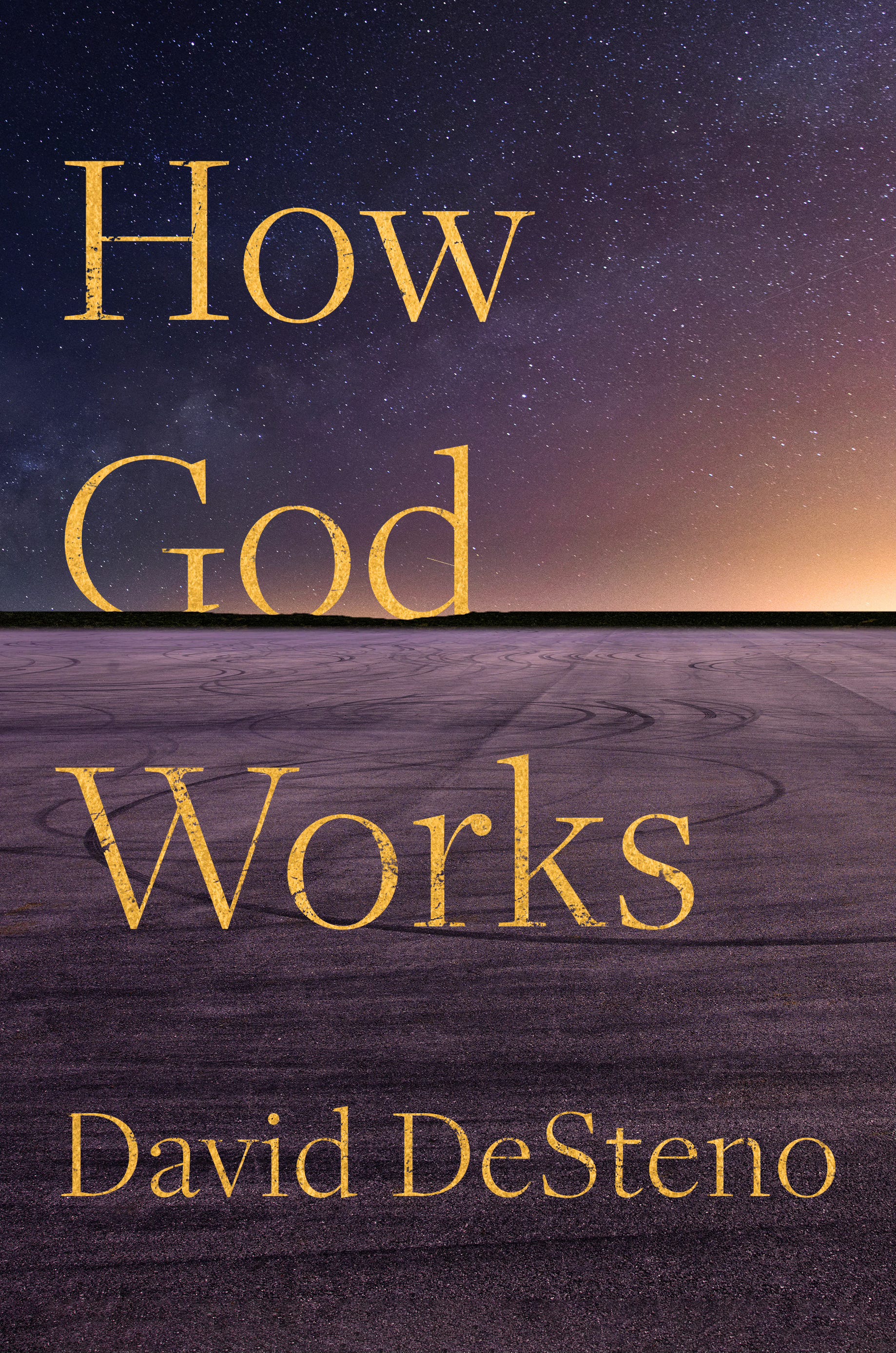
The Journey Ahead
Adapted from How God Works: The Science Behind the Benefits of Religion
By David DeSteno
How do you raise a child to be a good person? What are your responsibilities to your family, your friends, and your community? How do you cope with a serious illness? Can you find someone to love and, if you do, how do you go on when they’re gone? How do you find joy and meaning in life—especially in difficult times—and how do you make sense of your life’s inevitable end?
These are the questions that keep people up at night. They strike at the heart of what it means to be human. And so they keep me up at night too. Not only because I’m trying to figure out, like millions of others, how to live a good life. But also because for the past thirty years my career has focused on uncovering ways to help people become more moral, more compassionate, and more resilient as they walk the road of life.
That might be surprising, as I’m not a priest, therapist, or life coach. I’m a research scientist. I conduct psychological experiments. And few people would expect to find the meaning of life through scientific investigation and lab work.
How God Works
For millennia, most people have turned to priests, ministers, rabbis, and imams to help them deal with grief and loss, birth and death, morality and meaning. And many still turn to a traditional faith or seek out new modes of spirituality to address the challenges and opportunities that life presents.
But over the past few decades, science has started finding ways to help people deal with these issues too. Psychologists like me study things like generosity, empathy, resilience, and forgiveness. And as scientists learn more about what helps foster these feelings and behaviors, we can also suggest practical steps that people can take to improve their lives.
This data-driven approach may seem at odds with religion. Indeed, even though I was raised Catholic, for most of my adult life, I didn’t pay religion much heed. Like many scientists, I assumed it was irrelevant to my work.
Yet, over the years, as I continued to scientifically study the questions that fascinated me—questions about how to improve the human condition—I was surprised that many of the answers I found aligned with religious ideas. Even more surprising to me was that certain aspects of religious practices, even when removed from their spiritual settings, had a profound impact on people’s minds.
My research team found, for example, that giving thanks to one person (or to God) made people more honest and generous to others—not only to those they cared about but also to strangers. We saw that just a few weeks of meditation made people more compassionate—more willing to jump out of their seats to aid others in pain and to resist lashing out at people who might otherwise provoke them to violence. To our surprise, we found that even basic parts of many religious rituals, like moving or singing together, made people feel more connected and committed to one another.
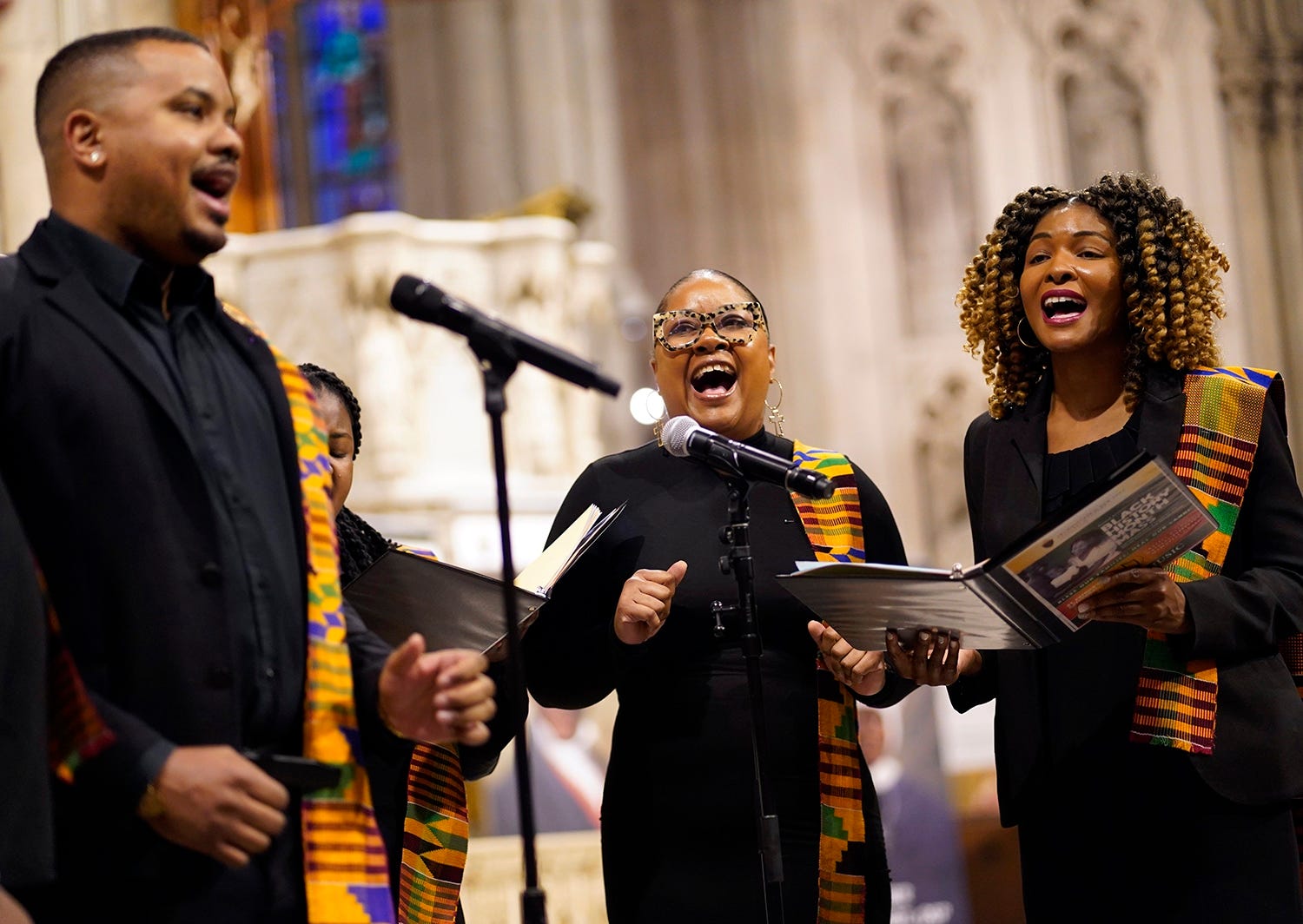
Other researchers have discovered that religious practices can lessen anxiety, reduce depression, and even increase physical health. In fact, much of what psychologists and neuroscientists were finding about how to change people’s beliefs, feelings, and behaviors— how to support them when they grieve, how to help them find connection and happiness—seemed to echo ideas and techniques that religions have been using for thousands of years. To my growing curiosity, I realized that we scientists were “discovering” many things that others had realized and implemented long ago.
That’s when it dawned on me: we were going about this in the wrong way. I realized that the surprise my colleagues and I felt when we saw evidence of religion’s benefits was a sign of our hubris—born of a common notion among scientists: all of religion was superstition and, therefore, could have little practical benefit. Yet, as I learned, spiritual leaders often understood—in ways that we can now scientifically confirm—how to help people live better. Social scientists are the new kids on the block.

Ironically, around the time I started having these thoughts, a larger cultural battle between science and religion was again heating up. Fundamentalist faiths were casting science as a misguided or even malevolent source of information. Prominent scientists were arguing the reverse: religion wasn’t only wrong, it was dangerous. The New Atheist movement, led by eminent thinkers like Richard Dawkins, Daniel Dennett, Steven Pinker, and Sam Harris, cast religion almost as a plague on the enlightened mind.
But when I looked at the results of my studies and those of other researchers, I saw a more nuanced relationship between science and religion. I saw two approaches to understanding how to improve people’s lives that frequently complemented each other.
Don’t get me wrong. I firmly believe that the scientific method is a wonder. It’s a framework that offers one of the best ways to test ideas about how the world works. But when it comes to thinking about how to help people through life’s travails, we scientists shouldn’t be starting from scratch. Just as ancient doesn’t always mean wise, neither does it always mean naïve.
I believe this view makes intuitive sense. When it comes to managing the human experience, it would be strange if thousands of years of religious thought didn’t have much to offer. As I said, people have long turned to spiritual leaders and religious communities for guidance about how to live well. And even in our increasingly secular era, there’s a good reason why people still do. Across the globe, those who regularly take part in religious practices report greater well-being than those who don’t. The key point here, though, is easy to miss. Saying you’re religious doesn’t matter much for health and happiness. It’s being religious—taking part in the rituals and practices of a faith—that makes life better.
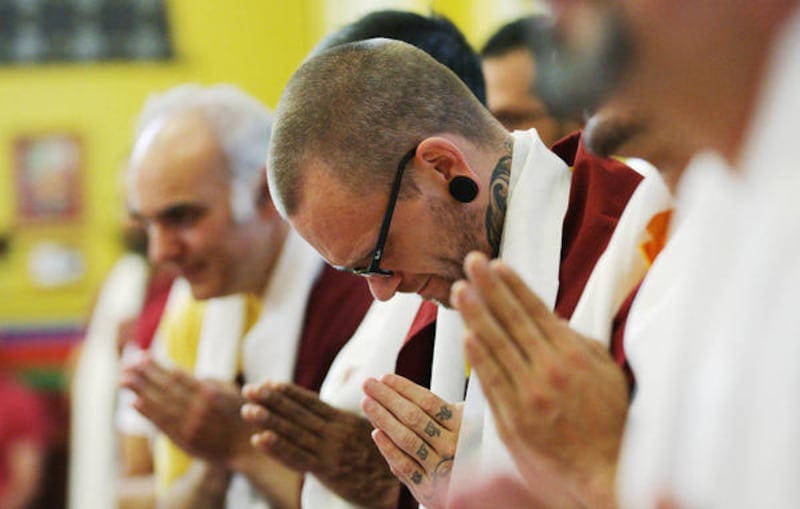
If we remove the theology—views about the nature of God, the creation of the universe, and the like—from the day-to-day practice of religious faith, most of the debates that stoke animosity between science and religion evaporate. What we’re left with is a series of rituals, customs, and sentiments that are themselves the results of experiments of sorts. Over thousands of years, these experiments, carried out in the messy thick of life as opposed to sterile labs, have led to the design of what we might call spiritual technologies—tools and processes meant to sooth, move, convince, or otherwise tweak the mind. It’s here, in the repetition of prayer, the stillness of contemplation, the joining of hands in celebration or sorrow, the dancing, singing, writhing, and swaying, that— actually or metaphorically, depending on your view—we can see God at work. To ignore that body of knowledge is to slow the progress of science itself and limit its potential benefit to humanity.
Adapted and excerpted from How God Works: The Science Behind the Benefits of Religion, published by Simon & Schuster.
David DeSteno is a professor of psychology at Northeastern University, where he directs the Social Emotions Group. His research examines the mechanisms of the mind that shape vice and virtue, exploring how emotions like gratitude, compassion, awe, and guilt influence moral behavior, resilience, and social connection. Bridging laboratory science with everyday life, his work investigates how ancient practices and modern psychology intersect to help people flourish.
He is the author of several books, including Emotional Success, The Truth About Trust, and Out of Character (co-authored with Piercarlo Valdesolo), in addition to How God Works. Through his writing, research, and public scholarship, DeSteno seeks to illuminate how the cultivation of emotion can strengthen character and deepen human bonds. He also hosts the podcast How God Works, where he explores the science behind spirituality, ritual, and the emotional architecture of belief.

Soul Boomlets, we’d love to know: what practices — religious or otherwise — have quietly shaped your life for the better?
I actually appreciate this angle. Instead of arguing metaphysics like it’s a cage match, ask whether the practices work. Gratitude, ritual, singing together, meditation — humans have been stress-testing those for millennia. That’s not superstition, that’s iteration. Where I’d push back a little is the idea that we can strip theology entirely and just keep the tools. Sometimes the story is what gives the ritual its voltage. Still, if science is finally admitting that ancient communities weren’t just randomly chanting into the void, that’s progress. Turns out cathedrals may have been proto-laboratories all along.
This was an amazing podcast! Rainn and Dave made such a fantastic case for the benefits of these spiritual tools and the importance of community and committment.