

Edwina Findley: The World is Waiting for You
PLUS: How do we find our reason for being?
Hello, beautiful humans of Soul Boom—
This week on the Soul Boom podcast, Rainn sits down with actor and writer Edwina Findley for a conversation about purpose, patience, faith, and the long, unseen stretches of becoming.
Edwina speaks honestly about listening for the quiet inner voice beneath the noise—especially when the path isn’t clear, the rewards aren’t immediate, and the question isn’t What am I achieving? but Who am I becoming?
And that question—Who am I, really?—has a way of showing up more insistently as life changes. Edwina isn’t talking about purpose as a destination—she’s talking about it as something you practice. That thread runs through her book, The World Is Waiting for You, too: faith not as certainty, but as showing up before you feel ready. Which, honestly, is most of life.

That’s why we wanted to share a thoughtful essay we received from Dr. Monica Aggarwal, a cardiologist and Soul Boom reader, reflecting on aging, identity, and purpose. She writes about what happens when the labels fall away—doctor, parent, achiever—and what remains when control loosens and life asks different questions.
Drawing on the Japanese idea of Ikigai, our “reason for being,” her essay reminds us that while aging may take many things, it also gives us something precious: clarity about what we love, how we serve, and why we’re still very much needed.
We hope it meets you right where you are.

A Reason for Being
By Dr. Monica Aggarwal
Some years ago, a patient told me that the difficulty with aging is that you lose more than you gain. He went on to explain that in the first chapters of life, it’s all about learning. You study, you gain experience, you get stronger, sharper, more confident. You build material wealth as well—getting a car, a house, and money in the bank. There are so many things that give a person value.
But as we age, we lose much of that. We may live on a fixed income, so money isn’t as easy. We may have a car, but can no longer drive it. Our house becomes harder to maintain, so we downsize. We lose friends to illness. We have more aches and pains and feel our muscles starting to weaken. We forget more, and we learn less.
Over the years since he said this, it has become easier to see how this can happen. As parents age and children begin to need us less, the pattern becomes clearer. Conversations with patients often return to the same refrains—“aging is a curse,” or “it is so hard to grow old.”
I am a cardiologist. I have gone from one job to another. When work has been absent, days have been filled with raising beautiful children, gardening, writing, and exercising. National organizations have been joined in an effort to impact change. There has been rest. These roles—doctor, mother, wife, change-maker—have shaped identity.
As the years pass, questions arise about how these labels may shift. Who remains when they are stripped away? What’s worse is that I have struggled with understanding how to deal with the lack of control that comes with aging because so many things happen that I don’t like or did not choose.
When I first moved to Orlando, I decided not to take a job and took six months off. That period turned out to be far more difficult than expected—trying to understand who I was without being “the doctor,” a role I hadn’t realized I valued so deeply. I spent a great deal of time listening to experts talk about thought, purpose, and value, yet what surfaced most often was confusion and a lingering sense of unease.
I kept searching for someone to explain who I was outside of my work. Questions about purpose and fulfillment became more insistent. When the money, the possessions, and the labels we give ourselves are stripped away, who am I underneath it all? What is my purpose, and what do I truly need to feel fulfilled?
It was at this time that I began considering the role of religion in my life. This surprised me. As a religious studies major in college, I had already explored many religions and reflected on their place in my life. Yet it was only as I aged—and achieved the material things I needed—that questions about the “what else” began to arise. And it was only through experiencing loss that the deeper “why” emerged.
I believe in a spiritual presence, and that belief has brought a sense of peace and hopefulness about the future. It has helped some of the loss make sense and has clarified aspects of my purpose. I have since joined a spiritual group where we reflect on life’s deeper questions, and it is within this community that I have begun to understand fulfillment.
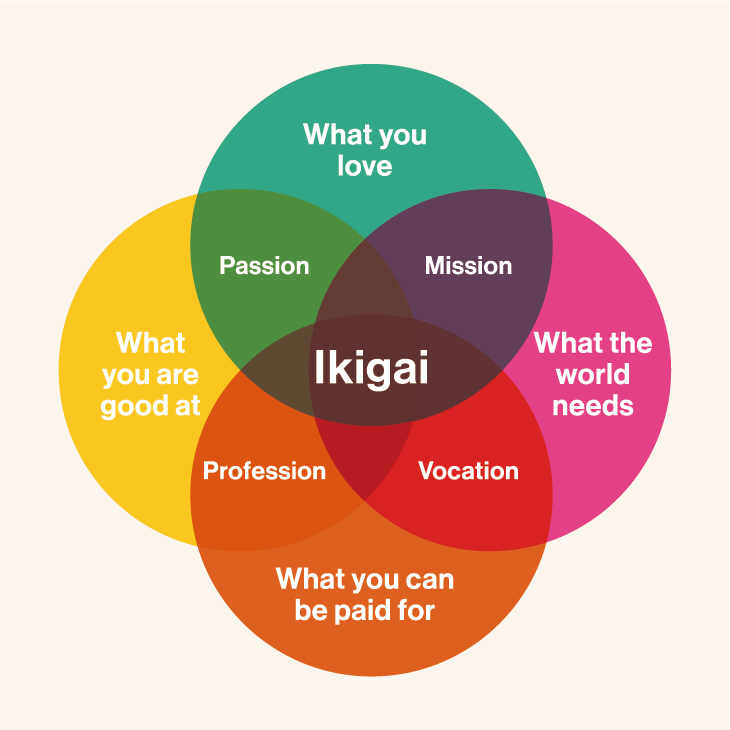
The Japanese believe in a concept called Ikigai. It means “reason for being,” or one’s purpose in life. The idea is that fulfillment lies at the intersection of passion, mission, profession, and vocation—blending what you love with what the world needs and what you are good at. Focusing on these ideas has begun to fill my cup. And that is a wonderful feeling.
I now consider my patient’s question differently. As we age, we do lose much—but we also gain much, too. We gain maturity, confidence, understanding, and perhaps most importantly, experience. Over time, I’ve come to understand what I love, what I’m good at, and what I can be paid for. I care less about what others think.
The greatest tragedy of aging is not the loss that comes with aging itself, but allowing ourselves to forget that we still have something to give to the world—that we still have purpose. When we continue to give back, contribute meaningfully, and cultivate connection and community, we find Ikigai. We find fulfillment. And in doing so, we may discover that we have gained far more than we have lost.
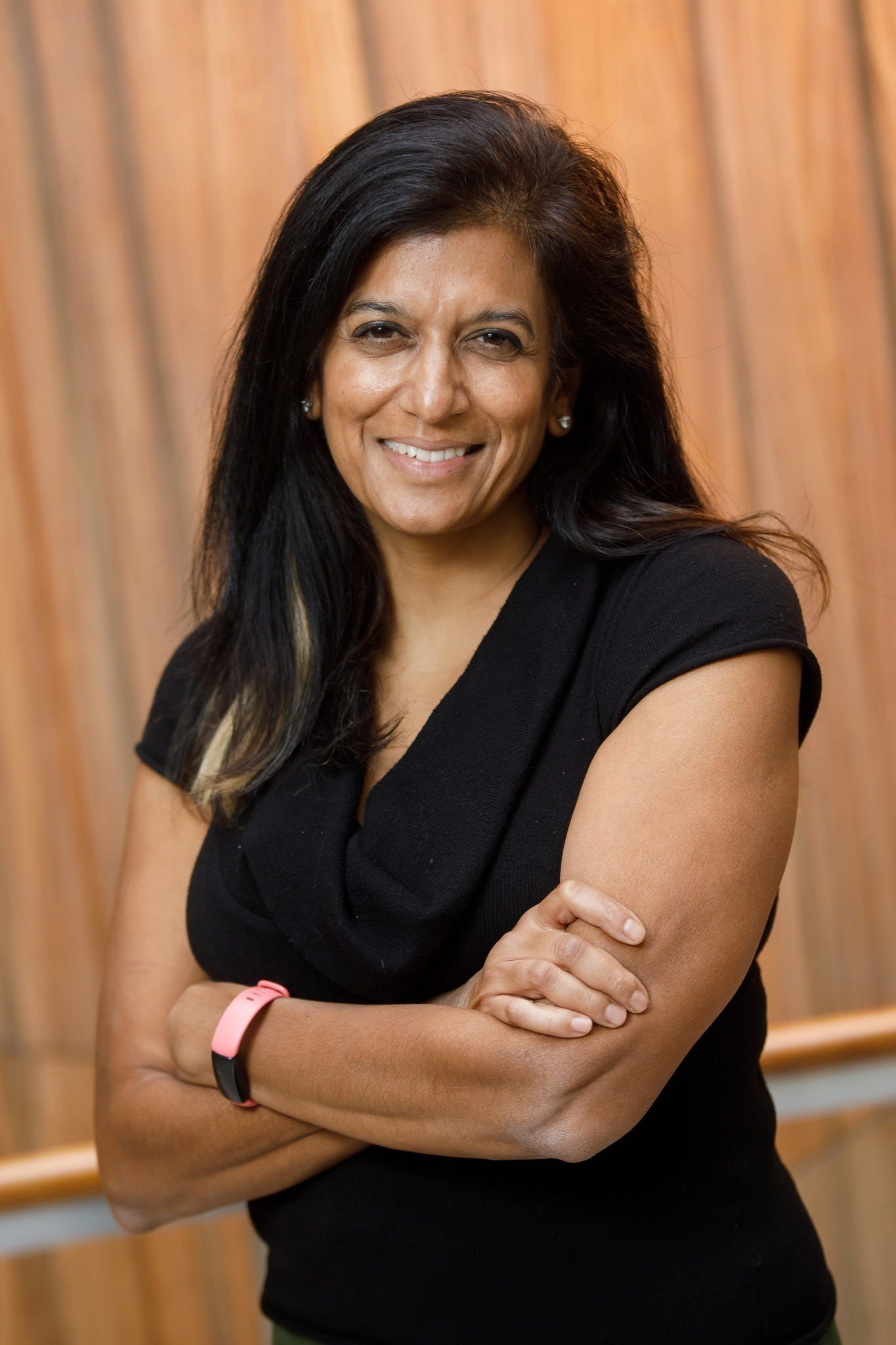
Dr. Monica Aggarwal is a preventive cardiologist, researcher, and writer exploring what it really means to live well—body, heart, and soul. She is an adjunct Associate Professor of Medicine in the Division of Cardiovascular Medicine at the University of Florida and sees patients at AdventHealth in Orlando, where her work centers on nutrition, lifestyle, and prevention.
Trained in internal medicine and cardiology, Monica’s own journey through chronic illness led her to rethink medicine from the inside out—integrating rigorous science with lived experience, spirituality, and purpose. She is the author of Body on Fire and writes about longevity, meaning, and human flourishing on her Substack, Life and Longevity with Dr. Monica Aggarwal.
Well, Soul Boomies, where might passion, mission, profession, and vocation all intersect in your life? Do you feel you’ve found any semblance of Ikigai?
This lands because it refuses the myth that purpose is a finish line. What she’s really naming is the grief of losing identities that once did the explaining for us and the relief of discovering we’re still useful without the costume. Ikigai isn’t a productivity hack for aging gracefully. It’s permission to stop auditioning and start contributing from what’s actually alive now. The world doesn’t need our résumés. It needs our clarity. And that usually shows up right after control leaves the building.
To the Infinite, the Finite & Our Foolishness
.
Life’s irony’s the view we benefit
from physical, material delight
as though naught counts but what’s felt or in sight
while ignored our souls are desperate
for what should count the most—the infinite;
yet we’ll go on till it’s too late, despite
much instinct in us of what’s truly right
that life’s content is so inadequate.
.
Regardless, to that same life we cling tight
since the physical solely seems definite
thus for material matters we fight
—like the blind-mind addict’s barbiturate—
while Great Hereafter’s placed post-the-finite
so skewed are values foremost we’ll permit.