

Eric Zimmer: How a Little Becomes a Lot
Greetings, Meaning Makers,
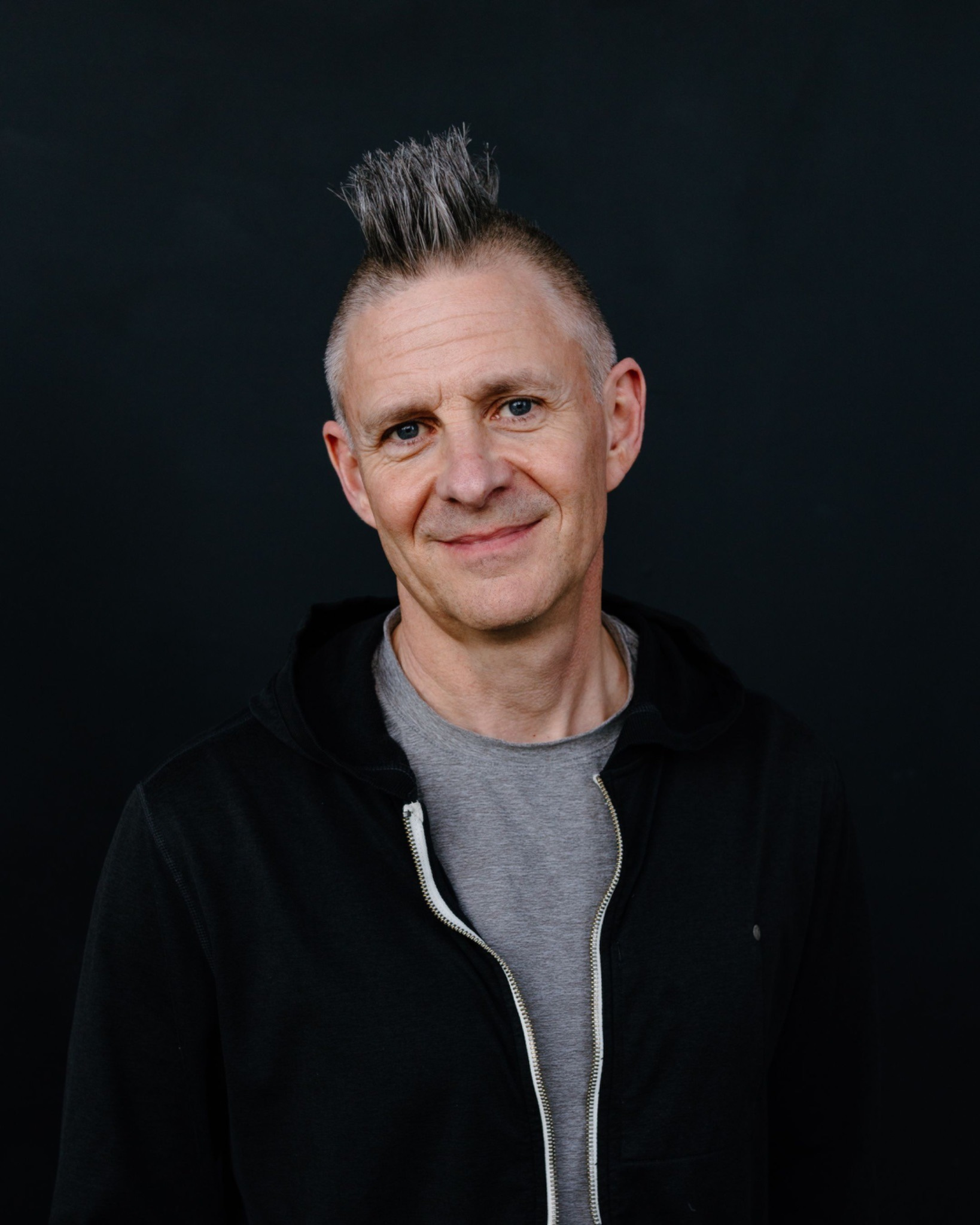
This week on the Soul Boom podcast, Rainn sits down with the inspiring author, podcaster, and creator of the Wise Habits program, Eric Zimmer.
Eric is the host of The One You Feed, a podcast with more than 50 million downloads, built around a deceptively simple question: what does it mean to live a meaningful life? It’s a question he didn’t arrive at from a place of comfort. More than 30 years ago, he was struggling with heroin addiction, unhoused, and facing prison. That period forced a confrontation not just with his circumstances, but with the deeper mechanics of change itself—what works, what doesn’t, and why so many of us find ourselves stuck between intention and action.
Out of that inquiry comes the central idea of his new book, How a Little Becomes a Lot.
The title itself is inspired by the Tanzanian proverb:
Little by little, a little becomes a lot.
As simple as it is, it is at the heart of spiritual change or anyone pursuing big goals — whether recovery from addiction, the pursuit of an Olympic gold medal, or the spiritual transformation of a community.
There’s a Zen saying André Duqum quoted in his appearance on Soul Boom: “Water heats slowly and boils suddenly.” There’s also the story of ‘Abdu’l-Bahá, who, responding to someone discouraged by the distance between where they were and where they hoped to be, offered the simple counsel: “Little by little. Day by day.”
Eric’s work brings together spiritual traditions like Zen Buddhism with modern behavioral science, and one of the most useful lenses he draws on is the Fogg Behavior Model. The premise is straightforward: for any behavior to happen, three elements have to converge — motivation, ability, and a prompt. When something feels too difficult, or when motivation inevitably dips, the behavior falls away.
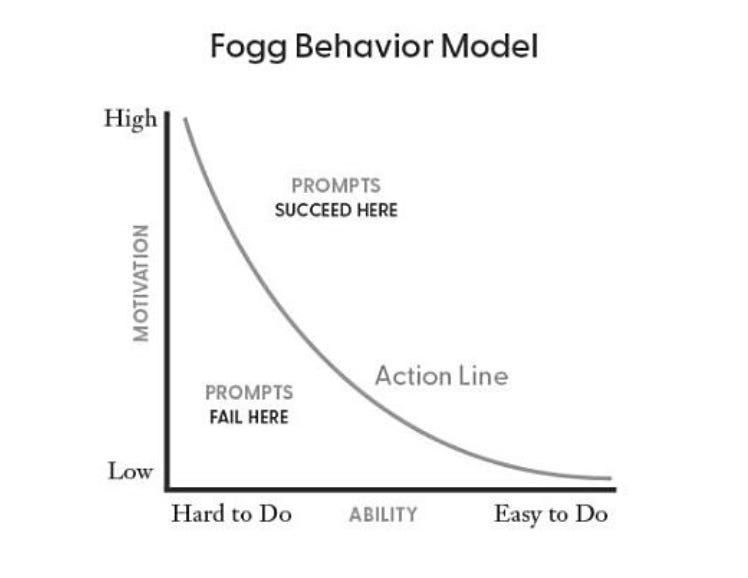
The Foggs Behavioral model helps explain a familiar experience. We decide to change. We set ambitious goals. We summon a burst of energy. And then, almost as predictably, we slide back into old patterns. It’s not necessarily a failure of character. It’s often a mismatch between what we’re asking of ourselves and how change actually works.
Eric’s approach is to reduce that mismatch.
Instead of trying to overpower the system, he suggests working with it. Make the action small enough that it can happen even on a day when motivation is low. Let consistency do the work that intensity cannot sustain. Over time, those small actions accumulate, and something begins to shift — not just in behavior, but in identity.
As St. Francis of Assissi is supposed to have said: “Start by doing what’s necessary; then do what’s possible; and suddenly you are doing the impossible.”
The path doesn’t unfold all at once. It builds. Little by little, until a little becomes a lot.
This week, to accompany you on your own personal journey from the seemingly impossible to the actually accomplished, we’re sharing an excerpt from Eric’s book — enjoy.

A THOUSAND MILES
Excerpted from How A Little Becomes A Lot: The Art of Small Changes for a Meaningful Life
By Eric Zimmer
I learned the hard way about the importance of showing up long before I ever climbed on a Peloton.
“Rarely have we seen a person fail,” is the beginning of a reading that happens at the start of nearly every AA meeting in the world. Early on in my recovery I went to at least one, if not two, AA meetings per day. So I heard the reading over and over, often feeling mocked by its confidence. I also heard the program’s famous Twelve Steps read at nearly every meeting. And the Twelve Traditions. Let’s just say there’s enough repetition at a 12-step meeting to make a broken record jealous.
At first I gritted my teeth and zoned out to get through the readings. Then I made a game of memorizing them, which wasn’t that hard to do as I heard them all twice a day.
On top of the recitation at regular meetings, we had to read the same 164 pages of the AA Big Book—the program bible written by founder Bill Wilson—at Big Book study meetings. Only one book and only the first 164 pages of it? I felt sure my brain would turn to sludge.
And the clichés, oh God, the clichés. “One day at a time.” “Easy does it.” “Keep coming back.” It felt like an infinite loop of Chicken Soup for the Boring Soul.
And you know what? I got and stayed sober.
Was it in spite of or because of the repetition? I think it was largely because of the repetition, as I’ll explain below. But we are faced with a quandary here. Repetition can lead to deeper insight and compounding growth, but it can also lead to stagnation, apathy, and a desire to quit. I was in danger of giving up on AA before I’d even scratched the surface—before I’d let the process do what it was designed to do.
What saved me was finding a way to appreciate just how meaningful, even spiritual, repetition can be.

Around the same time I’d discovered the joy of alcohol, at the age of eighteen, a high school teacher introduced me to Zen Buddhism. Although my understanding was weak, it spoke to me. The idea that something extraordinary could be hidden within the ordinary world resonated deeply with me, as did the belief that even in life’s hardest moments, peace is waiting, if we can just allow ourselves to access it.
Six years and a lot of questionable choices later, tasked with finding a “spiritual solution” to aid my recovery but not drawn to the mainstream offerings of Columbus, Ohio (I found the concept of an interventionist Christian God hard to square with my situation), I remembered those books about Zen my teacher had given me.
I cracked them open again and quickly realized that the voices that spoke to me—Shunryu Suzuki, Mark Epstein, Jack Kornfield, Pema Chodron—all emphasized one thing above all: If you want to grow spiritually, you have to meditate. So I made it my mission to start a consistent practice.
And yet no matter how hard I tried I could not stick with it.
Most of my books said that I needed to meditate for thirty to forty-five minutes, so that was always my goal. I might do it for a day, a week, maybe a month one time. And then I would just quit.
At the time I didn’t know anything about, as BJ Fogg would put it to me years later, the “compensatory relationship” between ability and motivation. I just knew that meditation was really hard for me to do and I could not seem to keep at it.
I would sit down, close my eyes, and then it was like the dark circus came to town. The ever-efficient processor nestled in my head would say, “Marvelous, you’re paying attention! Shall we begin with the classic hits—‘Imposter Syndrome,’ ‘Catastrophizing,’ and the chart-topping single ‘Your Life Is Meaningless’? Or would you prefer some fresh material from my Worst Case Scenarios album?”
To use the scientific terminology, half an hour of meditation was too high on my ability axis. Despite believing that it was gravely important for me to do this, I couldn’t keep my motivation high enough to make it a practice.
After many, many failed attempts, I finally decided that I would aim to meditate for just three minutes a day, but that I would do it every day. This was, of course, the solution. It was something easy enough that I always had enough motivation to do it. Eventually I was able to increase how long I meditated for, and over time, how well I could do it (less circus, more peace). And I reflected on the power of even the smallest repeated actions.
One of the most famous expressions of little by little comes from the Tao Te Ching: “A journey of a thousand miles starts under one’s feet.” The Buddhist tradition also emphasizes a gradual path to personal transformation. The Dhammapada, one of the core Buddhist scriptures, says: “Drop by drop is the water pot filled. Likewise, the wise person, gathering it little by little, fills themselves with good.” Nirvana, or enlightenment, is most often described as the end point of a long journey, during which we gradually rid ourselves of the weight of earthly desires.
Yet there has also been a debate in spiritual circles forever about whether enlightenment is actually more of a lightning strike, something that comes to us all at once, if at all.
My own adopted tradition, Zen Buddhism, has a rich history of stories of sudden enlightenment. As a user on the r/Buddhism subreddit wrote, these stories all sound something like: “So-and-so worked in the monastery kitchen. One day Master such-and-such kicked him in the ass and suddenly he was enlightened.” In one actual example, a student named Gensha stubs his toe and promptly cries, “This body does not exist!” There are also the meditative koans (“What is the sound of one hand clapping?”) which are sometimes described as tools for “direct pointing,” or prompts to trigger an immediate, epiphanic experience of spiritual awareness.
To see only sudden enlightenment in these stories and practices, however, is to miss the forest for the bodhi trees. The moments of revelation come after long periods of practice and studies. Gensha the toe-stubber practiced an ascetic life in the mountains for years, thinking about the ephemeral nature of things like pain, before his holy stumble. Even the hypothetical monastery kitchen worker put in his time before the rewards of that work were revealed in a glorious instant.
The modern spiritual marketplace is filled with promises of a shortcut to enlightenment. The logic is something along the lines of “everything you need to awaken is right here and is always right here and all you have to do is see it directly.” Which is like telling a Little Leaguer, “All you need to hit a home run in the major leagues is to watch the ball come in, swing at the right time, and let the ball do all the work.” Slightly more often than a chimpanzee types a novel the kid will hit a home run, but they are far more likely to end up with a traumatic brain injury.
Gurus of popular psychology sometimes make similar promises, with neat parables of “breakthrough” moments.
One thing my very gradual road to building a meditation practice did was to disabuse me of any and all such get-enlightened-quick dreams. If there is someone out there who could focus perfectly enough to access the secrets of the universe or his own psyche all at once, I’m not him. But I am someone who could practice sitting, listening, being present—three minutes by three minutes, day by day.
Another old Chinese proverb says: “Read a book for 100 times then the meaning will emerge.” In my Zen practice, my teacher had me read the same 165-page book for six months. We chanted the same thing at the end of each meditation session and bowed, in the same way, each time.

Back in my early days of AA, reading the same 164 pages of the Big Book over and over, I would have been shocked to hear that the task I was rolling my eyes at was almost identical to something I would do happily in pursuit of Zen years later. And yet: Meaning did emerge in those early days of sobriety. I kept showing up to meetings, reading the readings, sitting down to at least try to meditate. My days without drinking added up. And eventually, “Rarely have we seen a person fail” came to seem less mocking than fortifying. “One day at a time” and “keep coming back” were still more clichés than koans, but they took on the weight of lived experience.
We all know the phrase “practice makes perfect,” but it is more accurate to say that repetition breeds results. This is because the more we repeat a task or activity, the more comfortable and confident we become in our ability to do it. We become more efficient and effective as we become more familiar with the process.
We also trust the process more, even subconsciously. We see ads for the same products many times; politicians parrot the same messages on what feels like an endless loop. Why? Repetition breeds results. It seems like it should take more than repetition to make something persuasive, but scientific study after study shows that it really does work. This is due to something called the illusion of truth effect. People rate statements that have been repeated just once as more valid or true than things they’ve heard for the first time.
The key, I believe, is to be intentional in our repetition. We should pause and ask ourselves why we are doing this and what we hope to gain from it. We should strive to bring our full selves to the task. We should be aware of the potential for complacency and strive to remain curious and engaged in the process.
What I got from remaining curious and engaged in my journey toward sobriety was not only sobriety itself, but a lifelong interest in the ways each of us seek wisdom and meaning. I’m still somewhere on that journey of a thousand miles, grateful that I get the chance to continue.
THE FIRST STEP
In his book The Quiet Before, author Gal Beckerman makes the argument that even revolutions start gradually, with creative exchanges of ideas in small rooms and among limited networks.
“We are gripped by the moment when the crowd coalesces on the street—the adrenaline, the tear gas, the deafening chants, a policeman on horseback chasing down a lone protester or a man standing up to a tank,” Beckerman writes. But “change—the kind that topples social norms and uproots orthodoxies—happens slowly at first.” The Civil Rights Movement, the women’s suffrage movement, the LGBTQ+ rights movement: Behind each was a long path of (as the TTM would say) precontemplation, contemplation, preparation, action, and maintenance that made their eventual public actions undeniable.
For every “Eureka” moment there’s a thousand dusty chalkboards. Years of failed attempts preceded the Wright Brothers’ first successful flight. Even with famous lightning-strike discoveries, there’s more to the story: After Alexander Fleming accidentally discovered a bacteria-killing mold called penicillin, it took fourteen years and the careful work of a number of other scientists before a patient was treated with the world’s first antibiotic.
“If I have looked far,” Isaac Newton said, “it is because I’ve stood on the shoulders of giants.” But of course those “giants” were standing on shoulders too. In creating his physical laws Newton drew on the laws of planetary motion developed by Johannes Kepler, who in turn relied on the work of astronomer Tycho Brahe… who spent twenty years of his life watching the sky every single night, making meticulous maps of the movements of heavenly bodies governed by a force no one had yet called gravity.
The story that gets passed down is an apple to the head and a flash of genius. But the real story is one of thousands of little steps, thousands of nights spent watching the stars.

Eric Zimmer is an author, behavior coach, and the host of The One You Feed, an award-winning podcast with more than 50 million downloads. A person in long-term recovery, his work brings together behavioral science, spiritual wisdom, and lived experience to explore how real, lasting change happens. His latest book, How a Little Becomes a Lot, offers a practical path toward a more meaningful life—one small step at a time.
What are times you’ve experienced this spiritual truth at work in your life?
We’d love to hear.
Thank you for introducing me to this thoughtful individual! I feel very much in alignment with his beliefs and attraction to Buddhism. When I quit drinking, I went through many different stages of growth, and I am still learning about myself and seeing the decision less and less about giving something up and more and more about giving myself freedom, awareness, and wellness. Repetition breeds results, but those results also breed more results and different kinds of results. My most recent Substack post was about Mindfulness - https://chooseradicalwellness.substack.com/p/what-is-mindfulness?r=1i7iwo&utm_campaign=post-expanded-share&utm_medium=web
This is a reminder of the day that I discovered that you don't have to do something big to make a big difference. Lots of little things add up. And as Jane Goodall famously said, “What you do makes a difference, and you have to decide what kind of difference you want to make."