

Greetings, to all you soulful deep thinkers out there!
This week on the Soul Boom podcast, Rainn sits down with renowned political commentator, journalist, author, and (in Rainn’s opinion) best podcaster in the world.
This conversation happened because Rainn was in New York to catch the NBA Finals back in June — and yes he was there for the Knicks’ glorious triumph. When he was planning his trip, he was determined to get his favorite podcaster in the world to sit down for an episode of Soul Boom. When Rainn had first brought up Ezra to us, he texted us an Instagram Reel with a clip from Ezra’s podcast, with the comment “LOVE ezra klein - he’s my hero.” That’s when we knew we had to get Ezra on for an episode of Soul Boom. When we asked him how the conversation with Ezra went, he texted the team: “Ezra went great. He’s the most thoughtful, articulate, inspired podcaster that’s ever lived!!” All that to say, we think you’ll enjoy the conversation. In fact, we loved the long, rich conversation so much, we actually made it two episodes, just so we wouldn’t be forced to cut out any of the juicy bits. Part 1 (what you see above) focuses more on our inner journey. Part 2, as you’ll see this Sunday, is all about the big, systems changes we’re in dire need of.
In this first episode, early in their conversation, when Rainn asks why we have so much anxiety, Ezra points out the human nervous system is profoundly mismatched with the world we have built for it.
This does not mean that human beings were happier ten thousand years ago. Or five thousand. Or five hundred. Ezra is quick to point this out. Our ancestors dealt with famine, disease, violence, infant mortality, drought, war, predators and all manner of genuinely terrifying things that most of us, thankfully, will never encounter.
The point is that the human organism developed over hundreds of thousands of years under one set of conditions and now finds itself living under another — one that can change almost completely within a generation.
Our nervous systems evolved to respond to immediate threats in our environments. Now we can lie perfectly still in bed while receiving information about a war six thousand miles away, an upsetting email from someone at work, a natural disaster on another continent, an acquaintance’s suspiciously fabulous vacation in Portugal and the latest outrage being committed by whichever political figure currently makes our blood pressure spike.
And we can receive all of this before breakfast. And unlike many of the dangers our nervous systems evolved to confront, there is often no physical action that can resolve any of it. We are simply left holding the information.
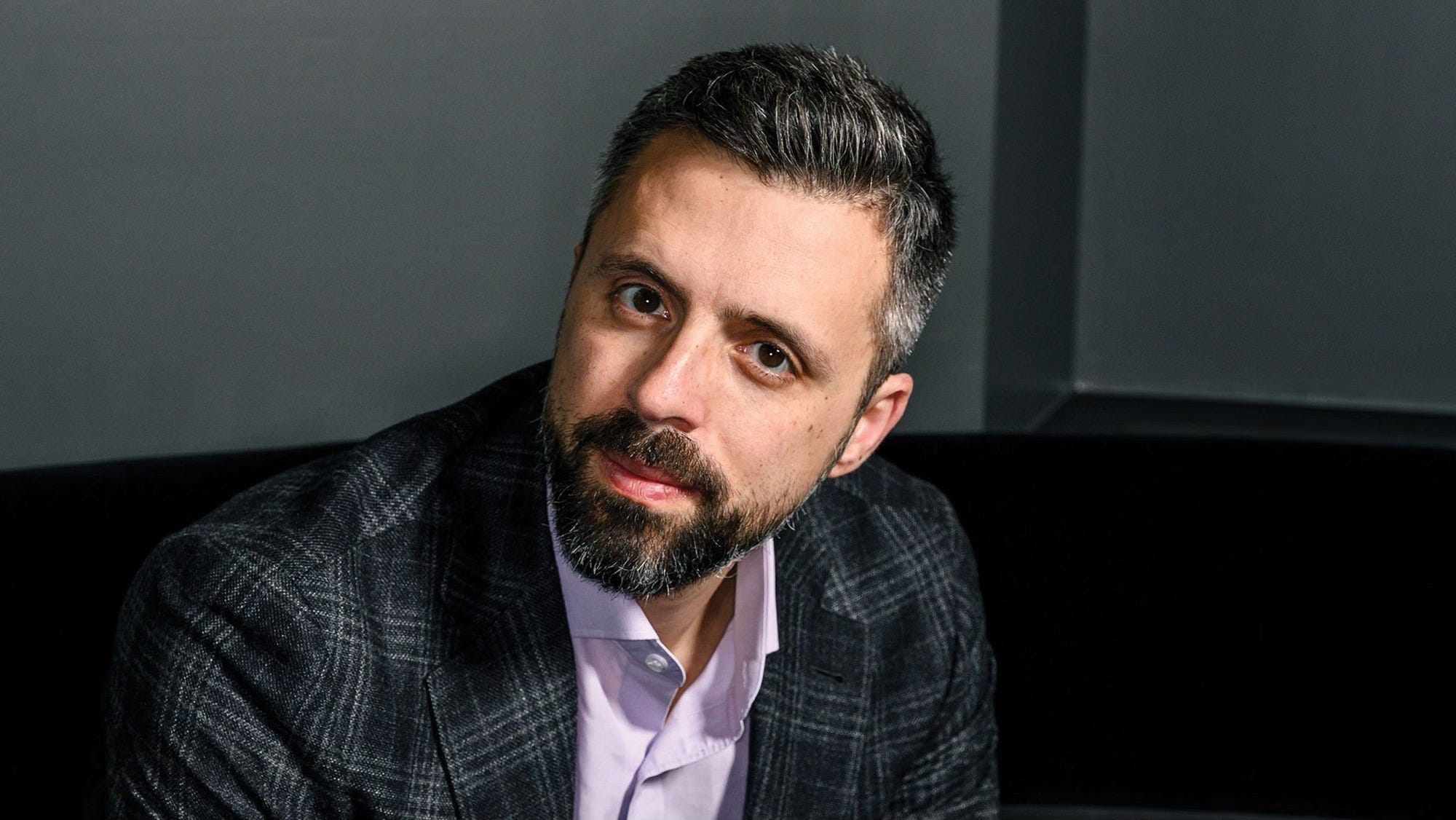
The conversation takes some fascinating — and surprisingly personal — turns that we won’t spoil here. But you can also see in real time some of the fruits of Ezra’s curiouser-and-curiouser spiritual journey, perhaps an unexpected one for a person who has spent much of his public life among the wonks and political commentariat.
Over the past several years, Ezra has wandered increasingly into meditation, Buddhism, poetry, prayer, mystical experience, his own Jewish tradition and questions about the limits of our material understanding of reality. He has described himself as an agnostic who nevertheless “believes deeply in mystery.” He has spoken about a profound and unexpected mystical experience that made him more open to Judaism. And earlier this year, he sat down with the Buddhist nun Pema Chödrön for a conversation about uncertainty, suffering, presence and the very human desire to make uncomfortable feelings go away.
In his telling, Ezra has spent much of his life very well trained in one particular kind of energy: trying to change things, solve problems, act and optimize. What he had trained far less was the complementary capacity to simply allow something to be. He described slowly realizing that his meditation practice had itself been another form of optimization: he would meditate because he wanted to feel different afterward. Only later did he begin to understand that the deeper practice might be learning to accept how he already felt.
Which brings us back to the nervous system.
If there is a growing mismatch between the human beings we are and the environments we have constructed around ourselves, then what are we supposed to do about it?
As novel as much of the change we’re experiencing is, human beings have been wrestling with versions of this problem for a very long time. Long before there were smartphones and social media feeds and A.I. companions and 24-hour news cycles, we were anxious, distracted, grasping, fearful creatures. We wanted things. We feared losing things. We worried about tomorrow. We got angry at our neighbors. We were jealous of our friends. We fell in love with people who didn’t love us back. We wondered why terrible things happened. We wondered what happened when we died.
And over thousands of years, spiritual paths have developed practices for working with this strange creature called the human being.
Meditation asks us to observe rather than react. Contemplative traditions ask us to become still. Fasting asks us to discover that wanting something does not mean we must have it. A day of rest asks us to stop doing and open up a space for something numinous to enter. Prayer asks us to turn our attention towards something greater and higher than ourselves.
Even boredom, that horrible scourge of childhood car trips, may have something to teach us. Ezra deliberately rides the subway without putting in his AirPods. No podcast. No music. No little informational pellet to fill the empty space between one thing and the next. He simply sits there and experiences the subway. He has found that when he does this, he arrives home more capable of being present with his children.
This sounds almost comically small. Ride subway. Do nothing.
But consider how rare doing nothing has become.
Waiting in line used to mean waiting in line. Sitting in a doctor’s office meant sitting in a doctor’s office. Walking down the street meant walking down the street. Now almost every little clearing in consciousness can be immediately colonized by information. The moment nothing is happening, something can be made to happen.
Social media has transformed this very intimate human impulse. Many of us originally went there looking for connection. Here are our friends. Here is our family. Here are people like us. What a miracle!
Then the machines got much better at figuring out what would keep us looking.
Now, as Ezra has put it, he can open Instagram searching for connection and soon find himself pissed off, confused or inexplicably watching content about psychedelics in the 1970s. What began as a response to a profoundly human desire for connection became increasingly effective at capturing what he calls his “most intimate faculty”: his attention.
Attention.
In a conversation with Texas state representative James Talarico, Ezra mentioned that he had been thinking about prayer in his own life and reading the great twentieth-century Jewish theologian Abraham Joshua Heschel. He shared these words from Heschel:
“Prayer is our humble answer to the inconceivable surprise of living. It is all we can offer in return for the mystery by which we live. Who is worthy to be present at the constant unfolding of time?”
What a way to put it: “Prayer is our humble answer to the inconceivable surprise of living.”
As Ezra put it, prayer began to feel more accessible to him when he understood it as “a kind of admission of gratitude and wonder.”
There is a universe. There are stars. There are trees pulling light out of the sky. There are other people whom we somehow love despite the fact that they routinely leave dishes in the sink. There is consciousness. There is birth and death and beauty and grief and all of this is just today.
And somehow we get to be present at this ever-unfolding eternal now, as measured out in our human lifetimes.
Perhaps practices like prayer, meditation, poetry, time in nature, silence and Sabbath are not simply techniques for calming down our overtaxed nervous systems. Perhaps they help restore forms of attention that the world around us increasingly makes difficult to sustain.
And this matters for reasons far beyond our own serenity.
One of the most interesting ideas that runs through Ezra’s recent spiritual explorations is that becoming more accepting of reality does not necessarily make us more passive. As he and countless others before him put it, if we become more capable of tolerating discomfort, then discomfort has less power to dictate our behavior. The range of things we can actually do becomes larger. We can have the difficult conversation. Admit we were wrong. Sit with another person’s suffering without immediately trying to instantly fix it or make it disappear.
We can look at injustice without either collapsing into despair or frantically convincing ourselves that everything will be fine.
We can pay attention.
Which brings us, oddly enough, to poetry.
In true Ezra Klein fashion, we asked him to recommend three books for you, our dear Dispatch readers — and he offers you three fantastic titles for your consideration:
The first is The Asking, a collection of more than five decades of poetry by Jane Hirshfield.
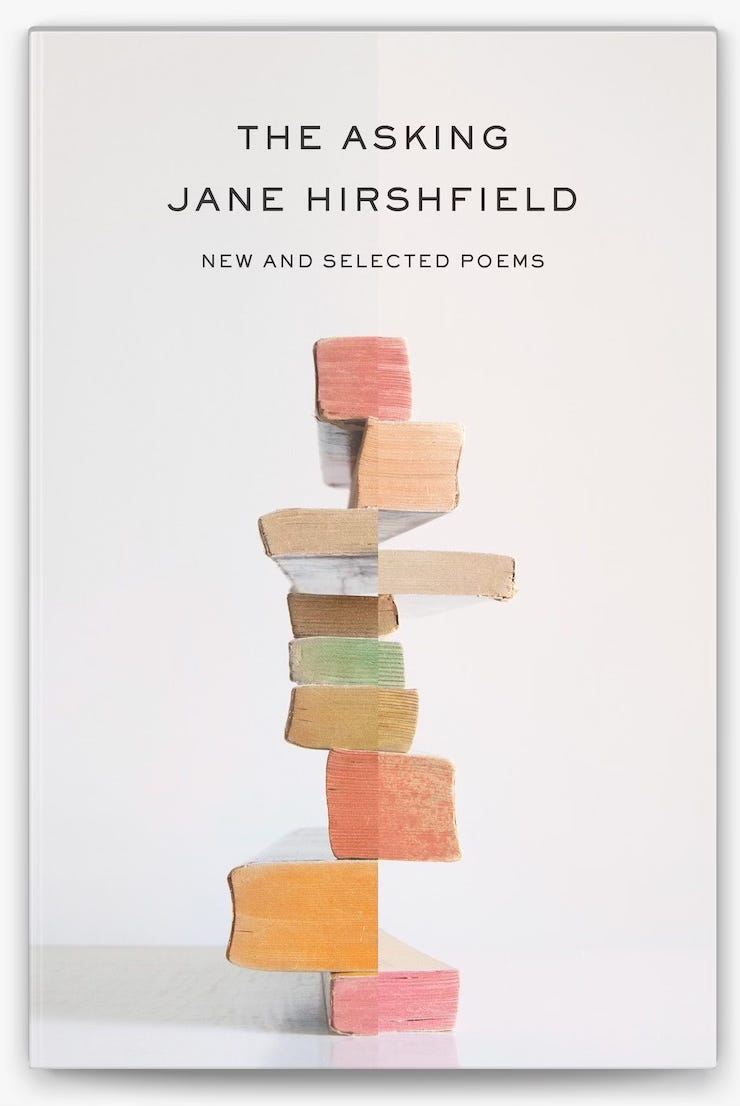
Ezra interviewed Hirshfield several years ago and told her that he had developed what he called a “yearning to have a more poetic mind.” Not to become a poet, exactly, but to cultivate a way of encountering the world that was less linear and purposive, more permeable and open to transformation.
Hirshfield speaks about poetry as a form of attention to what ordinarily remains at the edges of our awareness. Our consciousness is always much larger than the tiny spotlight we shine on whatever problem happens to be in front of us. Poetry can widen that spotlight.
She also talks about poetry as an antidote to despair. Not because a poem will end a war or stop climate change or cure cancer. (Poetry has many fine qualities, but its record on curing cancer remains disappointing.) Rather, finding language for what we encounter can itself become a form of agency. We attend. We see. Something changes in us. And perhaps, from there, something can change in the world.
Ezra’s second recommendation is Zoë Schlanger’s The Light Eaters, a remarkable journey into the emerging science of plants. Plants, it turns out, are extremely weird.
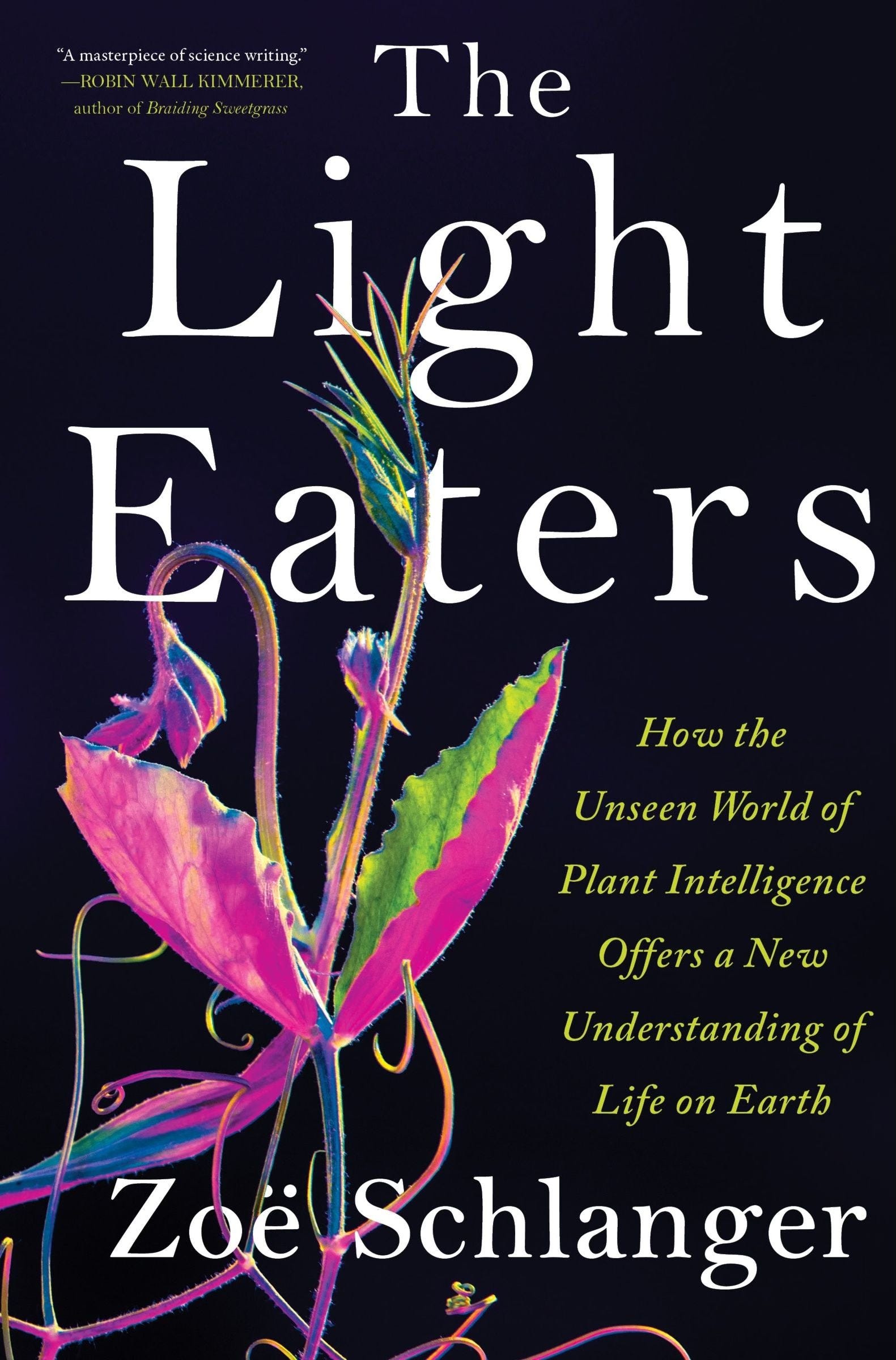
They sense. They communicate. They respond to threats. They make use of information from their environments in ways that continually complicate our ideas about what a plant actually is and what kinds of intelligence or agency exist in the living world. Surely there are countless lessons to be learned from them — just look at how they turn towards that nourishing sunlight (if only it was so easy for us to do).
Finally, Ezra recommends The Sabbath, by Abraham Joshua Heschel—the same Heschel whose words on prayer we encountered earlier.
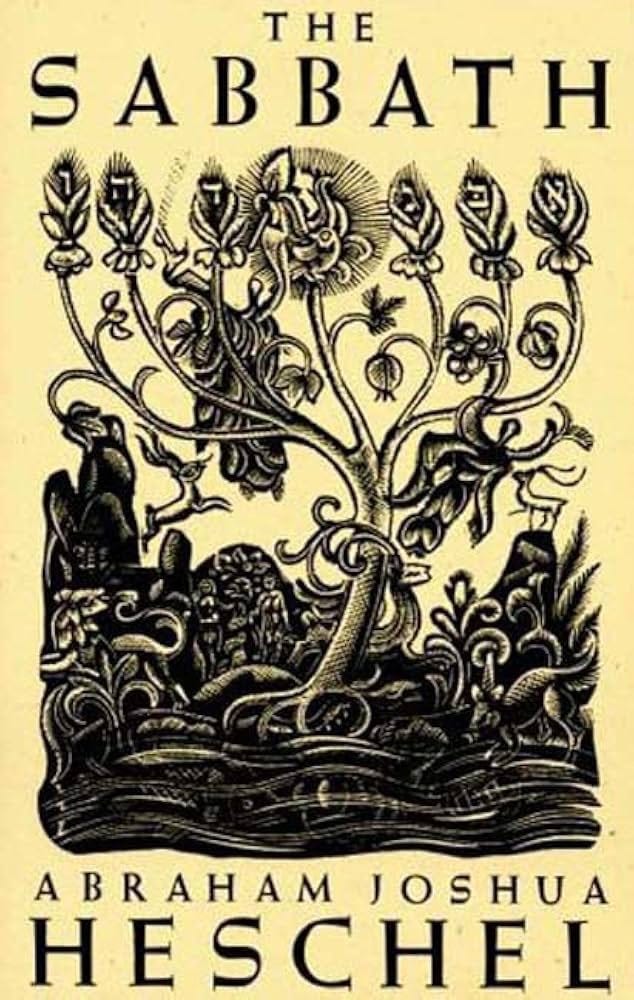
In The Sabbath, the central lesson is that human beings do not find the deepest meaning of life by mastering space, accumulating things, or producing more, but by learning to inhabit sacred time.
In that state, we cease trying to make the world do something for us. We simply inhabit it.
This is where something that initially sounds like a discussion about individual mental and spiritual health starts to open into something much bigger.
In the Bahá’í Faith, there is a simple idea Rainn writes about in Soul Boom called our “twofold moral purpose.” On one side is the transformation of the individual. The spiritual life should help us develop greater wisdom, compassion, courage, detachment, love and peace. If our spiritual practices do nothing to make us better human beings, there isn’t much point in having them.
The cultivation of those inner powers has a practical effect — facilitating the spiritual powers that will catalyze the transformation of society. As we develop ourselves, we can better contribute to the world, and in turn, our efforts to serve and transform the world become one of the principal means by which we ourselves are transformed.
That said, we can disabuse ourselves of both the delusion and the unnecessary burden of thinking it all depends on us, as a single individual. We just do our part. Many hands make light work. As Rabbi Tarfon says in Pirkei Avot:
“It is not your duty to finish the work, but neither are you at liberty to neglect it.”
This seems like pretty good advice for living in 2026.
The suffering of the world is too large for any of us to carry. Climate change. War. Poverty. Loneliness. Political division. Technologies transforming human life faster than we can understand their consequences.
We will not finish the work. Thank God, because our calendars are already pretty full.
But neither can we simply retreat into our meditation rooms, breathe deeply and hope somebody else handles civilization. We must eventually emerge from those meditations (and we do encourage you to meditate!) and take those cultivated selves out into the world to go and bend that arc of history towards a better world — one more attuned to not only the nervous systems of our primate brains but also the intangible higher self we like to call the soul.
What do you think, Soul Boomlets — can our inner growth lead to outer change?
PS — Stay tuned for when we drop a bonus Soul Boom episode and Dispatch this weekend. Rainn and Ezra continue with Part Two of their conversation. Together they discuss the larger systems we inhabit, the possibilities for changing them and what a better world might actually require of us. Plus, we’ll be sharing a special gift of Ezra’s writing relating to all these grand themes. Till then ✨
(By the way, if you’d like to listen to Soul Boom on one of your favorite platforms, check out the full selection of options here.)
I have already written two pages in my journal inspired by this post. I look forward to listening to the interview. "As we develop ourselves, we can better contribute to the world, and in turn, our efforts to serve and transform the world become one of the principal means by which we ourselves are transformed." I connect to this so deeply and it is the premise for my book - Radical Wellness: Pathways to a Healthy Body, Mind, and Planet. In a world increasingly designed to hijack our attention, coming back to ourselves, to loving and caring for ourselves, is the doorway to transformation and to a world where we can extend that love and care to others and the planet.