

PART 2: Rainn & Reggie on AI, Imagination, and the Future of Us
PLUS — Will we ever solve racism?
Greetings, cosmic tricksters and gentle futurists.
This week on the Soul Boom podcast is part two of Rainn’s wide-ranging, mind-bending conversation with Reggie Watts.
In this half of the conversation, Rainn and Reggie wander into big questions with playful seriousness: artificial intelligence and human evolution, power and governance, psychedelics and presence, art and science as twin engines of progress, and what it really means to live the future we claim to want. It’s a dialogue that moves easily from the cosmic to the deeply personal, from speculative futures to the daily work of staying human, curious, and kind.
To get to the world we’re envisioning requires two big things: a shared vision of the future we want, and the patient, often unglamorous work of clearing the obstacles in the way. And there are many. As Rainn names them in Soul Boom, we’re up against sexism, materialism, unjust economic extremes, nationalism and militarism, climate change, racism—phew. It’s a long list. And that’s before we even touch the social alienation and fragmentation fueling so much despair. But rather than buckling under the weight of it all, it can help to step back, take these challenges one at a time, and begin imagining how society might meet each one—and where we ourselves might fit into that work.
Let’s take racism. The issue of racial division is complex and nuanced and many pixels have been generated in think pieces, calls for justice an earnest pleas for mutual understanding on social media, as well as vitriolic and hateful posts and memes (perhaps more commonly, sadly). Racism isn’t always hoods and burning crosses—in fact it usually isn’t. It’s personal and structural, communal and institutional. There’s the big, obvious episodes—say an officer of the law using a hateful epithet while beating a person of color. And then there’s the more subtle episodes of exclusion.
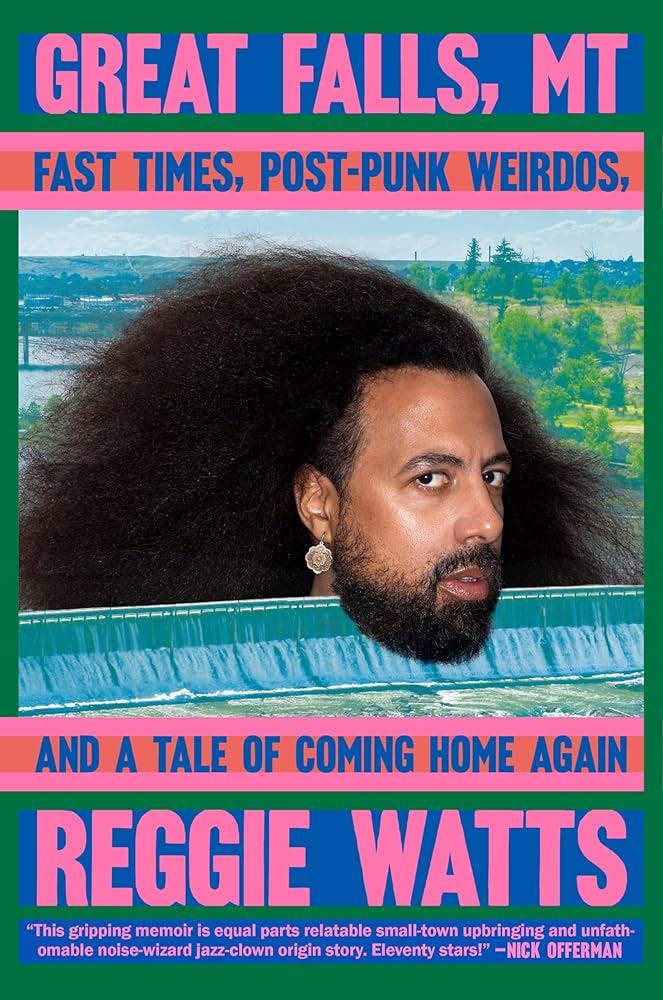
Without bitterness or anger, Reggie speaks about these moments of othering. As Reggie recounts in his book Great Falls, MT: Fast Times, Post-Punk Weirdos, and a Tale of Coming Home Again, he was often one of the only Black kids in school—hyper-visible without being fully seen. He recalls being treated less as a peer and more as an anomaly: classmates fixating on his hair, his appearance, his “difference,” sometimes with curiosity, sometimes with an unspoken distance. There’s no single explosive incident he points to—no headline-grabbing act of cruelty—but rather a steady accumulation of small signals that quietly communicate you are not quite from here. It’s the absence of people who look like you, the subtle sense of being observed rather than included, the feeling of existing just slightly outside the frame. Reggie doesn’t present these moments as trauma so much as texture—conditions that shaped his interior life, nudging him toward imagination, self-definition, and the creation of worlds where he could belong on his own terms.
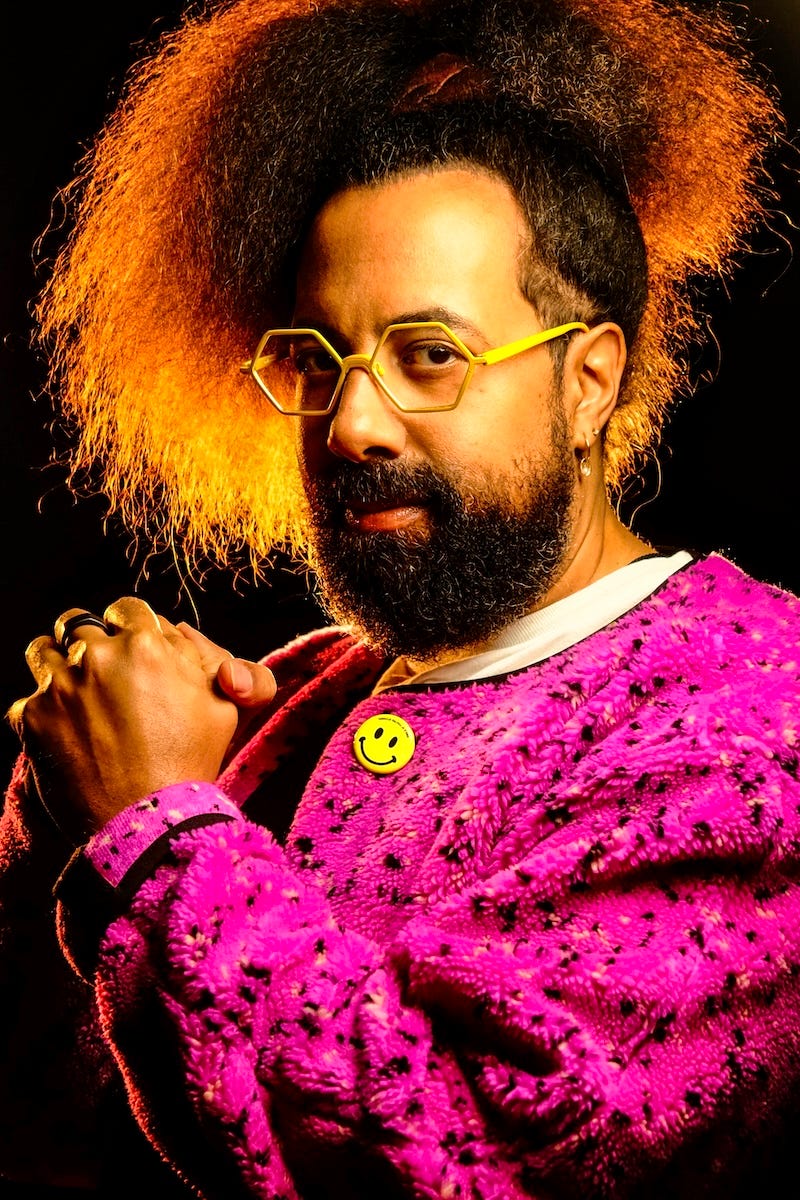
Reggie embodies what it means to practice radical imagination—the courage to envision a future that doesn’t yet exist, and to live toward it anyway. So let’s follow his lead. Let’s stretch our own capacity for radical imagination and dare to picture an America—and a world—freed from the malignant, useless scourge of racism. A world organized not around fear or hierarchy, but around our shared humanity.
With that spirit in mind, we’re welcoming the voice of a dear friend of the Soul Boom team: the pure-hearted, devoted community builder and activist Syda Segovia Taylor. The essay below originally appeared earlier this month in the Chicago Tribune.

Syda Segovia Taylor: I beat cancer. America’s racism will require the same fight.
By SYDA SEGOVIA TAYLOR
At age 32, I began my fight with breast cancer and won after a mastectomy, chemotherapy, radiation, multiple corrective surgeries and years of tamoxifen. Now, as I celebrate my 50th year of living, I can articulate the parallels between my battle with cancer and our collective fight against racism. It is shocking, painful and transformative.
When diagnosed, my first question was, “How bad is it?” From my observation, America’s societal cancer has spread to the point in which we can no longer ignore its deadly progression.
As a first-generation American with roots in Colombia and Honduras, I embraced the beauty of diversity while witnessing our country’s anti-Blackness reality, which along with the principles of my Bahá’í faith compelled me to stand for justice at a young age.
But now, entering the seventh year of Organic Oneness, an organization I founded on principles that bring people together to eliminate racism and create healthy communities in Chicago, the work against racism is multiplying with fewer resources. America continues to suffer from the cancer of racism, and its health is declining rapidly, creating openings for other global ills to attack its fragile state.
The beautiful veins of this country are plagued by cancerous cells; these cells have entered every organ. We are witnessing how this diseased mindset laid the foundation for every major system: law, health, education, economics and housing.
Liberation movements were like chemotherapy, flushing our systems to reboot their chemistry at the cellular level. And now it’s time for another blast as major cities in our nation resemble the countries my family fled from. I now understand why my grandmother never left the house unassisted, as I am hesitant to take walks where I normally felt safe, and I am afraid for my parents.
While fighting cancer, I had to manage extreme emotions and be patient in the midst of anxiety. I had to envision myself being healthy while painfully battling myself away from death. But here’s what truly transformed me: understanding how to love myself, realizing how each part is interconnected and honoring how each system works. My thoughts manifested emotions and behaviors. My spiritual centeredness determined my mental strength or weakness. My food contributed to physical wellness or illness. My environment promoted or delayed my healing.
I had to relearn how to live life, understand root causes, aggressively change my habits and build new structures so the cancer cells died and never returned. I learned to accept all the parts of my body that I was conditioned to hate. I found my voice to be brave with words. I created space to heal and taught everyone my new boundaries. This reflective, perilous process is what I had to do for my body to survive.
The mature love I experienced required sacrifice of immediate gratification for the greater good so my daughter can have a mother and my husband a wife. My new love carried me through the darkest moments.
Fighting racism is no different. America must do similar work to survive. There is a dire need for us to understand that we are one human family; we are witnessing the danger of believing we are not interconnected.
The treatment for racism must take place on every level: individual, community and institutional. No one is exempt as we are all affected by this deadly disease. It will require us to confront uncomfortable truths about this nation — who we took land from, who suffered to build it and who is still presently suffering — and aggressively, systematically repair the harm.
We need to rid ourselves of any ideas of inherent superiority and see the nobility in each person. We need to let go of old patterns of behavior while integrating new ways of life. We need to focus on individual transformation while actively serving the community. We need to replace hate with thoughts of love.
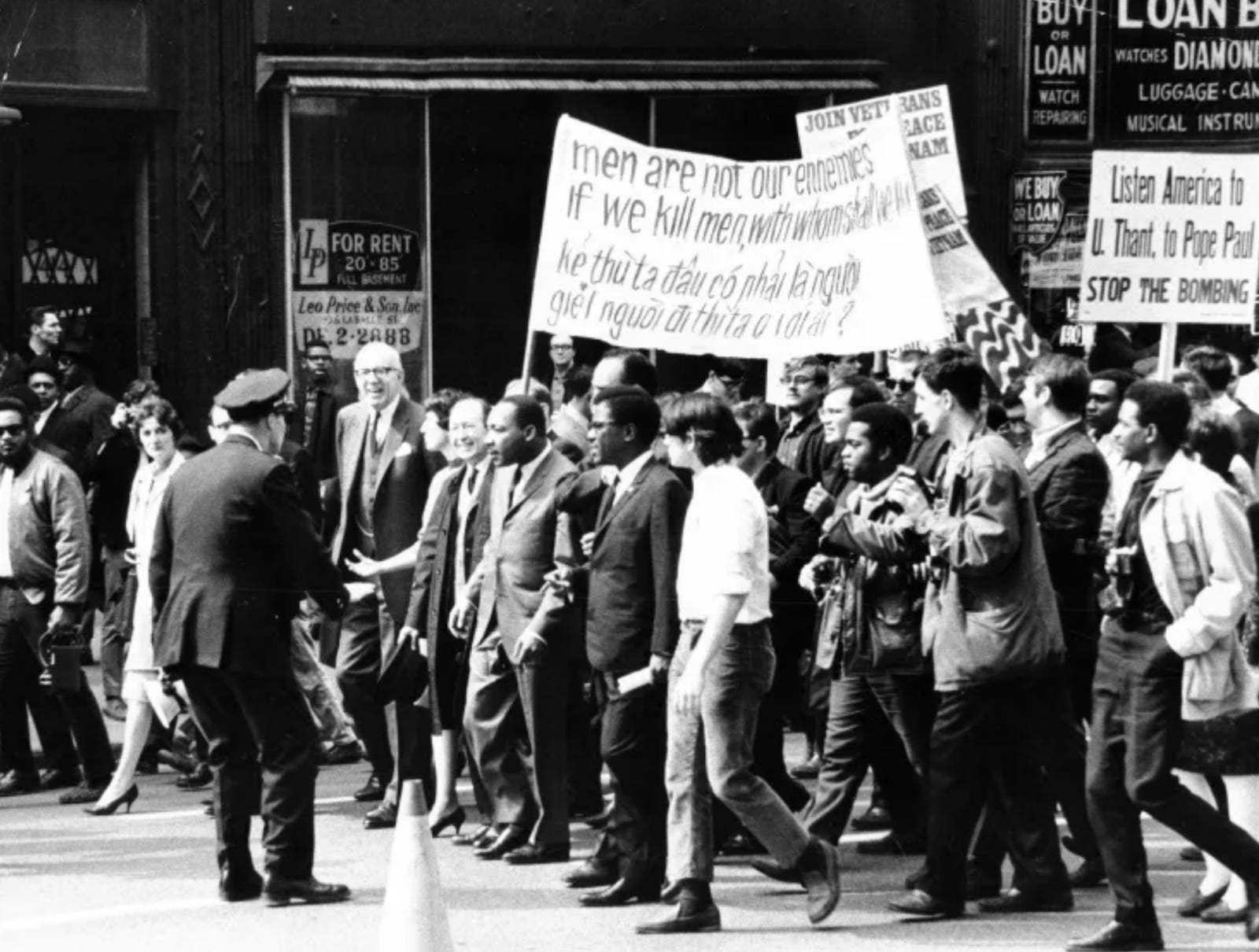
The Rev. Martin Luther King Jr. said: “Those who love peace must learn to organize as effectively as those who love war.”
This means everything; our data, strategic plans, human capital, materials and supplies, and mindset all need to be focused on one common goal. Our decisions should be made with everyone at the table. Embracing our diversity allows us to build new systems so everyone lives to their fullest potential.
This is where local community building becomes essential. As Organic Oneness convenes its annual King Day of Service on Jan. 19 for 350-plus volunteers, I witness how love manifests in action when we bring people together for service projects, create spaces for healing conversations and invest in the well-being of all people, foregrounding Black and brown communities.
Transformation happens when neighbors look each other in the eye and choose connection over division. It happens when we show up for each other and build trust through spontaneous conversations and genuine care, when we share a meal, laugh and pray together. This grassroots heart work is how love becomes tangible and shifts from abstract ideals to lived reality and policy.
I stayed hopeful while fighting cancer, even when the treatment felt worse than the disease. America can do the same. We can eradicate racism if all communities commit to doing this together with love as the guiding force and stay centered and healthy during the transformation.
The beautiful life we want is possible. Start with love in your heart, and that energy will flow through the veins of the community to the rest of the nation.
Syda Segovia Taylor is the founder and executive director of Organic Oneness and a member of the Chicago Reparations Task Force and Be the Healing.
What do you think, Soul Boomistas? If racism is a disease that affects every system of our society, what part of the healing work do you feel personally called to do right now—within yourself, your community, or the systems you’re part of?