

Pete Holmes: Why Everything Belongs
The Philosopher-Comedian Returns to Soul Boom!
In Pete Holmes’ previous appearance on Soul Boom—during our inaugural Soul Boom Live at Largo—much of the conversation revolved around consciousness, nonduality, Rupert Spira, and the nature of God. He and Rainn explored the philosophical terrain of Pete’s spiritual life: the ideas, teachers, and traditions that helped shape his worldview.
This conversation travels through some of that same country. Rupert returns. Ram Dass returns. Questions about awareness, consciousness, and God all return.
But the emphasis feels different. It’s less on what Pete believes and more about the inner journey that embraces all his previous incarnations.
Pete’s spiritual journey begins in familiar American territory: evangelical Christianity, youth groups, certainty, answers. A world in which the great questions of existence seemed largely settled. God existed. Salvation had a blueprint. The universe possessed a clear moral architecture.
But life has a way of interrupting our certainties.
For Pete, one of those interruptions was divorce. The future he imagined disappeared. Assumptions he had carried for years no longer seemed capable of holding the weight of reality. Many people experience such moments as a collapse. Listening to Pete describe them now, they sound more like an initiation.
The experiences we most wish to avoid often become the experiences that transform us. Not because suffering is inherently noble, but because it strips away the stories we mistake for ourselves.
Pete has spent years exploring that territory through the work of thinkers and teachers as varied as Joseph Campbell, Ram Dass, Richard Rohr, and Rupert Spira. What unites them is not a shared doctrine but a shared intuition: that reality is larger than the conceptual boxes into which we habitually place it.
Pete shares the words of Richard Rohr’: “everything belongs.” It may be the simplest summary of Pete’s worldview.
Everything belongs. The embarrassing parts. The holy parts. The failures. The victories. The certainty and the doubt. The evangelical kid. The divorced comedian. The spiritual seeker. The frightened self and the awakened self. Not one replacing the other, but all of them somehow included in a larger whole.
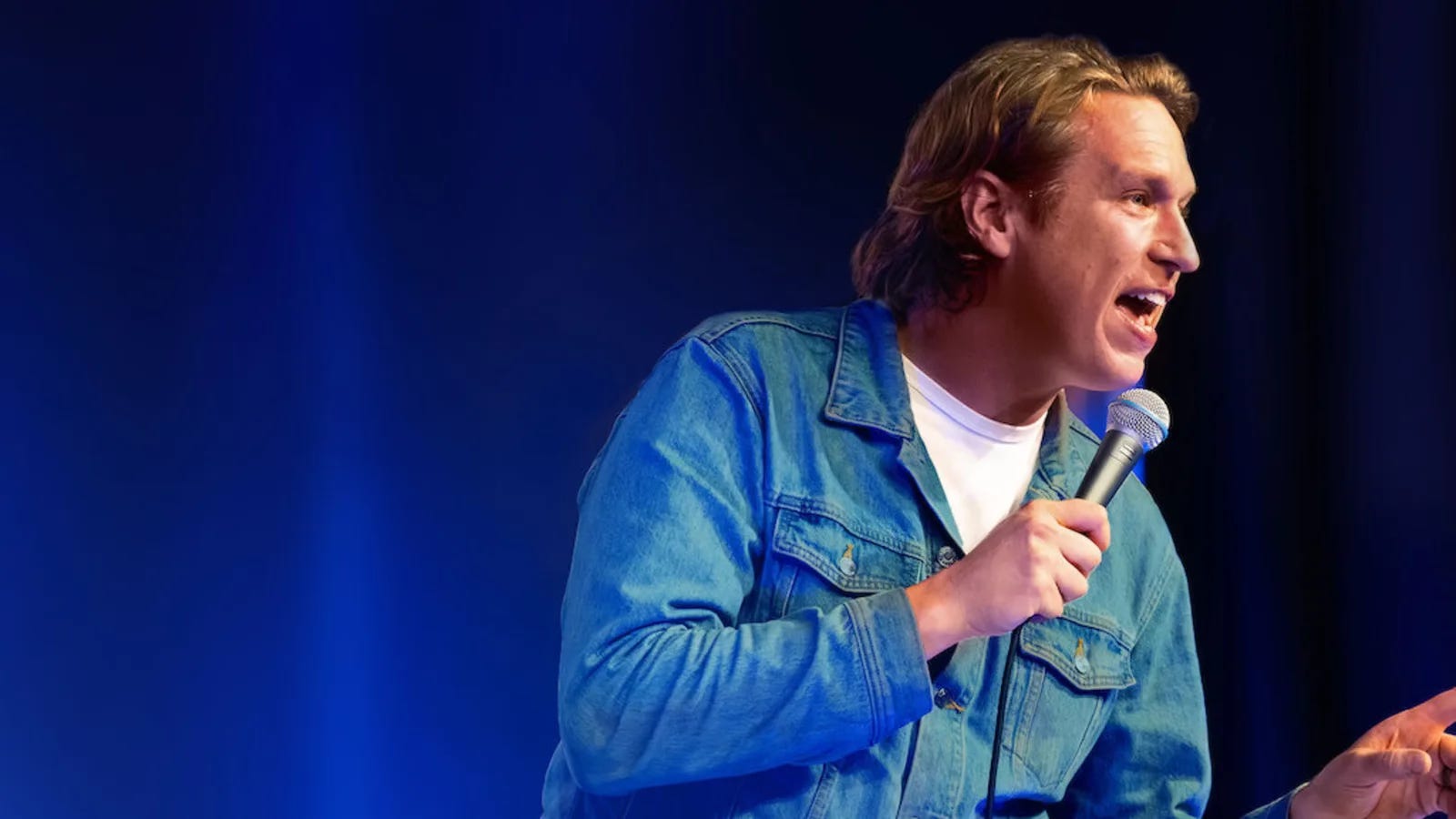
Much of modern life is organized around exclusion. We curate our identities and our conceal contradictions. Yet wisdom traditions across centuries often point in the opposite direction. They suggest that maturity consists less in perfecting ourselves than in enlarging ourselves. Becoming spacious enough to contain complexity without being shattered by it.
That insight appears repeatedly throughout the episode, including in an extended discussion of Christianity. Pete offers a striking observation borrowed from Richard Rohr: perhaps Christianity, at its best, is a spirituality of learning how to lose well.
It is difficult to imagine a message less aligned with the values of contemporary culture. We are surrounded by exhortations to win—to accumulate, optimize, dominate, achieve, and prevail. Yet the central figure of Christianity enters Jerusalem on a donkey, not a warhorse. He is humiliated before he is glorified. The apparent defeat becomes the source of redemption.
Whether one interprets that story literally, symbolically, or somewhere in between, the pattern appears everywhere. The breakdown that becomes a breakthrough. The wound that becomes an opening. The loss that reveals a deeper form of belonging.
The conversation eventually arrives at the question beneath all spiritual questions: What is God?
Pete’s answer is less a definition than a gesture. The God he speaks about today is not a cosmic supervisor keeping score of human behavior. It is closer to what mystics across traditions have pointed toward for centuries: the awareness within which all experience appears. The mystery that precedes concepts. “The Ground of Being” as theologian Paul Tillich would describe it.
What makes this conversation compelling is not the philosophy itself. It is hearing those ideas refracted through lived experience. Through heartbreak. Through uncertainty. Through many, many laughs.
Pete remains one of our favorite kinds of guests: deeply thoughtful, spiritually adventurous, and entirely unwilling to sacrifice humor in the pursuit of seriousness. The result is a conversation that moves effortlessly between theology and comedy, grief and transcendence, the ridiculous and the sublime.
In other words, exactly the sort of conversation we love around here.
I met Pete at a recent retreat with Mirabai Starr. In all my cluelessness, I had no idea who this man was that I was having just a funny and spiritually deep conversation with. Authentic. Grounded. Soaring. Hilarious. Thank you for highlighting this - that spirituality is all of it.
"Everything belongs." That is the whole thing. The embarrassing parts. The holy parts. The failures. The victories. The certainty and the doubt. Not one replacing the other. All of them included in a larger whole.
Most of life is organized around exclusion. We curate our identities. We conceal contradictions. But wisdom suggests maturity is not about perfecting. It is about enlarging. Becoming spacious enough to contain complexity without being shattered by it.
The breakdown is the breakthrough. The wound is the opening. The loss reveals a deeper form of belonging. That is the pattern. The apparent defeat becomes the source of redemption.
The question beneath all spiritual questions is not "What is God?" It is "What is the awareness within which all experience appears?" That is the ground. The mystery that precedes concepts.