

Greetings to all you peaceniks around the planet—
This week’s episode of the Soul Boom podcast Rainn sits down with peace activists, social entrepreneurs and authors Maoz Inon and Aziz Abu Sarah:
Rainn opens by asking the central question: Is peace between Israelis and Palestinians still possible after October 7, the war in Gaza, and the current level of violence? The duo answers unequivocally that peace is not only possible but inevitable—it’s only a question of how long will we have to wait, and how much suffering will be endured along the way.
The sentiment might be unexpected, but it’s even more surprising when you learn that Maoz Inon is an Israeli whose parents were murdered in the October 7 Hamas attacks, and that his co-author is also no stranger to violence: Aziz Abu Sarah is a Palestinian whose brother died after being imprisoned and tortured by Israeli authorities decades earlier. By every instinct of history and politics, these two men should have become enemies.
Instead, they became brothers. Their remarkable new book, The Future Is Peace, is brilliantly told, deeply rooted in history, unsparing about the present, and unwavering in its conviction that peace is humanity’s destination.

If their names sound familiar, you may have seen them recently on The Daily Show with Jon Stewart, where they spoke about refusing to let devastating personal loss become an excuse for vengeance. Or perhaps with Christiane Amanpour’s show, where they challenged one of the most deeply held assumptions of our time—that this conflict has simply gone too far for peace to remain possible. They’ve been traveling the world inviting people to imagine a future that many have stopped believing can exist.
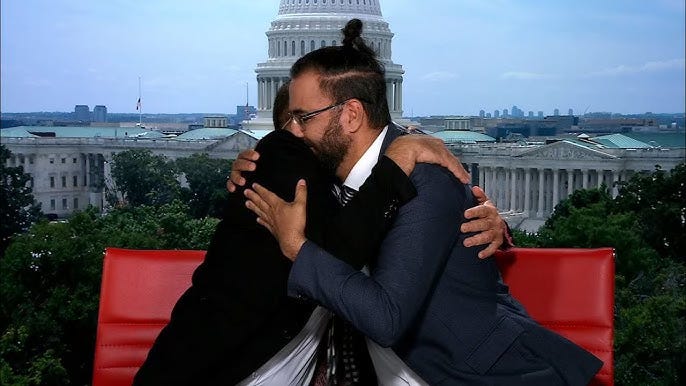
Rainn doesn’t avoid the difficult questions. And neither Maoz or Aziz minimizes the pain that has been endured. Neither asks us to pretend history didn’t happen. What they challenge instead is the assumption that history must always repeat itself.
At one point in the conversation, Maoz says that peace is one of the names of God—in both Hebrew and Arabic. Shalom. Salaam. Aziz reflects that, in Islamic tradition, many of the names of God come in complementary pairs, but peace stands alone. It has no opposite.
As Nelson Mandela said, “Peace is not just the absence of conflict; peace is the creation of an environment where all can flourish regardless of race, color, creed, religion, gender, class, caste or any other social markers of difference.”
As Maoz and Aziz demonstrate, peace is a practice, and one that people on the ground can choose long before treaties are signed and politicians catch up.
Which makes us think about another moment in the history of the Holy Land.


More than a century ago, when ‘Abdu’l-Bahá—an important figure in Rainn’s Bahá’í Faith—passed away in Haifa, thousands gathered to accompany his funeral procession to Mount Carmel. Muslims. Jews. Christians. Druze. Government officials. Religious leaders. Rich and poor. They walked together through the streets of a city overlooking many of the most sacred sites of the Abrahamic traditions, united in honoring a man whose life was devoted to the oneness of humanity, whose service transcended every social and religious boundary, and whose love embraced all.
Today, that same city of Haifa has quietly become one of the centers of the Israeli-Palestinian peace movement. Perhaps that’s coincidence. Or perhaps it’s a reminder that the Holy Land has always carried more than one story. Alongside every chapter of division has been another—often overlooked—of people choosing relationship over resentment, shared humanity over inherited hatred.
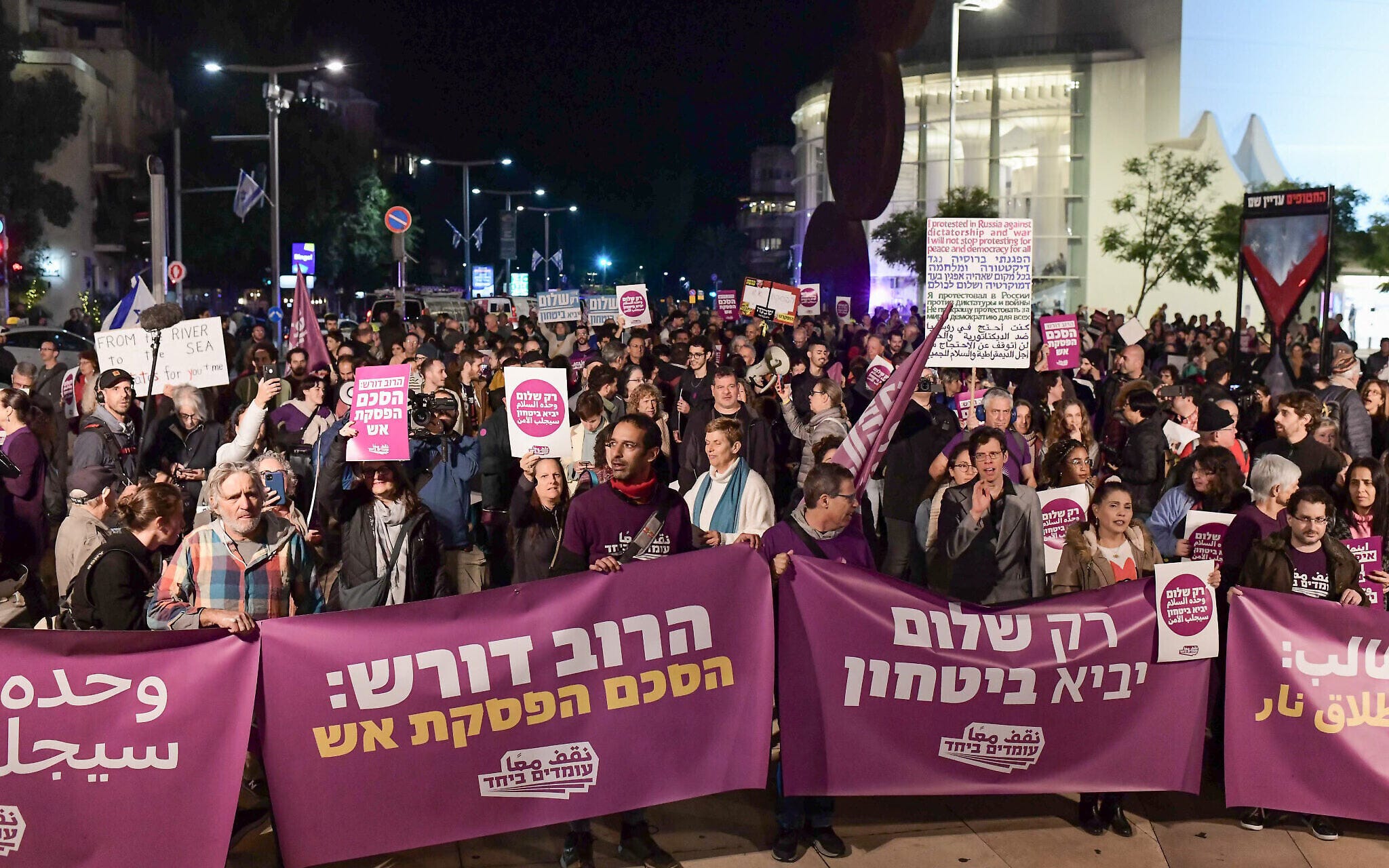
Maybe that’s the story we most need to remember. The Future Is Peace is not simply a book about the Israeli-Palestinian conflict. Like this week’s conversation on the Soul Boom podcast, it refuses both despair and easy answers. Instead, it offers something much rarer: the conviction that even after unimaginable loss, another future is still possible.
As Aziz and Maoz write:
“While our friendship is unusual, we are not unique. The two of us are part of a growing coalition of Israelis and Palestinians, working locally and globally to build a bridge to a shared future. Together, we are creating a new story. We do not see ourselves as Palestinians and Israelis, or as Jews and Arabs, but as human beings who believe in fostering a culture of dialogue, a culture of forgiveness, a culture of peace. To those who see only division lines, we say: If you must divide us, let it be as those who believe in peace and equality and those who don’t . . . yet.”
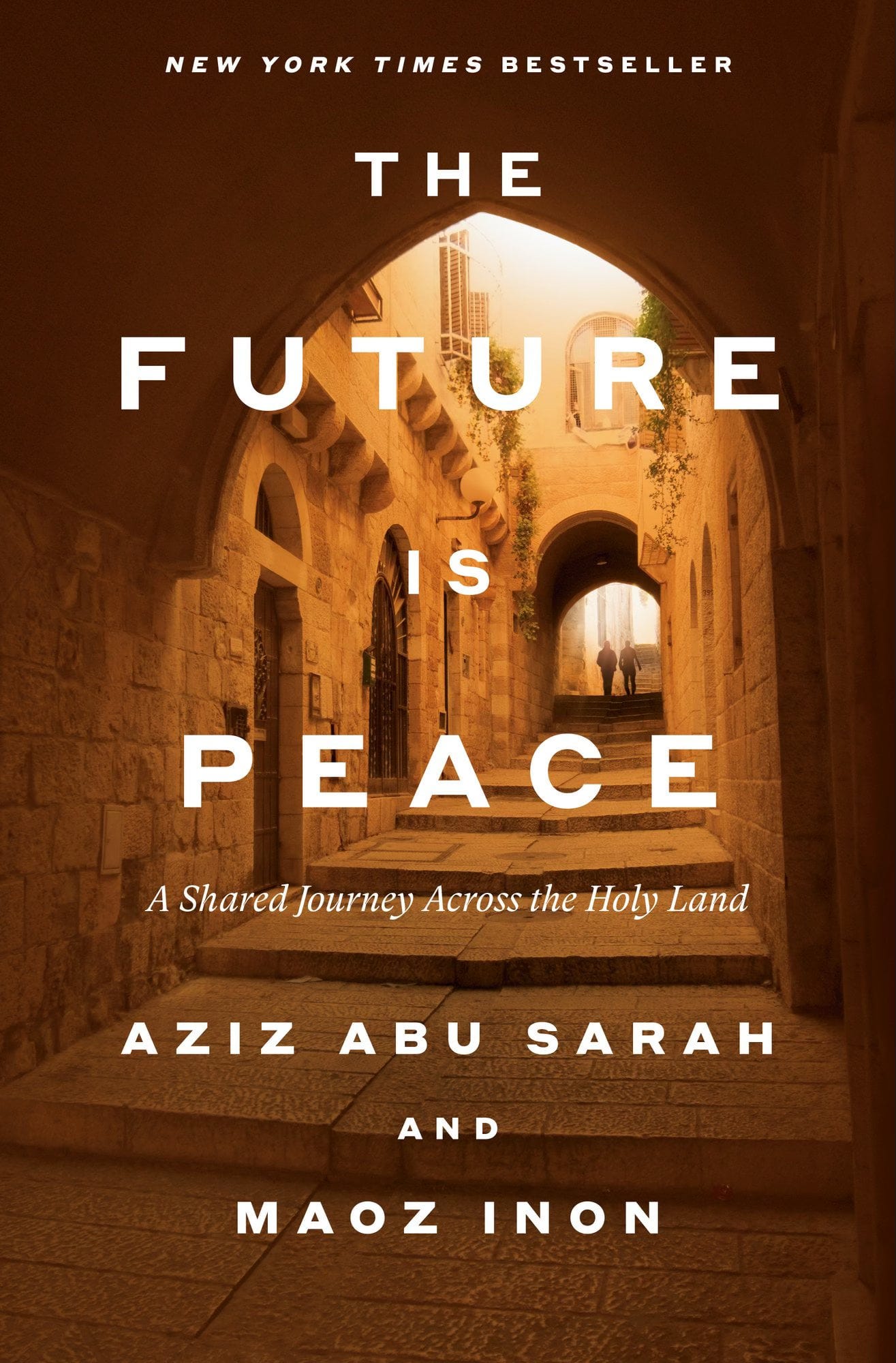
The Future is Peace
Excerpted from the book by Aziz Abu Sarah and Maoz Inon
Once, there were two brothers who lived on opposite sides of a hill. They had each inherited half of their father’s farmland. One was married with children, the other a bachelor who lived alone. They tilled their own plots of land, and when harvest time arrived, both were blessed with bountiful crops. One night, the younger brother thought to himself, “I have more than I need. My brother has a large family to feed. Surely, his need is greater than mine.” On the other side of the hill, the older brother lay in bed thinking, “I have children who will care for me in my old age, but my brother has no one. Surely, his need is greater than mine.”
That night, each took a sack of grain from his own stores, carried it over the hill, and secretly placed it in his brother’s barn. In the morning, they were both puzzled to see their own stores unchanged. Night after night, this exchange continued. Until one night, under a clear and starry sky, the brothers met each other coming over the hillside, sheaves of wheat bundled under their arms. In that moment, they understood why their stores had never diminished. The brothers embraced and wept in each other’s arms.
It was on this hill, the site of an extraordinary act of brotherly love, that the holy city of Jerusalem was built.
The two of us—Aziz, a Palestinian, and Maoz, an Israeli—forged a bond of brotherhood when the world expected us to hate each other. We are peacebuilders, sons of farmers born into a world where the very idea of brotherly love between Israelis and Palestinians was unthinkable. Aziz lost his brother in the First Intifada; Maoz lost his parents on October 7. Our mutual loss and pain, along with a shared vision of peace, brought us together at a time when the violence of war has pushed our people further apart than ever.
This story of grace and generosity between brothers is a popular Jewish fable, but its origin is as an Arab folktale passed down through oral history for centuries by Palestinian Jerusalemites and then adopted and adapted by Jews in the early nineteenth century. Before there was conflict between our people, there was a long history of cultural collaboration. But today we are trapped in a hurricane of violence and vengeance that has led to more than a century of bloodshed. The scars of our generational trauma are deep. We are so divided by fear and anger, by extremism and tribalism, that we can no longer see each other’s humanity or feel empathy for one another’s suffering. We live the histories handed down to us, but if Israelis and Palestinians are to build a shared future—and we must, for the sake of both our people—the only way forward is to tear down the walls of ignorance and hatred that divide us.
We both know the agony of losing those we love most to this conflict. We understand that in the face of suffering and grief, when so many lives have been lost and families shattered, talking about peace can feel too vulnerable—dangerous, even. When each side believes that the other is a threat to its existence, talk of peace can feel like a betrayal of one’s people. Wherever we look in the world, we find these growing divides. Siloed into a false mentality of us versus them, we perpetuate zero-sum arguments fed to us by the politics of fear. The biblical Book of Proverbs says, “Where there is no vision, the people perish.” And today, we are too often sold a vision that leads to more violence, instead of one that leads to harmony and a strategy for lasting peace. But there is another way.
Peacebuilders have been marginalized, both at home and abroad, for far too long. We are not invited to sit at negotiation tables or included in international summits with those making decisions on behalf of our peoples. We are used to being dismissed as dreamers and mocked as being naïve. Yet we are realists. We know that bombs will not bring quiet, walls will not protect us, and war will not bring security to either side. What is truly naïve is imagining that fear and multigenerational trauma will lead to security, or that any strategy to end the horror of this conflict can succeed without dreamers and visionaries at the vanguard. We have met with politicians and world leaders to forge a path beyond the tragedy of endless wars, a path that leads to a future grounded in the values of dignity, inclusion, and equality. We have shared our personal stories in houses of worship, virtual town halls, and local community centers; on university campuses and in arenas before audiences of thousands. We have been interviewed by countless journalists and media outlets about our shared vision of peace “from the river to the sea.”
At our core we are travelers and guides. Coming from a tourism background, we have a passion for taking people on transformative journeys, and we have become adept at guiding travelers through conflict zones. We share a conviction that travel is more than just checking off destinations on an itinerary. It is an industry of diplomacy and dialogue—and peacebuilding. We have learned that when it comes to shifting mindsets and creating discourse out of discord, nothing is more powerful or transformative than the experience of stepping out of one’s comfort zone to meet the “other” and truly listening to their story. Between us we have organized and led thousands of tours across Israel and Palestine. We have witnessed people overcome fear and even hatred by being exposed to those they once considered enemies. The first step on the path to peace is listening to the other side’s story. This sounds simple, but for those who choose to walk this long and winding road, it is often the most difficult step to take. And so, in August 2024, ten months into the deadliest year in close to a century of bloodshed between Israelis and Palestinians, we turned to the transformative power of travel.
We wanted to tell the story of our people through the living history of the land that holds our memories. We wanted to give a voice to those whose lives have been indelibly shaped by the persistent violence of this conflict. However, months of bombings of Gaza and the looming threat of a regional war had all but collapsed the tourism industry across the region. Since we couldn’t bring travelers to the Holy Land in person, we decided to embark on our own eight-day journey across the ancient terrain that binds and divides our people. On this journey, we learned new things about each other, challenged stereotypes, met each other’s families, and grappled with century-old questions. We invite you to join us on this journey of memory, remembrance, and history…
Years ago, Aziz began using a “dual-narrative” approach, in which Israeli and Palestinian guides lead tours together as partners, sharing stories and perspectives that offer human context for travelers to understand the immensity of the conflict. On the journey ahead, we will take turns guiding you over land as we visit some of the most holy and contested locations in the region, and through time as we share the political history that has shaped the physical and psychological boundaries that separate our peoples.
We will take you to the landscape of Maoz’s childhood in the Negev, which for thousands of years has been a crossroads of trade, culture, and conflict. As we stand in the shadow of the border fence between Israel and the Gaza Strip, we will see the scars of war as we confront the trauma on both sides of the conflict and explore the intersection of grief and peacebuilding. In the ancient port of Jaffa and the modern Israeli city of Tel Aviv (known as the “Startup City” and the “City That Never Stops”), mythic and biblical symbolism collide with the recent past as we lay a foundation for the two historical narratives underpinning the conflict: the Israeli War of Independence that established a Jewish State in the wake of the Holocaust, and the resulting mass displacement of more than seven hundred thousand Palestinians from their ancestral villages and homes, known as the Nakba—the catastrophe.
In a region steeped in tension, nowhere is that feeling more palpable than in the holy city of Jerusalem. Sacred to the three Abrahamic religions, the “City of Peace” sits at the center of the conflict and holds the collective heartbeats of diverse faiths and cultures. As we walk the winding stone alleyways of the Old City, we will see the conflict in history and the conflict today, but also humanity’s profound capacity for collaboration. On the outskirts of Jerusalem, we will visit Aziz’s hometown and learn how the policies of separation and occupation prevent his family from living in their own home.
Next, we will head south and cross the checkpoint into the West Bank—an area roughly the size of Delaware—where about 3.3 million Palestinians live under military occupation, and where more than half a million Israeli settlers, in defiance of international law, have taken over large swathes of farmland and live in heavily guarded settlements. We will visit the Palestinian city of Bethlehem, where the concrete border wall stands more than twenty-five feet tall—twice the height of the Berlin Wall—and is covered in graffiti, murals, and street art that have transformed the mechanism of separation into a canvas of protest. In the West Bank, we will learn about the Jewish people’s biblical and historical connection to the region, come face-to-face with the reality of structural violence, and explore what binds Palestinians together as one people.
Next, we will head north to the most important Arab city within Israel, and the only one that still holds its pre-1948 Palestinian identity. The city of Nazareth is holy to Christians as the site of the Annunciation and the childhood home of Jesus. We will guide you through the history of how the birthplace of Christianity became the “Arab capital of Israel” and share the story of Maoz’s twenty-year partnership with a Nazarene family that revitalized the city’s economy.
We will end our journey in the Galilee, where we trace part of the route Jesus walked from Nazareth to Capernaum. The region’s history is layered and complex: we will see the remains of a Roman road built for a conquering army, the battle scars left by fallen empires, and a kibbutz built by children of the Holocaust over the ruins of a Palestinian village razed in 1948. Layer upon layer of pain, one trauma built on top of the other. Yet conflict is a part of the human story. It has been with us since the beginning of civilization. Pope Francis cautioned us against trying to ignore this reality, saying, “What would a society, a family, or a group of friends be like without tension or conflict? Do you know what it would be? It would be a cemetery. Because only in dead things are there no tensions and no conflicts. When there is life, there is tension and there is conflict.” We cannot escape this truth of our past or our present, but if we are to break free from perpetual violence and create a future in which our people can live together in peace, we must find a way to rise from conflict and evolve from it. Ultimately, every conflict ends. It’s up to us to decide how much blood must be spilled first.
If you take nothing else from our story and this journey, let it be these words: The future is peace. We know this because between us we have visited and worked in former war zones—from Vietnam and Northern Ireland to Rwanda and South Africa—where we have witnessed people’s capacity to rise out of the wreckage of their trauma and the destruction of war, and we have seen former enemies come together to forge a path of healing and reconciliation. We know that the future of humanity is peace; the only uncertainty is how many more innocent people will suffer before we get there.
We have been to places that take peace for granted, even though bloodshed, slavery, and genocide are part of their recent history. We have seen the weakening and delegitimization of international organizations such as the United Nations, which was created to prevent wars and build bridges but is being rendered unable to achieve that mission at an increasing rate as permanent Security Council members engage in or support preventable wars. We believe that now is the time to renew our vision for a peaceful world upon which these institutions were built. A lasting peace in Israel and Palestine would send ripple effects around the world and help remind the world that the future will be peace!
Excerpted from The Future Is Peace: A Shared Journey Across the Holy Land by Aziz Abu Sarah and Maoz Inon. Copyright © 2026 by Aziz Abu Sarah and Maoz Inon. Reprinted with permission of Crown, an imprint of Penguin Random House LLC.
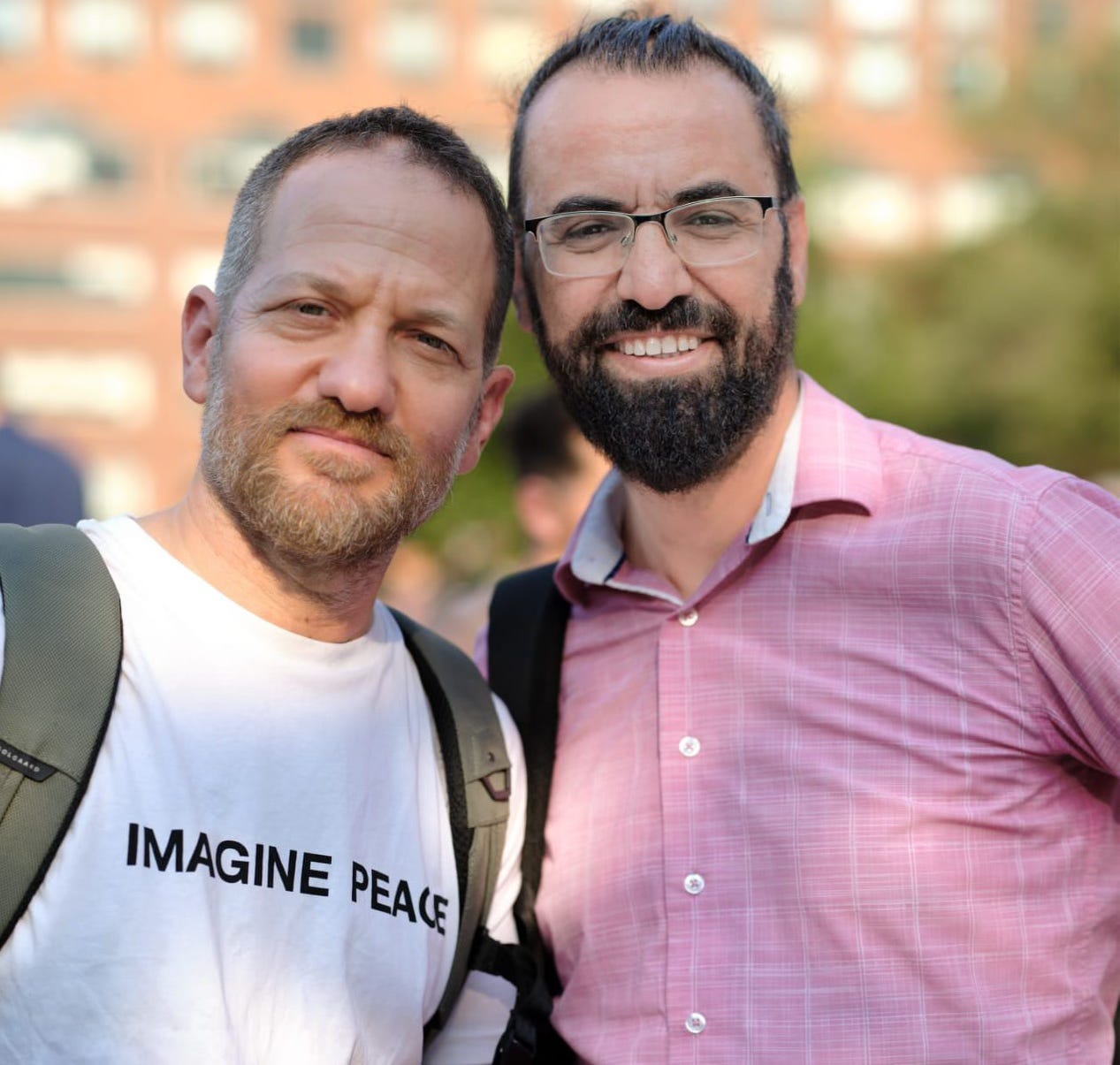
Aziz Abu Sarah is a Palestinian peacebuilder, author, and former National Geographic Explorer. After losing his brother during the First Intifada, he dedicated his life to transforming personal tragedy into dialogue, reconciliation, and peacebuilding. Maoz Inon is an Israeli social entrepreneur and peace activist who spent decades building ventures—including the Abraham Hostels network—designed to foster encounter, understanding, and connection across cultures. After his parents were killed in the October 7 Hamas attacks, he became an international voice for nonviolence, reconciliation, and a shared future for Israelis and Palestinians.
Together, Aziz and Maoz have emerged as two of the world’s leading advocates for grassroots peacebuilding, demonstrating through their friendship that reconciliation is not merely an aspiration but a lived reality. Through their writing, public speaking, and practical work, they invite us to imagine a future rooted in dignity, justice, and our common humanity.

Thank you for this story! Their voices resonate deeply. The only real future is peace. Everything else is a perpetuation of the distortions of the human spirit that result from cycles of violence. Aziz and Maoz challenge us to act from true spirit in our day to day lives. God bless them in their work.
Peace sounds good to me!