

The Secret to a Meaningful Life
Bill Burnett & Dave Evans on the podcast—plus an excerpt from their new bestseller ✨
Greetings to all you Life Designers!
This week on the Soul Boom podcast, Rainn sits down with design legends, Stanford professors, and best-selling co-authors, Bill Burnett and Dave Evans.
Bill and Dave aren’t just theorists—they’re co-founders of the Stanford Life Design Lab, where they’ve spent nearly two decades helping students, executives, and everyday people navigate life’s biggest transitions. Their work blends design thinking, psychology, and real-world experimentation, and has reached millions through their courses, workshops, and bestselling books.
The conversation opens with Rainn asking a deceptively simple question: how can a Christian who loves Jesus and an atheist who loves Nietzsche work together on the same project—helping people design their lives? What unfolds is a rich exploration of shared humanity, even across very different worldviews.
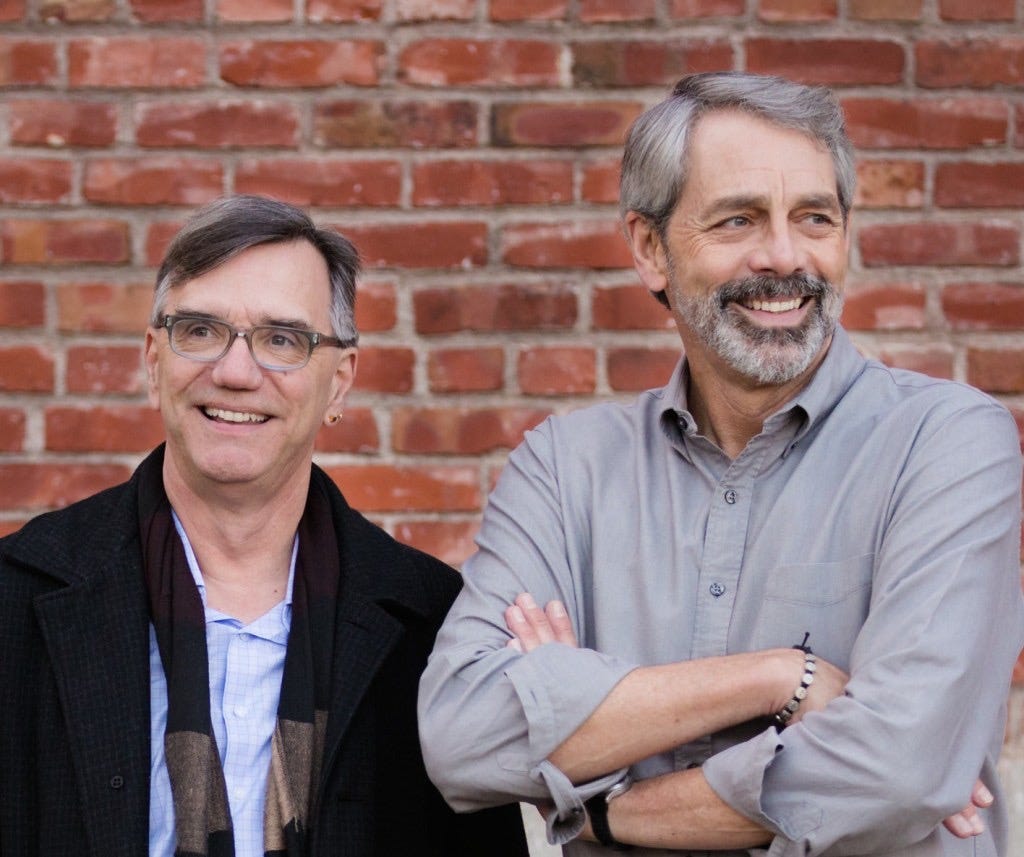
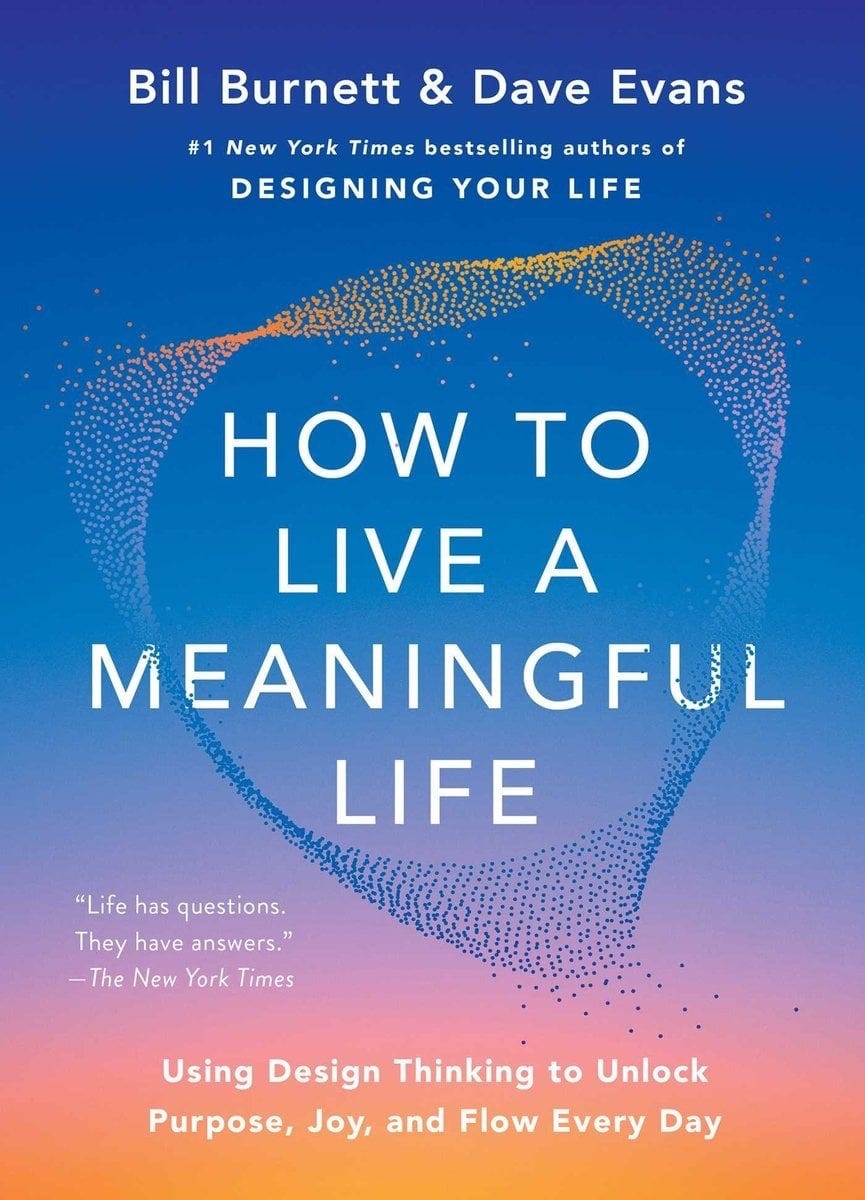
Rainn wanted to have Bill and Dave on the show because he loved their latest book, in which the two tackle the greatest design problem of all: how to design a meaningful life.
This isn’t their first rodeo. Their first book, Designing Your Life, was aimed at helping people get unstuck—offering practical tools for navigating careers, choices, and uncertainty through design thinking. But over time, they began hearing a persistent question from some of their former students: My life works—so why doesn’t it feel meaningful? They had achieved what they thought they wanted, only to discover it wasn’t enough. As Bill and Dave point out, many of us are living in that gap between a functional life and a meaningful one. That question led to their second book, How to Live a Meaningful Life, which moves beyond building a life that functions to designing one that actually feels alive.
Bill and Dave don’t treat meaning as an experience you stumble into or are handed by circumstance. They see it not as a static reality, but as a living practice you can actively design into your life. Not perfectly or all at once. But by staying curious, experimenting, and paying attention to what actually makes you feel alive.
Because the question isn’t just “What’s wrong with my life?”
It’s: What’s possible if I start designing it differently?

One of the key ideas Bill and Dave return to is that meaning unfolds over time—and that the work of your twenties, thirties, and beyond is not the same work.
They describe the early years of adulthood as the “Odyssey Years”—a season not for having it all figured out, but for exploring, forming convictions, and building the inner compass that will guide the rest of your life. It’s a time to cultivate curiosity, practice wonder, and begin aligning your life with your values—not perfectly, but intentionally.
Get too fixated on finding the one perfect passion, and you can stall out. Lose your curiosity or your sense of wonder, and you risk drifting into a life shaped by other people’s expectations instead of your own.
But invest in those capacities early—curiosity, wonder, coherence—and you lay the groundwork for a life that can grow in meaning across decades.
With that foundation in mind, the excerpt below explores what comes next: how the first half of life is about building your “container,” and how the second half invites you to transform and give that life away in a deeper, more expansive way.
Ages and Stages
Adapted and Excerpted from HOW TO LIVE A MEANINGFUL LIFE: Using Design Thinking to Unlock Purpose, Joy, and Flow Every Day
By Bill Burnett & Dave Evans
The First Half
After the Odyssey Years, the rest of the first-half years are full of challenges. It is during this stage that Richard Rohr talks about building your life container. This is the container that defines who you are and where you stand in the world. Basically, it’s what you’re all about—the combination of your story, your Workview, and your Lifeview... Crafting that container is hard, necessary work. Much if not most of that work is done in the transactional world as you build your work and career and assemble your network of friends, colleagues, and family. The emphasis is on getting stuff done and making something of your life (however you define that). And it takes time.
That transactional emphasis tends to come with a nonstop sense of urgency. It seems like everything takes too long, so we are constantly pushing to speed things up. But a lot is happening in these first-half years with work, career, family, relationships, children, community, and naming your mission and goals for life. These things take a few decades to complete, so pace yourself. Don’t let the urgency distract you from the joy of this season. These very productive years can be deeply gratifying and meaningful, if you remember to pay attention and catch the many wonderful moments when they appear. You’ll pass this way but once, so remember to make the most of it.
The encouragement we want to give to those of you in the first half of life is to keep moving and not get lost or stuck. We wrote this book to address a concern that we kept hearing again and again from people in their thirties and forties—that they were working hard, and even successfully, at designing and building their lives, but they still weren’t experiencing the kind of meaning and purposefulness in those lives that they were hoping for. As we heard their stories, it sounded to us like they were accidentally (though quite understandably) getting stuck in their first-half-of-life thinking.
For modern people in a post-internet, AI-accelerated world, the first-half-of-life project can easily become all-consuming and all transactional. The first half’s hyper-focus on producing and achieving has made impact the primary if not sole form of meaning-making many people recognize. Being busy isn’t the problem. As we’ve seen it, losing sight that there is anything else in life is the problem.
There’s more at stake here than just the sadness of missing out on the gifts of the flow world during these years. This relentless focus on constant production morphs from a merely lopsided lifestyle trend to an ideological conviction. Serious people living worthwhile lives are getting stuff done, and the best and brightest are using technology to do more faster. The mantra of more faster starts to become a mindset—even a kind of moral code—that perniciously works its way into every domain of modern life. Worst of all, this mindset is insatiable, so it carries its adherents along year after year, well into the second half of life and in so doing delays or even prevents the rest of the journey of becoming fully human.
If you’re learning the same lessons at sixty that you learned at forty, there’s a good chance you overran the finish line of the first half and just kept going. Keeping a more balanced perspective isn’t hard to do, but it is easy to forget. That’s where some well-chosen practices from this book and participating in a supportive formative community can make a world of difference.
During these go-go years of work and possibly family, just remember to design a life that includes regular access to the flow world, that makes room for wonder, and appreciates coherency along the way. You don’t need to dedicate lots of time to these things—just enough to keep your awakened brain awake and celebrate the scandal of particularity.
The second recommendation we have for this first-half stage is to get your compass calibrated and form the habit of living coherently. While the Odyssey Years are the time to start forming your Compass Values, it’s in the thick of these first-half years that your compass gets calibrated against the push and pull of reality in adult life. Now is the time when necessity will very likely demand some compromises be made.
Perhaps creativity is important to you, but the only job you could find in the media world was account management. Is creatively managing your customer relationships and promoting creative media (but not actually making it yourself) good enough, or do you feel you need to find a different job altogether? These aren’t easy questions, but they’re the ones we face in the first half. When they appear, take them head-on and work it through so that you have confidence in your own coherency.
In our work, when someone at the age of thirty-eight or forty-five suddenly looks up and finally admits to themselves they’ve lost their way, exclaiming, “Omigosh! How did I get here?!” it’s usually because they abandoned their compass early on—or never calibrated it in the first place. Having a set of values is easy; applying them coherently in the real world can be harder. Don’t shy away from the task or put it off to next time. Get your compass calibrated and take coherency sightings regularly, especially in your thirties and forties.
This is also a great time to invest in a formative community and to find mentors to help you navigate the tough choices when they arise. Both of us remain deeply grateful to have had great mentors who helped us stay on track when things got confusing during our early careers and young family years.
The Second Half
The second half of life is about moving from self-actualization into self-transcendence—the peak of Maslow’s revised pyramid. This follows the rule, “First we must build the Self, so that we can transcend the Self.” Going back decades if not centuries, much has been written about the second half of life, and never more than as the huge baby boomer generation began entering their sixties and seventies (with Gen X and millennials coming up close behind). If you are entering this phase of life, we encourage you to sample the many books, TED Talks, podcasts, workshops, and articles on the subject and discover what resources are most helpful to you. While this is not a comprehensive treatment, we do want to highlight some of the unique gifts and design opportunities to be found in this stage.
When we’re talking about the second half of adult life, we’re talking about the life that awaits us after a big shift in the human journey of becoming—the shift from role to soul. In Connie Zweig’s lovely book The Inner Work of Age: Shifting from Role to Soul, she describes the special invitation of late life as an opportunity to discover an advanced stage of human development that is hidden in plain sight—the shift from role to soul.
This phrase was coined by spiritual teacher Ram Dass, a Harvard psychologist who returned from India in the 1960s and became a renowned guide and bestselling author. He describes this shift in identity from the active roles that we have fulfilled during our lives to something deeper, something connected to a spiritual essence that has inherent value and does not depend on our productivity, accomplishments, or self-image. Ram Dass calls this spiritual essence loving awareness. Whether we call it soul, Spirit, Higher Self, or God, when we begin to identify with That, we begin to become who we really are. With this next stage of development, we can unearth the treasures of late life.
Not everyone chooses to make this shift, and while it usually happens in one’s fifties, it can start anywhere from thirty-five to eighty-five, depending on the mindset and personality of the individual. The famous psychiatrist and researcher Carl Jung spoke extensively about this change. He called it going from life’s “morning” to life’s “afternoon.”
Thoroughly unprepared, we take the step into the afternoon of life. Worse still, we take this step with the false presupposition that our truths and our ideals will serve us going forward. But we cannot live the afternoon of life according to the program of life’s morning, for what was great in the morning will be little at evening and what in the morning was true, at evening will have become a lie.
Jung suggests that second-half living is different from the first-half living, so the tools and tricks that worked in life’s morning probably won’t work as well in the afternoon of life. Remember philosopher James Carse’s discussion of finite and infinite games—where we play finite games by the rules to win versus playing with the rules in infinite games to get to keep playing.
Using Carse to explain Jung, what we’re saying is that the first half of life is playing a finite game (winning the project of building the container of your life) while the second half of life is an infinite game (staying in the never-ending game of enjoying each particular moment for itself). Going from being an effective finite game player to an artful infinite game player is what the big midlife shift is all about.
That may sound a bit daunting, but if you think on it for a moment, it’s wonderfully encouraging news. Carse and Jung and countless wisdom traditions before them are telling us that the second half of life is a refreshingly new chapter with new gifts to give and new experiences of meaning and purposefulness in store for us. It stands to reason that a new approach is needed to make the most of these new discoveries.
Our first tip: Don’t stumble your way into second-half living. (Skip the midlife crisis.) Stumbling into midlife happens when we have become so preoccupied with first-half living that we ignore the signals that the game is changing. Signals like your body is past its natural peak; you’re the one at work with more answers than questions; your kids are going through puberty; and “winning” or “succeeding” just doesn’t pack the same punch it used to.
When these things start appearing in life, don’t turn a blind eye and just hit the gas to accelerate into your old life. Lean into this new perspective and listen to what your life is starting to tell you.
The secret to doing midlife well is simple—it’s our old designer’s mindset friends: acceptance and availability. If we accept that the second half is coming and make ourselves available to it and open to learn from it, we can make the most of it. If we just try to keep doing what we’ve done before, we’ll get stuck in the first half and find it more and more frustrating. If you keep a little curiosity, wonder, coherence, and community going, you’ll be well positioned to skip the crisis and sail into your second half.
The chief feature of the well-lived second-half life is freedom. With the container-building project of your first-half self largely completed, you are now free to put your attention on other things. You are still involved in the transactional world and probably very busy, but in this stage, you more and more get to pick what you say yes and no to.
If we come to our second-half life with a healthy trust in ourselves and fully accepting the life that we’re in—successes, losses, compromises, joys, and all—our capacity to notice and pay attention to our experience of life in the moment (and not just our progress on our goals) takes a big leap forward. That capacity can become a superpower.
Our second tip: Get good at using your flow world–vision superpower. Like Superman’s superpower of x-ray vision, second-half people have the superpower of flow-world vision…
This is much easier to do in your second-half life because your maturity and wisdom enhance and focus your vision. You can see the flow world much more easily because you have put the transactional world in its place—it isn’t taking up all your attention and awareness. Remember that the flow world is always happening everywhere. Every moment has a flow moment available in it. With this superpower, you experience the reality of the flow world coursing along just below the surface of the transactional world, and you are able to access it anytime you want.
Excerpted from How to Live a Meaningful Life: Using Design Thinking to Unlock Joy, Purpose, and Flow Every Day, by Bill Burnett and Dave Evans. Published by Simon Elements, an Imprint of Simon & Schuster, LLC.
Bill Burnett is a designer, educator, and co-founder of the Stanford Life Design Lab, where he has spent decades helping students and leaders apply design thinking to life’s biggest questions. A longtime Stanford professor and self-described Nietzsche fan, he brings a curiosity-driven, human-centered approach to designing a life of meaning. He is the co-author of Designing Your Life and How to Live a Meaningful Life.
Dave Evans is a Stanford lecturer, entrepreneur, and co-founder of the Stanford Life Design Lab, where he has spent decades helping students and leaders design lives of purpose and coherence. A Christian who “likes Jesus a lot,” he brings together engineering rigor and spiritual reflection in exploring what makes a life meaningful. He is the co-author of Designing Your Life and How to Live a Meaningful Life.
I may have posted this here before, but for many people, the greatest gift life offers is that someday, preferably soon, they get to die — however frightening an anticipation/event death itself will likely be due to its total unknown and finality.
When suicide is simply not an option, it basically means there’s little hope of receiving an early reprieve from their literal life sentence.
Ergo, the following lines extracted from a much larger piece:
__
I awoke from another very bad dream, yet another horrid reincarnation nightmare
where having blessedly died I’m nonetheless bullied towards rebirth back into human form
despite my pleas I be allowed to rest in permanent peace.
I ask for the blessed purpose of my continuance. I insist upon a practical purpose!
Give me a real purpose, I cry out, and it’s not enough simply to live
nor that it’s a beautiful sunny day with colorful fragrant flowers!
I’m tormented hourly by my desire for emotional, material and creative gain
that ultimately matters naught. My own mind brutalizes me
like it has a sadistic mind of its own.
I must have a progressive reason for this harsh endurance!
Could there be people who immensely suffer yet convince themselves
they sincerely want to live when in fact they don’t want to die,
so great is their fear of Death’s unknown?
No one should ever have to repeat and suffer again a single second of sorrow that passes.
Nay, I will engage and embrace the dying of my blight!
This book sounds fascinating. My book club has just moved from fiction to also considering nonfiction books, and I'm thinking about suggesting this one. Most of the members of the club are decades younger than I...in midlife, while I am well into the second half of my life. I would love to have a serious discussion about life with them, and this will help. That said, I am eager to listen to the podcast next and see what the authors say about making meaning instead of chasing it. I believe that paying attention keeps leading me to discover ways in which I can use my strengths to fill a need out in the world that is important to me. I didn't "design" my life at all. I just allowed myself to be led. And when I wonder how I got where I am, I realize that something powerful must have led me here.