

David Bentley Hart and Rainn go to Hell
Also: Awakening, mystery, and the wisdom of the Tao Te Ching
Greetings, to all you seekers and sages, thinkers and dreamers—
This week on Soul Boom, Rainn sits down with theologian, philosopher, literary critic, translator, and one of the most provocative religious thinkers alive today, David Bentley Hart.
David is one of Rainn’s favorite thinkers. And by the end of this week’s episode, he might be one of yours too.
If there is a common thread running through David’s vast body of work, it is a refusal to accept shallow explanations for the deepest realities of human existence.
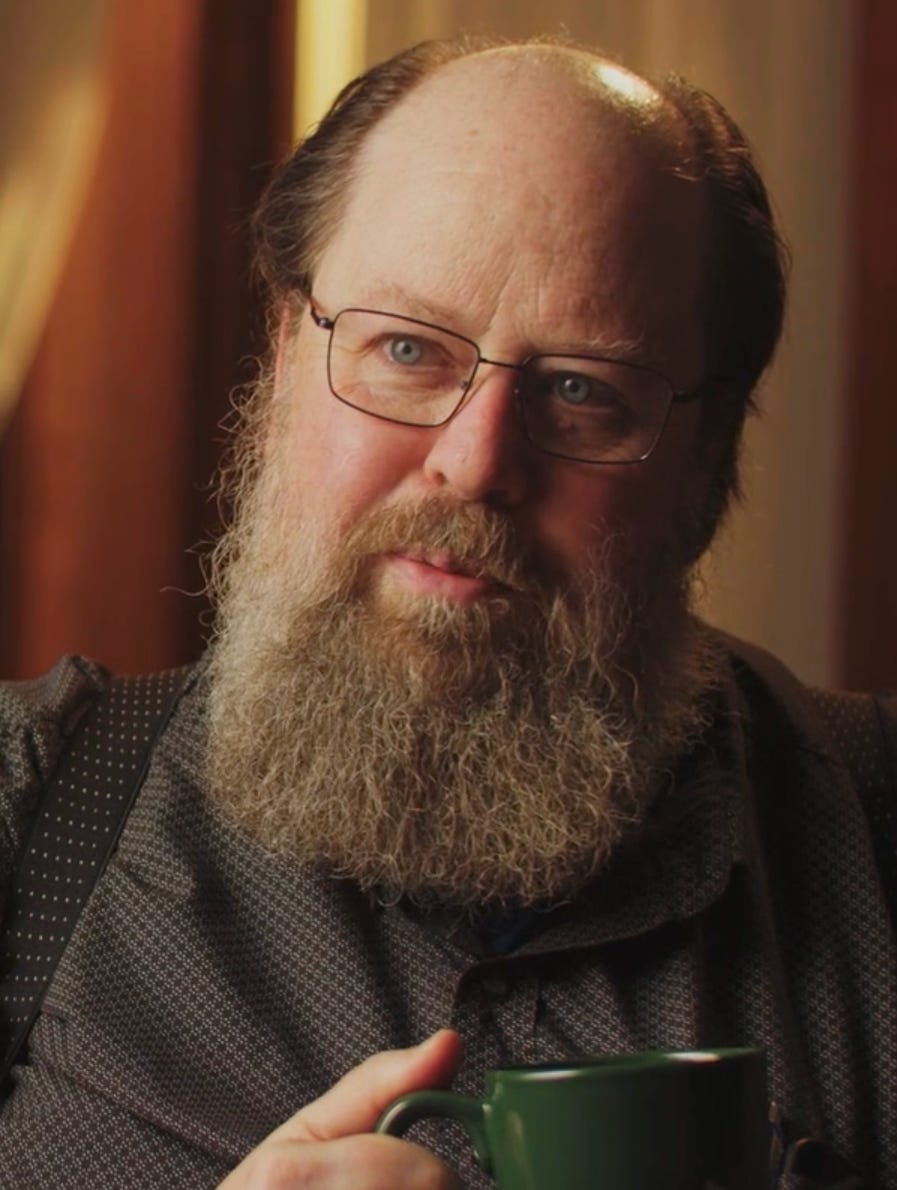
For Hart, reality is stranger, more mysterious, more interconnected, and more beautiful than we perceive.
Modern life can sometimes feel like a dream from which we have forgotten how to awaken. We become absorbed in the immediate concerns of our days—our careers, our anxieties, our political tribes, our ambitions, our endless scrolling—and gradually begin to mistake those things for the whole of reality. The horizon narrows and deeper questions fade from view.
In a passage in his book The Experience of God, he compares this condition to dreaming:
“One does not see that this secondary world rests upon no foundations, has no larger story, and persists as an apparent unity only so long as one has forgotten how to question its curious omissions and contradictions.”
This intuition appears throughout Hart’s work. Whether writing about consciousness, God, beauty, love, suffering, or the great religious traditions of humanity, he repeatedly invites us to look beyond appearances—not to escape the world, but to encounter it more fully.
That invitation feels especially relevant today, submerged in our digital simulacrums and unrooted to the ground beneath our feet. We are connected to more people than ever before, yet often feel profoundly alone. We possess extraordinary technological power while struggling to answer basic questions about meaning, purpose, and what it means to live a good life.
Those questions lie at the heart of David’s newest book, a new translation of the Tao Te Ching.
Written more than two millennia ago, the Tao Te Ching remains one of humanity’s most enduring spiritual texts. In his introduction, Hart describes it as one of the great monuments of humanity’s “awakening” to a deeper understanding of reality. This little book has found its way into monasteries and universities and backpacks and nightstands and probably a few glove compartments. It’s a book that can be read by a monk sitting quietly on a mountainside and by a college student sitting in a coffee shop and by a tired parent reading a few pages before bed. It has traveled across centuries and languages and cultures and lost none of its vital relevance.
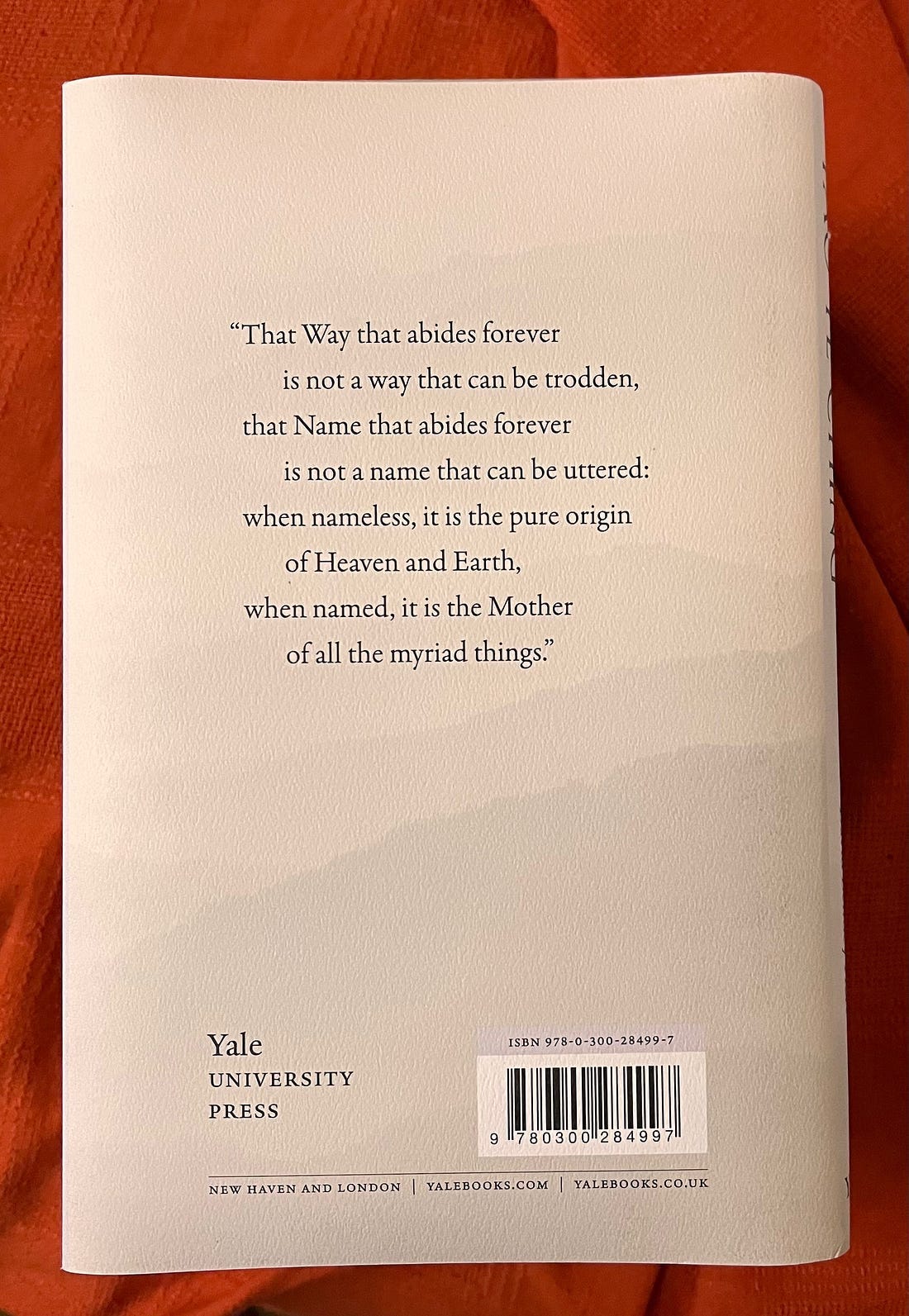
In luminous prose, David describes vividly the power of this ancient text in his introduction to the translation:
“... a very great part of the strange genius of the Daodejing lies in what it makes of this picture of things. It is a text that abounds in paradox, telling us that true strength lies in yielding, true wealth in possessing nothing, true greatness in humility, true wisdom in apparent folly, true glory in hiddenness, and the highest victory in the cultivation of indifference to struggles for dominance. It tells us also that force is weakness and pride a form of contemptible debasement.
In a world that has always been the plaything of violent and avaricious buffoons, as we have been reminded with special vividness in recent years, the “saint” or “sage” who represents the human ideal in this book is someone who instead refuses to strive for mastery or ownership or personal aggrandizement. Instead, he or she seeks to imitate the flow of nature and of life as a gift that arrives from a source beyond itself and moves toward an end over which no one at the last can wield control...”
What if the deepest source of wisdom is just learning to let go — and go with the flow? But, like, for real.
Enjoy this excerpt from David Bentley Hart’s new rendering of the Tao Te Ching.
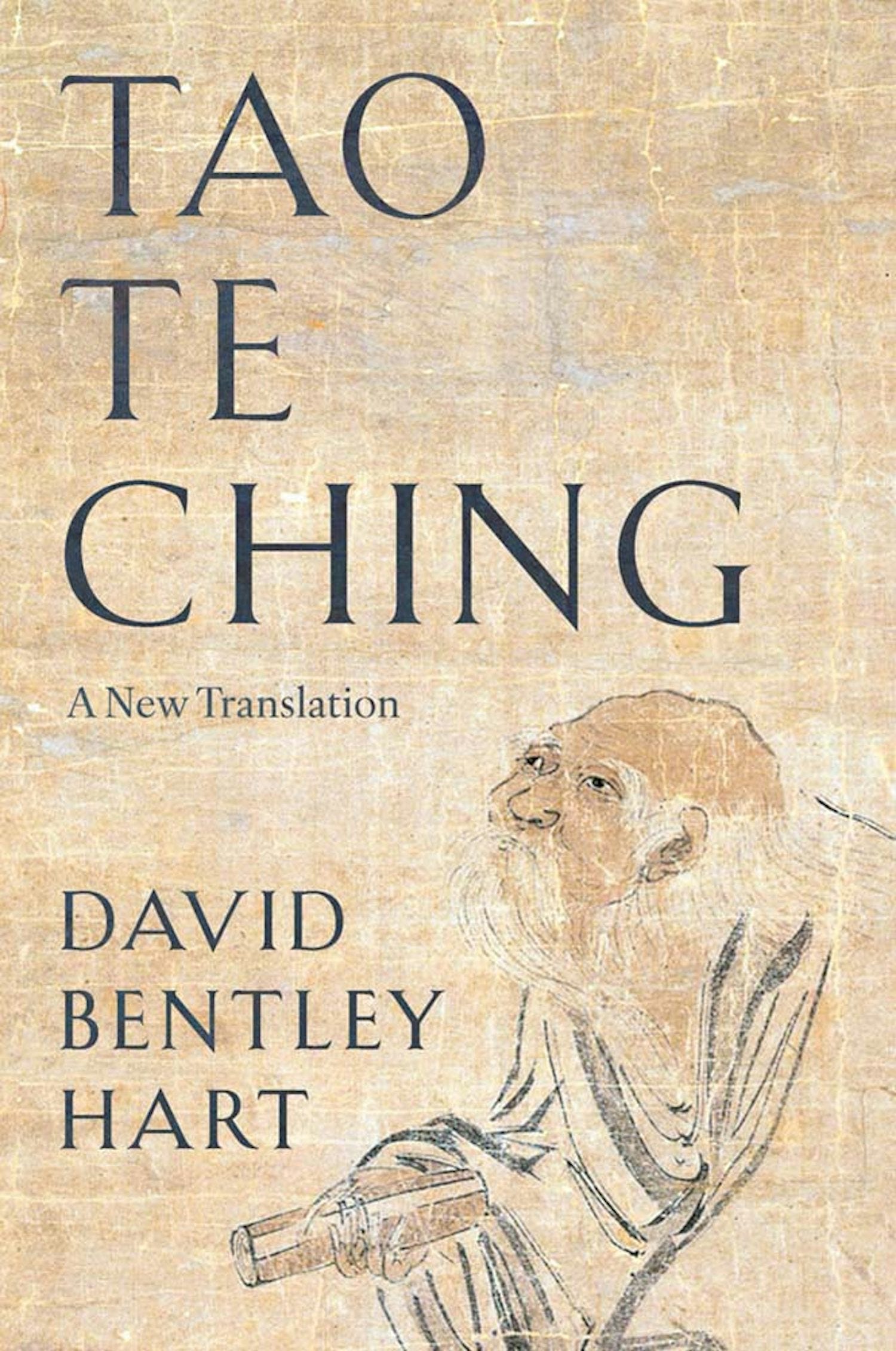
Tao Te Ching
Attributed to Laozi
A New Translation by David Bentley Hart with Patrick Robert Hart
I
That Way that abides forever is not a way that can be trodden,
that Name that abides forever is not a name that can be uttered:
when nameless, it is the pure origin of Heaven and Earth;
when named, it is the Mother of all the myriad things.
Abandon desire and its figments forever,
and you will be granted the vision of that wondrous mystery;
cling to desire and its figments forever,
and you will see only the surfaces of things.
Yet both the hidden and the manifest issue from a single source,
even if we speak as though they were wholly different.
All we can say of them is that they are an abyss of mystery,
and even then a mystery that constantly deepens—
this is the gateway through which one enters
into the wondrous mystery of all things.
2
All who dwell under Heaven recognize beauty when it manifests itself
by distinguishing it from deformity;
all recognize the good
by distinguishing it from wickedness.
So it is: being and non-being are begotten each from the other,
the arduous and the effortless arise together,
the long and the short reveal one another,
the high and the low rest each upon the other,
tone and timbre together produce harmony,
future and past are ever pursuing one another.
Thus one who is wise and holy dwells outside the realm of striving
and, without speaking, teaches a doctrine that has no need of words.
Attending to all the myriad things as they arise while rejecting none of them,
nurturing them but not possessing them,
laboring over them but seizing no fruit from them,
accomplishing what is needful but claiming no honors.
It is those who do not assert themselves
whose achievements never fade away.
3
Do not exalt even what is worthy of honor,
lest the people contend for honor and rank;
do not prize rare and unattainable possessions,
lest the people be moved to steal and intrigue;
do not make a great show of opulent riches,
lest the people’s minds be perturbed by longing.
One who is wise and holy governs by preserving the purity of humble souls,
filling their stomachs,
weakening their ambitions,
fortifying their bones,
always preserving them from furtive cunning and extravagant desires,
assuring that those who are cunning by nature dare not try to deceive them.
There is nothing that may not be ordered well by not striving.
4
The Way is empty
and yet forever inexhaustible to those who draw upon it.
It is a fathomless abyss
and yet is manifest in all the myriad things as their fountainhead.
It blunts all that is sharp,
unravels all that is entangled,
softens every glare,
settles the dust of the world.
Deep and tranquil, it seems to abide in its own eternity.
I know not whose child it is.
It is more primordial than the gods.
From Tao Te Ching, translated by David Bentley Hart and Patrick Robert Hart.
David Bentley Hart is an Eastern Orthodox scholar of religion, philosopher, translator, cultural commentator, and fiction writer. He is the author of more than 30 books spanning theology and metaphysics, philosophy, biblical scholarship and translation, political theology, linguistics, fiction, and children’s literature. His works include The Experience of God, The Beauty of the Infinite, That All Shall Be Saved, All Things Are Full of Gods, and his translation of the New Testament. He also has a fantastic Substack to which he contributes almost weekly, Leaves In The Wind.

Apokatastasis Baby! The ultimate restoration of ALL creation! This is the only path to “All shall be well”. Shalom.
I learned a long time ago that life is happier without ego, simpler without struggling to control. If I make any situation about me instead of about other people, if I turn my attention to myself instead of what is before me, I make myself miserable. I love the poetry here, and watching the podcast will, I think, make me want to read David Bentley Hart's translation of the New Testament as well. Thank you for this post!